
The EU has stepped up its crackdown on Russia's shadow fleet and Belarus's financial schemes
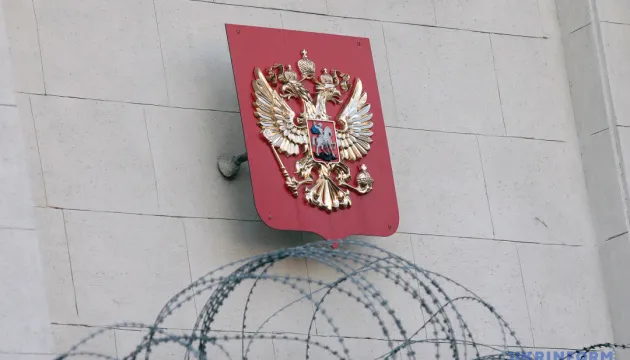
The European Union has expanded its sanctions against Russia and Belarus, tightening restrictions on the shadow fleet, banks, and the crypto sector. Ukraine and eight other countries have joined the new package, supporting Brussels’ decision. This is one of the broadest sets of sanctions in recent times, covering the energy, finance, and defense industries. The statements were published by the EU Council’s press service.
The European Union has approved another package of restrictions against Russia and Belarus, focusing on targeting sanctions evasion schemes, maritime oil shipments, and financial flows that support Moscow’s military economy. The decision also aims to cut off supply channels for dual-use technologies and goods that can be used in military production.
Ukraine, as well as Albania, Bosnia and Herzegovina, Iceland, Liechtenstein, Montenegro, North Macedonia, and Norway, have joined the sanctions. The countries agreed to align their policies with the EU Council’s decisions of April 23, 2026, and to support the expansion of the restrictive regime. As part of the new package, the EU expanded sanctions against Russia’s “shadow fleet,” adding dozens more vessels to the list, and tightened controls on the sale of tankers to prevent their further use by Russia. Some vessels were removed from the list only after their compliance with the requirements was confirmed.
Separately, restrictions were imposed on the banking sector: sanctions were extended to a number of Russian financial institutions, as well as banks in Kyrgyzstan, Laos, and Azerbaijan. Additionally, the EU restricted transactions involving cryptocurrency services and banned the use of certain digital currencies, including the digital ruble.
A significant set of measures concerns the energy sector: new bans have been imposed on services for Russian tankers and LNG transportation, as well as restrictions on terminals handling Russian gas. This is expected to further complicate the export of energy resources, which remain a key source of revenue for the Russian Federation. The EU has also tightened export controls and expanded the list of goods that can be used in military production in Russia and Belarus. Dozens of organizations have been added to the list that, according to the EU, are linked to the defense sector or help circumvent sanctions.
Separately, the decision affected the information space: online resources that distribute content from sanctioned media via mirror sites and other domains were banned. The Belarusian sanctions package was also expanded—restrictions now cover additional companies and goods that could strengthen Minsk’s defense sector. The EU also introduced bans related to cryptocurrency transactions and the digital currency of the National Bank of Belarus.
Brussels emphasized that these measures are aimed at further weakening the military and economic potential of Russia and its allies, and the participating countries have committed to aligning their national policies with EU decisions.
Belarus’s self-proclaimed president, Alexander Lukashenko, held a meeting on military equipment and announced the preparation of a new state armament program for 2026–2030.
Belarus continues to build infrastructure facilities deep within its territory and is not moving them closer to the Ukrainian border. At the same time, it cannot be ruled out that Russia may use these facilities in the future to deploy additional forces and equipment.
Journalists have established that Belarus continues to play a significant role in supplying the Russian military-industrial complex, providing chassis, electronics, and other key components for Russian military equipment. The value of these supplies in recent years has already reached billions of dollars.


