
Estonia has warned of a serious Russian threat – The Sunday Times
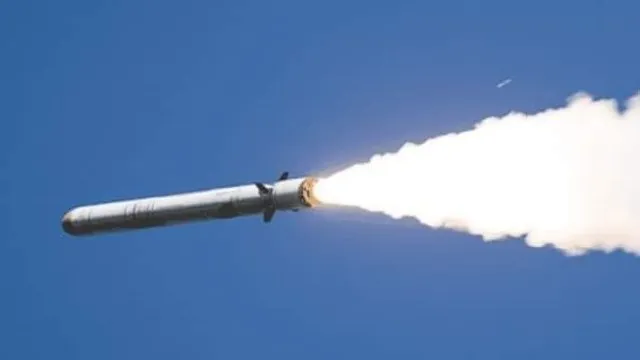
Estonia has warned its Western partners of the growing Russian threat, according to The Sunday Times. The article notes that Europe no longer has “buffer” countries capable of protecting its capitals, and that missiles could reach London in 7–8 minutes, while warnings about swarms of “suicide drones” arrive only a few minutes before the strike.
Estonian Defense Minister Hanno Pevkur made these remarks.
Pevkur spoke with the publication on Friday, a few hours after a Russian strike drone hit a residential building in Galați, Romania—two civilians were injured. The Estonian minister admitted that for him, this was not “just another day at the office.”
“The reality is that we are keeping NATO’s ‘front door’ closed,” Pevkur said. “But to keep that ‘front door’ closed, we need a reliable deterrent mechanism. I believe the alarm bell has been ringing for a long time.”
The minister compared his view on the need for joint action by allies to a symphony orchestra: “When you want a symphony orchestra to play good music, everyone has to do their part. You can’t have the first violin playing one piece and the trumpet playing another. For everyone to hear the same Mozart, you have to play together.”
In recent weeks, Russia has used electronic warfare to knock attack drones off course, causing them to enter Estonian airspace. Similar incidents have occurred in Poland, Finland, Latvia, and Lithuania. Unidentified drones have even been spotted near critical infrastructure in Western Europe.
Pevkur emphasizes: Western European capitals must recognize that the days when “buffer states” stood between them and the enemy are over.
“A missile flying toward Estonia or London—depending on the launch point—can reach its target in seven or eight minutes. You might have 100 Shahed drones, and early warning comes in two minutes, not two days or two weeks,” the minister explained.
He added: the incident in Romania and similar cases in Estonia are not the result of “Ukraine’s attack on NATO,” but the result of Russia’s attack on Ukraine.
Moscow has learned not only to jam attack drones by overloading their frequencies and disabling satellite navigation, but also to “spoof” GPS signals. This is a type of cyberattack where a drone receives false coordinates and begins flying along a trajectory different from the one set by its operators.
“In the western part of the Russian-Ukrainian combat zone, deception tactics are often used to make satellite receivers believe they are much further east than they actually are,” Ramzi Faragher, director of the Royal Institute of Navigation in the UK, explained to the publication. “The goal is to force autonomous platforms to deviate from their intended trajectory.”
For politicians in the Baltic states, almost all of whom are staunch supporters of Ukraine, this creates a difficult situation: they must explain to their citizens why allied drones are striking their infrastructure.
“This is truly a complex political issue,” noted Minna Alander, a security expert at the Center for European Policy Analysis. “Blame Russia? Blame Ukraine? Neither side can bear the blame alone.”
Former Estonian President Toomas Ilves warned that repeated drone incidents could undermine public support for Ukraine and NATO. A poll in Estonia showed that confidence in the Alliance’s ability to provide sufficient security guarantees is gradually declining. At the same time, 80% of Estonians still support sending military aid to Ukraine.
According to Pevkur, Moscow will seek new ways to pressure the unity of the West.
“Russia is looking for other actions that could undermine Western unity. It will use propaganda more actively and level more accusations against the West. Information campaigns and various ‘hybrid’ actions—there is a risk that such attacks will increase,” the minister warned.
At the same time, Pevkur emphasized the line between the current state of affairs and full-scale war: “This is not the worst-case scenario. The worst-case scenario is if a war breaks out here.”
Earlier, Estoniaresponded to Russia’s accusations of mistreating Russians.
Estonia blamed Russia for the arrival of Ukrainian drones.
A Romanian fighter jet participating in a NATO air patrol mission shot down a stray attack drone over Estonian territory.
Estonian Foreign Minister Margus Tsahkna, commenting on the incident involving the downing of the drone over the country’s territory, stated that this is a consequence of Russia’s war and provocations. He also emphasized that Ukraine has every right to strike Russian military targets.


