
European countries are refusing to join the naval blockade of Iran
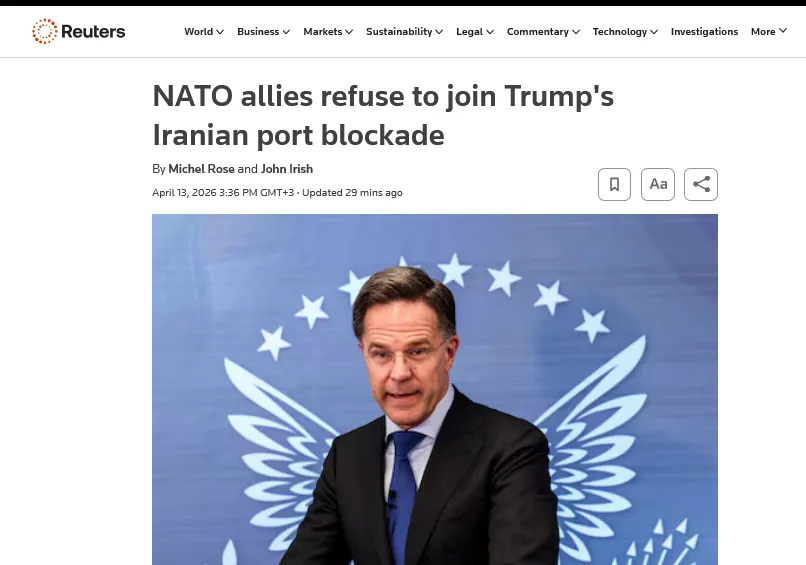
A number of NATO allies, including the United Kingdom and France, have announced their refusal to participate in the blockade of the Strait of Hormuz declared by Donald Trump.
Reuters reports this, noting that European nations will instead focus on ensuring the safety of shipping and seeking diplomatic ways to unblock the region. Despite the U.S. president’s statements about the future expansion of the coalition, key partners are seeking to avoid direct involvement in a military conflict with Tehran.
The blockade officially began on Monday with the participation of more than 15 U.S. warships following the breakdown of negotiations over the nuclear program. British Prime Minister Keir Starmer emphasized in a comment to the BBC that London does not support this move and will not succumb to significant pressure from Washington. This week, the “coalition of the willing” plans to hold a new conference to discuss an initiative that would allow for the resumption of free passage of ships without escalating hostilities.
Washington is using its fleet to pressure Iran, attempting to force the country to halt uranium enrichment and change its foreign policy course. At the same time, the stance of European capitals reveals a serious rift in approaches to resolving the crisis within the Alliance. While the U.S. is increasing its presence in the strait, Europe is trying to keep channels of dialogue open, fearing a large-scale war that could only benefit Russia by diverting attention from its aggression in Ukraine.
The U.S. has launched a full naval blockade of Iranian ports, and President Donald Trump has warned of the immediate destruction of any vessel attempting to breach it.
The U.S. announced the start of mine clearance operations in the Strait of Hormuz. At the same time, U.S. warships have passed through the strait for the first time since the start of the war without Iran’s approval.
