
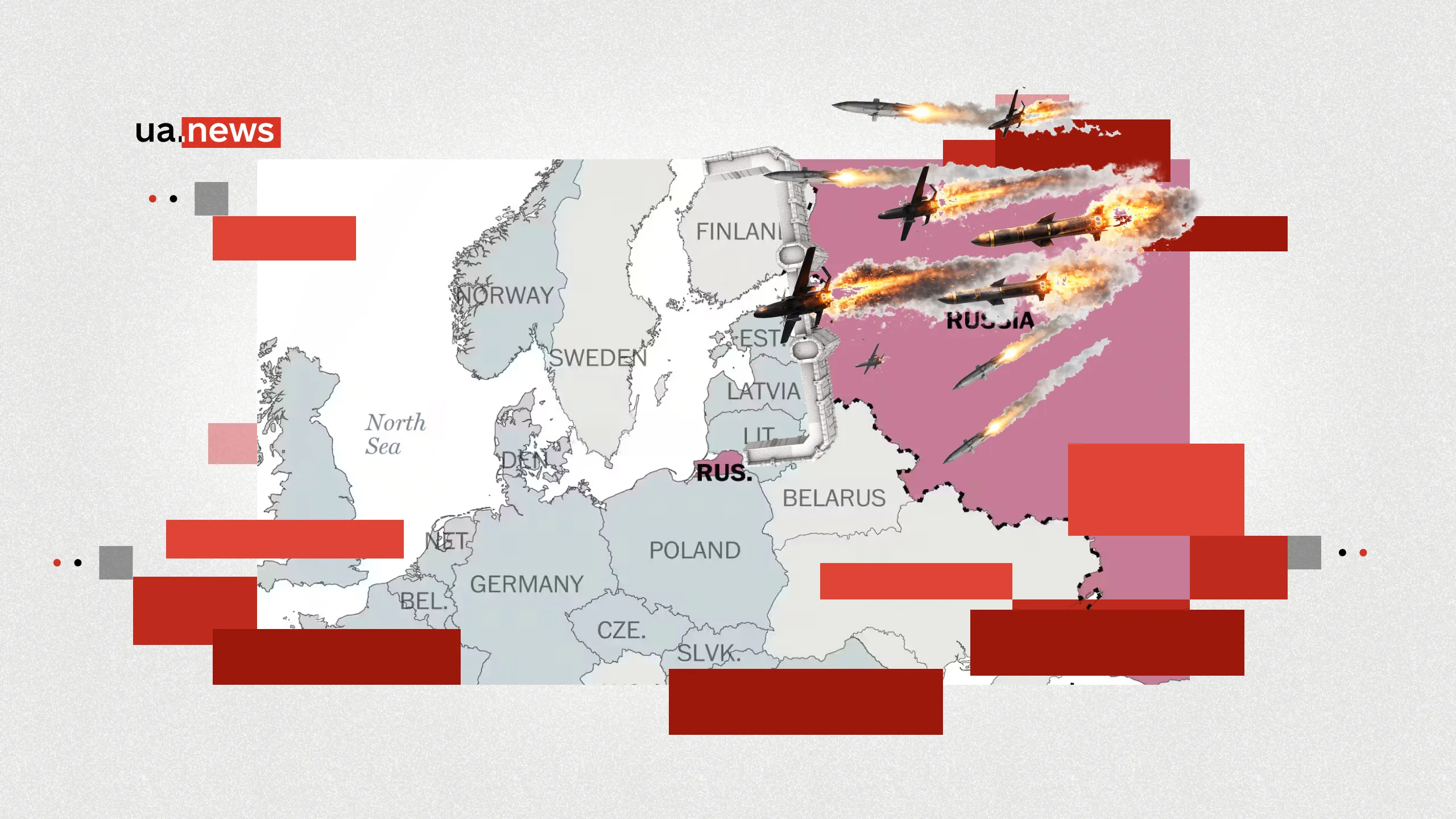
Looking at recent events in Europe, as well as reports in Western media and among experts, there is a strong sense of déjà vu: everyone is once again talking about a possible war with Russia, only this time not in the context of Ukraine, but on a scale encompassing the entire EU. Recent statements from Moscow—ranging from threats by Dmitry Medvedev, Deputy Chairman of the Russian Security Council, to strike European factories allegedly assembling UAVs for the Ukrainian Armed Forces, to the Russian Ministry of Defense’s publication of a “list of potential targets”—echo David Ignatius’s widely discussed column in The Washington Post. The renowned journalist paints a very alarming picture: Russia, he says, could attack Europe in the very near future, without waiting for the war in Ukraine to end.
The logic is simple: the Kremlin currently has a “window of opportunity.” While the European defense industry has not yet ramped up production, while Kyiv has not yet received long-range weapons capable of striking deep into Russian territory, and, most importantly, while “Putin’s friend” Donald Trump sits in the White House and undermines transatlantic unity, the Russian regime has a “unique opportunity.” Europe is currently weak, and if there is ever a time to attack, it is now, literally this spring—so writes The Washington Post.
Added to this alarming “cocktail” is the active militarization of Belarus, where President Alexander Lukashenko is already directly calling for preparations “for difficult times and war,” constantly accusing neighbors of alleged provocations and attempts at aggression against the republic. Russia, for its part, is symmetrically accusing the Baltic states and even Finland of “opening their airspace to UAV strikes against Russia.”
All of this combined paints an extremely bleak picture of the international situation. The war in Ukraine is increasingly spilling over into the wider world. But does this mean that Russia is truly preparing to attack Europe? Should we expect a major war between Russia and the EU in the near future? UA.News political analyst Mykyta Trachuk, together with experts, examined the issue.
The security dilemma in action
To understand why today’s talk of a major war in Europe is louder than at any time since the Cuban Missile Crisis, it is worth recalling the classic theory of international relations—the “security dilemma.” Unfortunately, it works, and it works flawlessly.
When Putin launched a full-scale invasion of Ukraine, he clearly hoped to intimidate Europe. Instead, he got the opposite effect: a continent that had been cutting back on its military for decades—and had grown rapidly wealthy as a result—suddenly woke up. Germany announced a new policy—the “turning point” (Zeitenwende)—and pan-European rearmament plans are estimated at a staggering 800 billion euros. German generals are now publicly warning that by 2029–2030, Russia will technically be able to rebuild forces sufficient to attack the EU and NATO.
In the Kremlin, this massive “muscle-flexing” by the EU is perceived, of course, not as a defensive response to its own aggression, but as “proof” of the West’s alleged preparations to attack Russia. This is the security dilemma in its purest form: steps taken by one side to ensure its security are perceived by the other as preparations for an attack, which only heightens the risk of conflict.
Hence the escalation of nuclear rhetoric, constant military exercises, and hysterical claims that the Baltic states have allegedly become an “airfield” for Ukrainian drones. Moscow is deliberately blurring the line between Ukraine and Europe, building a “case” for a possible retaliatory strike.
Ignatius is right about one thing in his column for TWP: if you look at the world from a bunker somewhere near Moscow, the current moment might seem like a strategic window of opportunity. European armies are clearly not yet ready for total war, munitions factories are still under construction, and the main guarantor of security—the U.S.—in the person of Trump, is behaving like a completely unreliable partner who could walk out of the room at any moment, slamming the door and leaving allies to fend for themselves.
Exhaustion and Elections: Why the Kremlin (Most Likely) Is Bluffing
However, factors come into play here that turn a hypothetical “window of opportunity” into a closed vent. The main restraining factor lies not in Brussels, not in London, and not even in Washington. It lies among the slag heaps of Donetsk Oblast and in the steppes of Kherson Oblast. After all, the Russian army has long been bogged down in Ukraine.
Imagine a boxer—truly strong and powerful—who has been fighting an exhausting heavyweight bout for a long time. He lands punches, takes blows to the liver, head, and torso; he doesn’t lose—but he doesn’t win either. And then he is offered to start a second fight at the same time: against a less experienced but more muscular, “fresh,” and energetic opponent. This is no longer a sparring match or a duel, but pure suicide.
For a hypothetical attack on the same Baltic states or, even more so, on Finland, Moscow would most likely have to announce a new wave of mobilization, close the borders, come up with its own version of the TCC, and so on. And this is no longer a question of military expediency, but of internal political stability.
And here we run into the calendar. In the fall of 2026, Russia is set to hold another major federal election to the State Duma. For Putin’s regime, this is a ritual of acclamation that requires absolute control and the simulation of “unity between the people and the government.”
A major war with the EU on the eve of the vote is a guaranteed shock to a society that the Kremlin diligently shields from the truth about losses in Ukraine, feeding it a television fairy tale about a “successful special operation somewhere out there.” A new war is a risk that Putin, with his maniacal concern for his own survival, is far from certain to take. He needs elections without upheaval, not “World War II 2.0”—at least for now.
To this, we must add economic exhaustion. Yes, the Russian economy still shows some growth on paper, and overall, it should by no means be underestimated. But this growth is based primarily on defense contracts and the raw materials sector. To scatter already limited resources on a second major front against the combined economy of the EU—which, even in a half-asleep state, is ten times more powerful than Russia’s—would be sheer madness.
Therefore, the Russian Ministry of Defense’s publication of a “list of targets” in Europe is, rather, a classic information and psychological operation. Its goal is to make the average European citizen doubt their own governments’ ability to protect them, to push businesses to withdraw capital from the region, to sow seeds of doubt and unrest, and so on. The Kremlin wages war with words no less fiercely than with missiles and drones, because it knows full well that nerves and public opinion in Western democracies are their most vulnerable point.

Expert Opinions
Military expert Oleg Zhdanov views The Washington Post’s article with considerable skepticism. However, his skepticism stems specifically from the publication’s underestimation of the situation.
“It’s very strange for such a prestigious publication to write such things. It feels like they’re living on the moon. As of today, World War III, as Russian Chief of the General Staff Gerasimov wrote, is a new type of hybrid war. And it has been going on for a long time. Europe is fending off this war as best it can. It is fending off constant cyberattacks and sabotage carried out by Russia—real sabotage involving explosions and arson. A striking example is the Kremlin’s recent publication of a list of European defense plants with their addresses and a note stating that they are allegedly legitimate targets for attack. This is very telling. The war has been going on for a long time. The only thing Russia cannot do today is carry out a direct invasion. Because as long as active hostilities continue in Ukraine, the Russian Federation will lack the forces and resources to carry out such an operation. But raids penetrating 5–10 km deep with the aim of armed provocation are entirely possible and likely. Especially if Belarus, whose armed forces are effectively a branch of the Russian Armed Forces, joins in the provocations,” noted Oleg Zhdanov.
Political analyst and director of the Penta Center for Applied Political Studies, Volodymyr Fesenko, also considers some form of hybrid provocation by the Kremlin to be possible. However, as of now, the expert does not believe in a full-scale war between the EU and Russia.
“I don’t believe in a major war between Russia and the EU right now. Russia isn’t ready for a war on two fronts. If anyone were to embark on such an adventure, it would be yet another huge mistake by the Kremlin. They won’t do such foolish things. Everything that is happening now—such as threats from the Russian Ministry of Defense and the publication of a ‘list of targets’ in Europe—is pressure. They are exploiting the current situation. There are two reasons for this: the deterioration of relations between the US and the EU within NATO, which makes Europe more vulnerable, and the Russians are taking advantage of this. This is being done to get Europe to weaken its support for Ukraine. And the second reason is that after the elections in Hungary, it became clear that support for Kyiv is not only continuing but even intensifying. There are specific agreements, specific projects, and new support plans. All of this strengthens the defense capabilities of Ukraine and Europe, and this irritates the Russians. Therefore, they are trying to pressure the EU to change the political climate in Europe, provoke a crisis, and stir up anti-war sentiments. So, for now, this is all just pressure. The most that is possible is hybrid-style provocations. The Baltic states face the greatest threat here; this is an unconditional risk zone. But we’re not talking about a major war, but rather military blackmail of the West’s “weak link.” America under Trump will certainly not defend these small countries. And effective protection from Europe is in question,” noted Volodymyr Fesenko.
In summary, should we assume that Russian tanks will roll into Tallinn and Warsaw “as early as tomorrow”? Most likely, no. Russia today is a state with a highly militarized economy and an army critically tied up in the Ukrainian theater of operations. Its human resources are not unlimited, and its domestic political calendar dictates a need for some degree of stability, not new global upheavals. Medvedev and Shoigu’s statements are a tool of psychological pressure, an attempt to play on the “security dilemma” and force Europe to fret and expend additional resources.
However, this absolutely does not mean that there is no danger at all. One can expect anything from Putin and Russia, and the spiral of escalation continues to tighten. The Kremlin is effectively declaring targets on EU territory as military objectives. The conflict could escalate into a hot phase at any moment, even without a strategic plan to “conquer all of Europe” (it is unlikely that such a plan even exists for the Russian dictator). War simply has a way of spiraling out of control, especially when leaders lose their last shred of rationality.
Therefore, European capitals should remain on high alert but not succumb to panic. A €800 billion rearmament effort is not a provocation of war, but a guarantee that the “window of opportunity” for the Kremlin will close as soon as possible. The sooner Europe becomes the agent and guarantor of its own security, the less desire Putin will have to test its resilience.




