
Japan plans to develop quantum sensors for detecting submarines
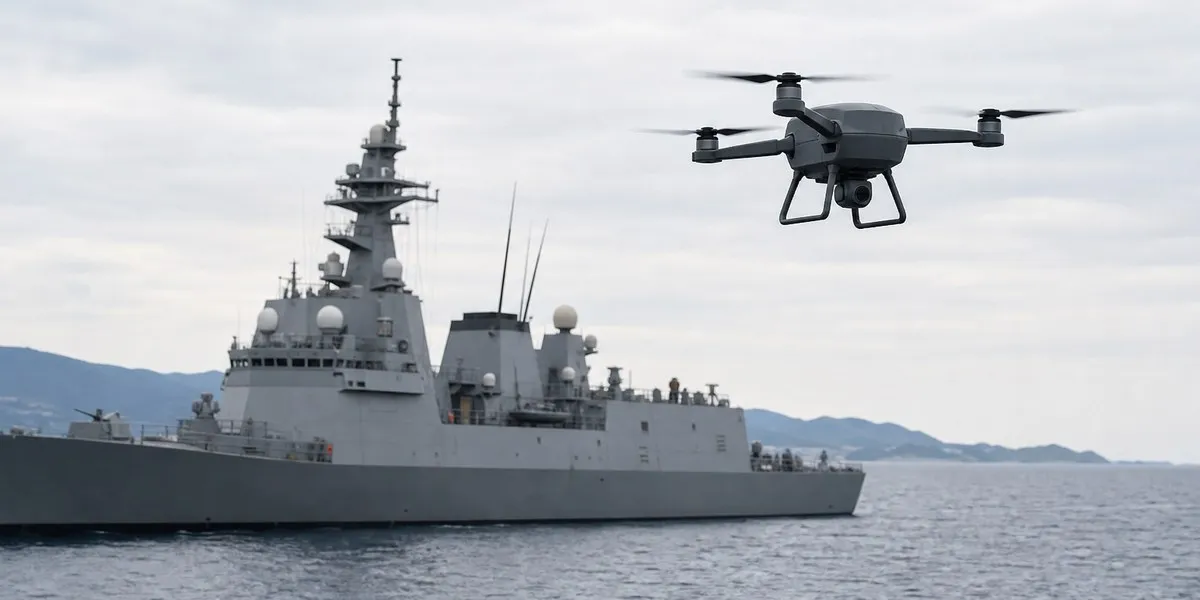
Japan plans to develop quantum magnetic sensors for drones capable of detecting submarines. Research into a more compact and functional sensor is included in the Japanese Ministry of Defense's budget request for fiscal year 2027, the South China Morning Post reports.
The technology uses the properties of atoms to register minor changes in the magnetic field that may indicate the presence of a submarine. According to the Nikkei newspaper, Japan's defense ministry expects to develop the sensor by fiscal year 2031. It is planned to be installed on low-cost drones that will fly near the sea surface and operate from military ships.
Use near straits
Masashi Murano, an expert at Washington's Hudson Institute, noted that searching for submarines with manned forces is extremely expensive per area of ocean surveyed. In his view, unmanned systems can reduce the cost of prolonged surveillance, although magnetic sensors have a limited detection range and are not suitable for large-scale searches.
At the same time, Murano considers such systems useful near straits through which Chinese submarines must pass on their way to the Pacific Ocean. Deploying a large number of low-cost sensors on drones may be more effective than using P-1 patrol aircraft.
More current news is available on the UA.News Telegram channel Telegram.
Competition underwater
Chinese researchers are also working on this technology and last year reported sea trials of a drone-mounted quantum magnetic sensing system. Beijing has also unveiled other anti-submarine capabilities, including the Y-9Q patrol aircraft, the Z-20F shipborne helicopter, and a Wing Loong X drone modification for dropping sonobuoys.
China is building networks of ocean sensors that combine satellites, buoys, underwater gliders, and seabed listening systems. According to a Pentagon assessment, China may have 80 submarines by 2035. The United States and its allies are also investing in detection and strike capabilities: General Atomics tested an MQ-9B SeaGuardian with a larger sonobuoy payload in January, while the U.S. Navy last month requested industry proposals for the compact air-launched Silent Anvil torpedo.
Murano stressed that not only the sensors themselves but also data processing, which makes it possible to combine many weak signals, is important. Retired Australian Vice Admiral Peter Jones added that a submarine can be detected at a distance of up to several thousand meters or less, so increasing the number of sensors in certain areas will make covert submarine operations more difficult.




