
A Japanese torpedo sank a U.S. amphibious ship
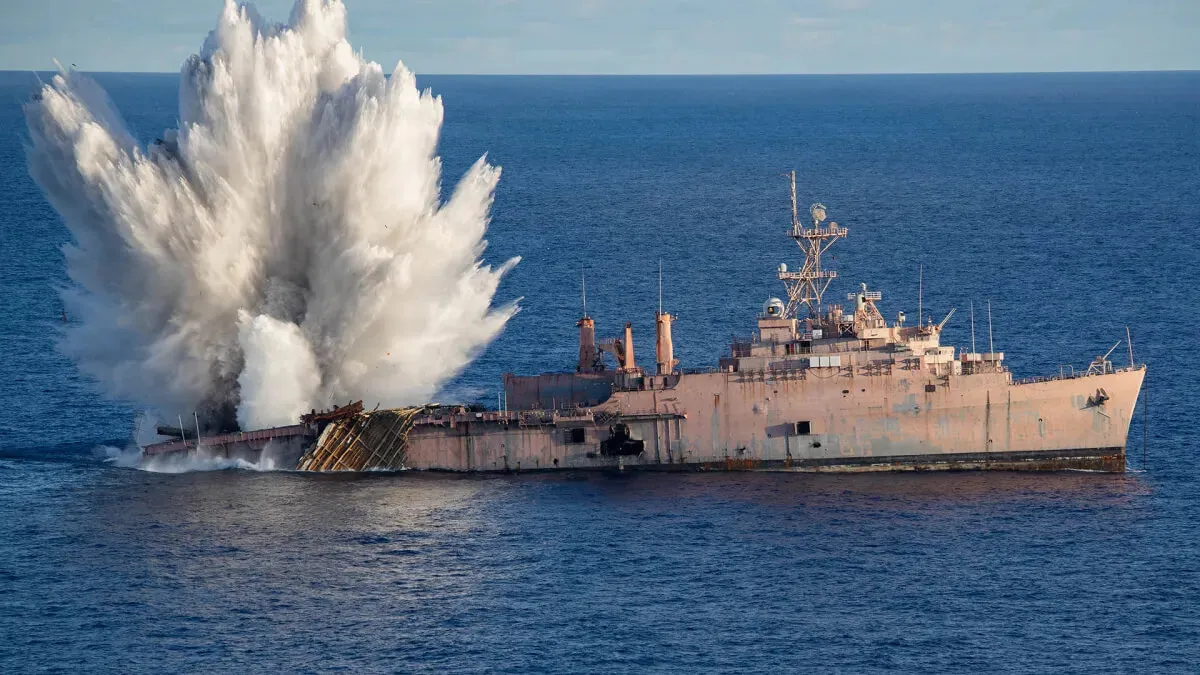
As part of the large-scale naval exercise Valiant Shield, which took place from June 22 to July 1, the allies practiced destroying a large maritime target.
The decommissioned U.S. Navy amphibious transport dock USS Juneau (LPD-10) was sunk by a precise torpedo strike delivered by a submarine of the Japan Maritime Self-Defense Force.
The ship sank at a depth of more than 200 nautical miles off the coast of the Mariana Islands following the successful completion of the SINKEX operation.
This phase of the exercises was a key element in demonstrating the combat readiness of the international coalition in the Pacific region.
Rear Admiral Eric Anduze, commander of the 5th Carrier Strike Group, emphasized the strategic importance of the maneuvers.
According to him, they allowed participants from different countries to fully integrate their capabilities to carry out complex tasks.
“These SINKEX exercises provided our joint team with an excellent opportunity to integrate capabilities across various domains, refining the lethal precision and coordination required for high-quality maritime operations in the Pacific theater of operations,” the rear admiral noted.
The Valiant Shield exercises are traditionally held every two years and bring together forces from the United States, Japan, Australia, Canada, and New Zealand.
The goal of the exercises is to practice joint operations in the air, at sea, on land, as well as in space and cyberspace.
The sunken USS Juneau had a rich history, having been commissioned back in 1969 and having actively participated in the Vietnam War and Operation Desert Storm.
After being decommissioned in 2008, the veteran ship was used as a training target for a long time.
This was reported by the U.S. Navy.
For the first time in 40 years, the U.S. is developing a new nuclear warhead
The U.S. Navy is left with almost no key submarines


