
Iran has triggered a sharp rise in oil prices by refusing to engage in dialogue with the U.S. — Reuters
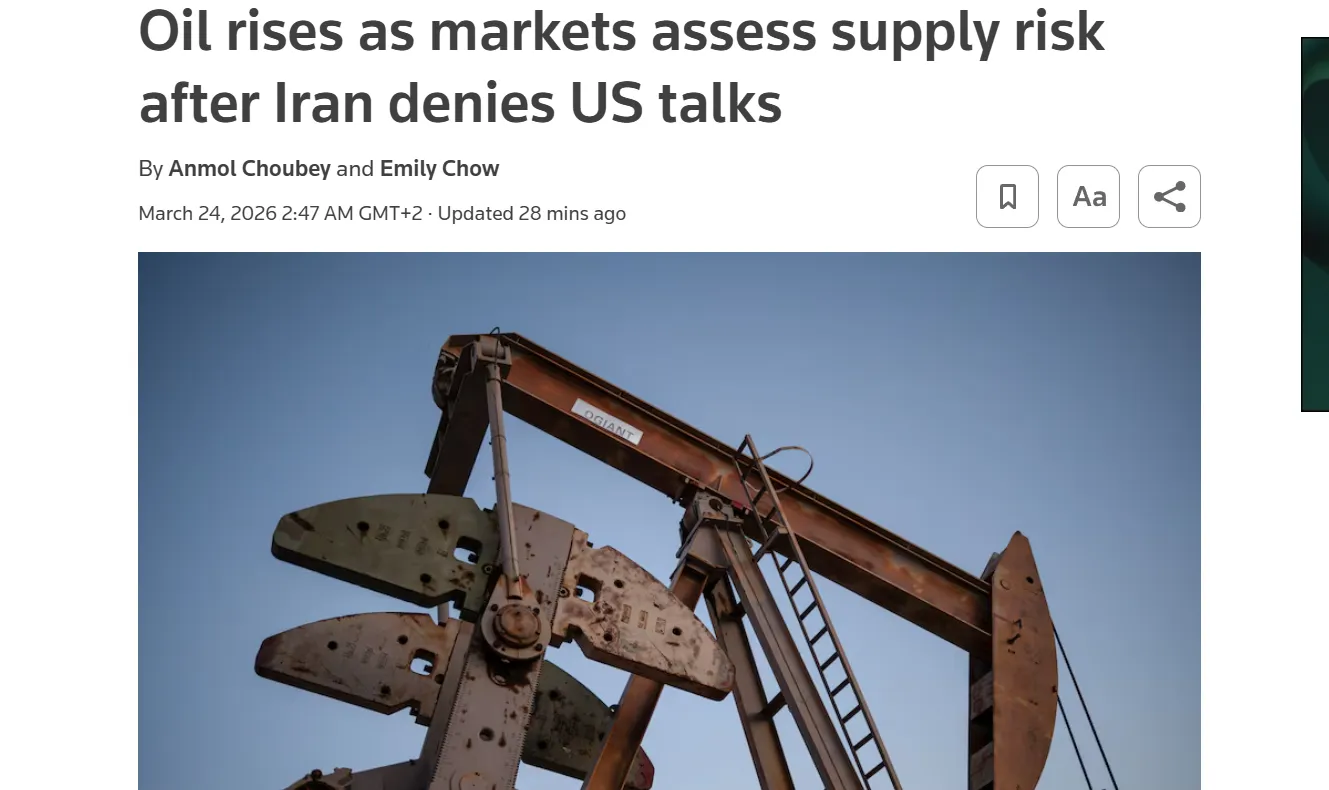
The global energy market reacted with a sharp rise in prices following an official statement from Tehran denying any agreements with the White House.
This was reported by Reuters.
Oil prices resumed their upward trend immediately after investors lost hope for a rapid de-escalation of the conflict in the Persian Gulf region.
On the morning of March 24, the benchmark Brent and WTI crude oil grades began actively recouping yesterday’s losses, showing a significant price increase.
The catalyst for this trend was a diplomatic move by the Iranian Ministry of Foreign Affairs, which called reports of “productive negotiations” a manipulation.
The market reacted immediately to the lack of real progress in diplomatic relations between the countries, leading to a price jump of over 4%.
Analysts note that traders’ previous optimism was premature and based on unconfirmed information.
“Brent futures rose by $4, or 4%, to $103.94 per barrel, while U.S. West Texas Intermediate crude rose by $3.49, or 4%, to $91.62,” industry experts note.
Market participants are once again factoring in the risks associated with a potential escalation of armed conflict into commodity prices.
“By postponing its plan to strike Iranian power plants for five days, the U.S. has effectively removed a significant portion of the ‘military premium’ from oil prices. Today’s moderate rebound is merely the market’s attempt to find a foothold in an unstable situation,” explained Tim Waterer, chief analyst at KCM Trade.
As a reminder, oil remains above $100 following the resumption of Iraqi supplies.
Oil prices also fell following Trump’s remarks on the Middle East.


