
Israeli farmer grows tomatoes 300 meters from Egypt — Jerusalem Post
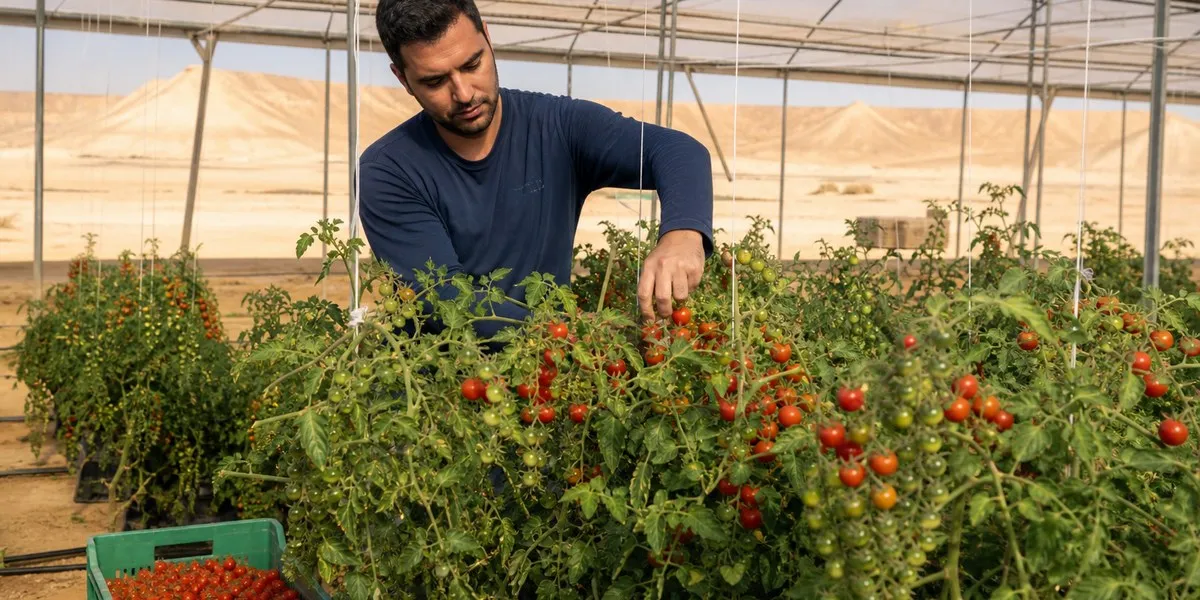
In Israel, 33-year-old farmer Noam Efrat grows cherry tomatoes in the community of Kadesh Barnea, located about 300 meters from the border with Egypt. In 2022, he moved there from Metula with his wife Noa and their son Negev. Efrat works on the family farm, The Jerusalem Post reports.
Kadesh Barnea is a small agricultural community of 87 families in the Nitzana region, which is part of the Ramat HaNegev Regional Council. The community’s official postal address is Nitzanei Sinai. Efrat’s parents moved there from Beersheba in 1995 and began growing cherry tomatoes, although they had no previous experience in agriculture.
Work in the greenhouses
Efrat said that he starts work at 5:30 a.m., and the trip to the farm takes about five minutes. After working in the morning, he returns home to take his son to kindergarten, and then works again until noon. In the afternoon, the farmer returns to the greenhouses when the heat subsides. According to him, the work schedule depends on the length of daylight hours.
More current news is available on the UA.News Telegram channel Telegram.
The farmer also served more than 300 days in the reserve of the Israel Defense Forces after October 7. He received an education through a program combining computer and environmental sciences, and later studied for a master’s degree in agroinformatics at Ben-Gurion University.
Water and border challenges
For agriculture in the region, brackish underground desert water and desalinated water are used. According to Efrat, cool desert nights promote tomato growth in greenhouses, while brackish water makes cherry tomatoes sweeter. Local farmers also grow cucumbers, wine grapes, peppers and salicornia.
Efrat participates in the Gesher L’Dorot project, which creates a digital archive about the history of communities in the Nitzana region. Among the difficulties of living near the border, he named smuggling using drones. According to him, drones from Egypt transport ammunition, drugs and weapons, including M16 rifles, for Bedouin groups in southern Israel. Efrat also named limited access to specialized medical care as another problem: his son underwent ear surgery in Jerusalem.


