
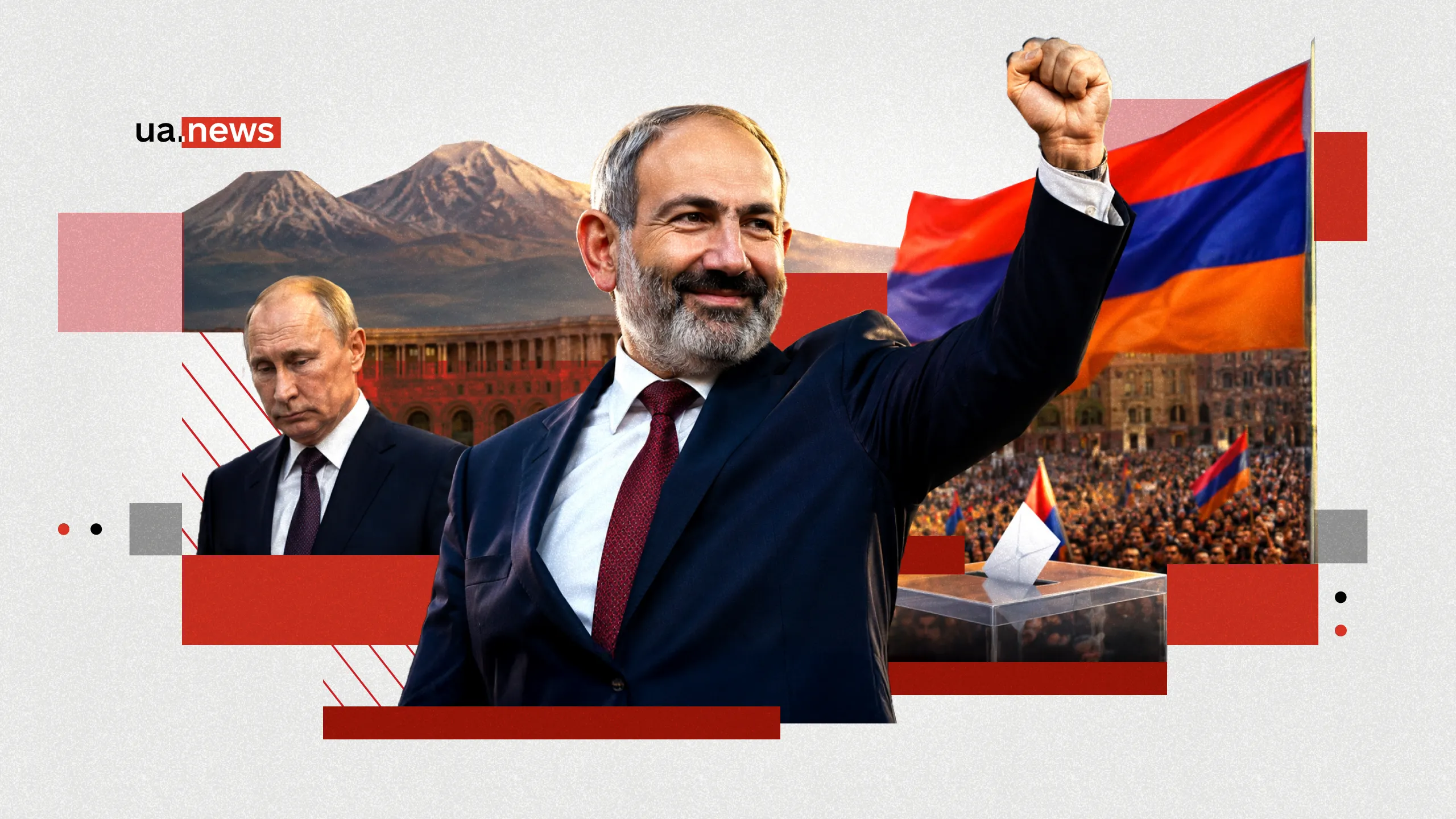
On Sunday, June 7, 2026, parliamentary elections were held in Armenia that can, without exaggeration, be called historic. This was not a traditional contest of political platforms, where opponents debate pensions, utility rates, or taxes. It was a tough geopolitical referendum. The citizens of Armenia faced an existential question: either they trust Prime Minister Nikol Pashinyan and his course toward a gradual break with Russia and a shift toward the West, or they return to Moscow’s orbit under the leadership of the pro-Russian opposition.
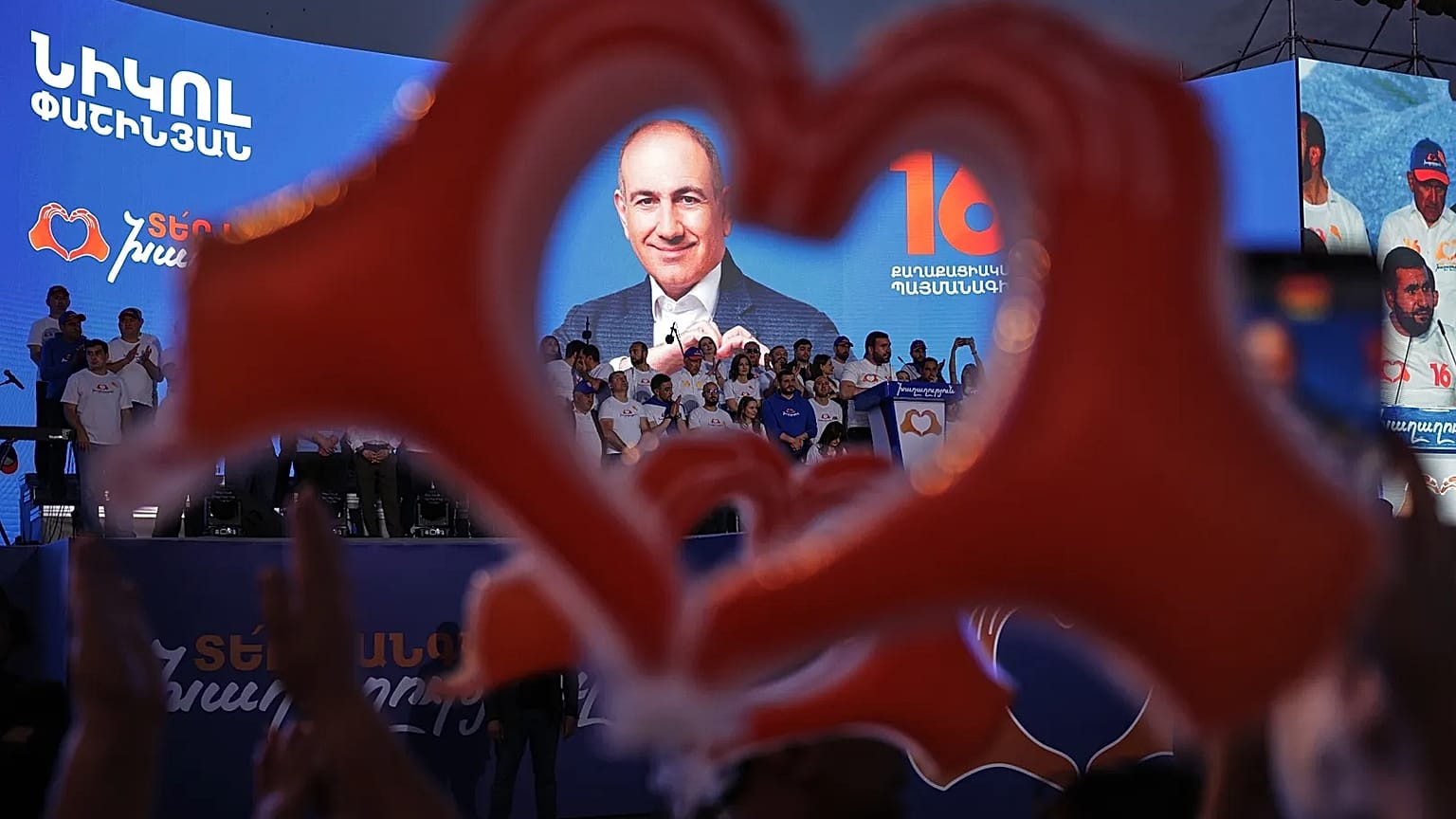
After 100% of the ballots were counted, Armenia’s Central Election Commission announced the victory of the ruling “Civic Contract” party led by Pashinyan. A result of 49.81% and 61 seats out of a possible 105 represents the vote of confidence that society has given to the current government. Second place, with 28 seats, went to the “Strong Armenia” bloc (23.29%), third place went to the “Armenia” bloc with 11 seats (9.94%), while “Prosperous Armenia” failed to clear the 4% threshold, falling short by less than a hundred (!) votes.
Despite unprecedented interference, political maneuvering, and direct threats, the Kremlin has once again demonstrated its helplessness where the reach of tanks ends and the reach of ballots begins. Armenia has chosen the path of a gradual but steady exit from under the CSTO umbrella and the post-Soviet sphere of influence.
How did this happen, what will happen to the country and the region now, and what conclusions can be drawn? UA.News political analyst Mykyta Trachuk, together with experts, examined the issue.
How the elections unfolded: arrests, masks, and the struggle for legitimacy
The electoral process could by no means be called perfectly peaceful or entirely lawful. It took place in an atmosphere of immense tension. It is immediately apparent that the authorities, aware of the high stakes, acted preemptively, ruthlessly clearing the field of potentially dangerous players. For instance, six parliamentary candidates from the opposition bloc “Strong Armenia” were arrested on election day itself. The Central Election Commission promptly approved these arrests.
“Strong Armenia” leader Samvel Karapetyan denounced the widespread repression, claiming that over a hundred members of his political party were detained on the eve of and on election day. This sparked a barrage of criticism from opposition figures. An incident in Gyumri was particularly shocking, where masked unknown individuals stormed the party’s office and detained everyone present. This is roughly the context in which the Armenian people cast their votes.
However, despite isolated shameful incidents, it would still be untrue to speak of any wholesale falsification of the results in Pashinyan’s favor. The gap between first and second place was over 25%—which amounts to hundreds of thousands of votes in a country with a population of less than 3 million. Armenians who came to the polls consciously voted for the “Civic Contract,” ignoring the alternatives. To put it simply, even if there were instances of “vote-rigging” or the use of administrative resources (as, unfortunately, almost every government in post-Soviet countries does), Pashinyan still wouldn’t have been able to secure nearly 50% of the vote. After all, he is not Lukashenko, and Armenia is not Belarus.

A Geopolitical Earthquake in the South Caucasus
The consequences of these elections extend far beyond Armenia’s borders. They are fundamentally altering the balance of power in the region.
First and foremost, Pashinyan’s victory is a tactical success for the West. For the EU and the US, keeping a loyal government in power in Yerevan is a key asset. This means maintaining the EU monitoring mission on the border, continuing the policy of energy diversification, and gradually pushing Russian military facilities out of the region. We should not forget the personal factor either: Donald Trump showed considerable interest in the outcome, viewing Armenia as part of a broader strategy to contain Iranian and Russian influence.
Equally important is the factor of Azerbaijan and President Ilham Aliyev personally. Pashinyan’s victory is a gift for Baku. Aliyev benefits from Pashinyan as a weak, predictable, and Western-dependent politician. Following the defeat in the Second Karabakh War, Pashinyan is trapped in a “peace at any cost” scenario. For Azerbaijan, this is a carte blanche to exert further pressure on issues of border demarcation and the “Zangezur Corridor.” In Baku, they understand perfectly well: a return to power by radical revanchists would force Azerbaijan to prepare for war once again, whereas Pashinyan, in a sense, is “trading” away parts of the territory and sovereignty in exchange for the survival of his government and the entire country. This is a cynical reality, but a very comfortable one for Baku.
As for Turkey, for Ankara, Pashinyan’s victory represents hope for normalization, albeit a slow one. Without Moscow’s mediation, opening the border and establishing economic ties will be much easier, as the Kremlin factor—which has forever blocked rapprochement—is disappearing. Iran, for its part, has taken a cautious stance. Tehran strongly disapproves of the West’s growing influence near its borders, which a pro-Western government brings with it; however, Russia’s sharp weakening allows Iran to claim the role of a “heavyweight” in the region—in rivalry with Turkey.
A “Frog Pond” for Political Strategists: The Anatomy of the Kremlin’s Failure
The most significant and tragicomic aspect of these elections is the Kremlin’s crushing failure. Moscow bet on unprecedented interference in the Armenian elections. It wasn’t just about supporting the “right” candidates: Russia quickly moved beyond direct threats. Trade sanctions and restrictions, blackmailing with gas supplies, closing markets to Armenian goods, and even direct hints of war—this was a level of pressure typically applied to openly hostile states, not to what is essentially a nominal ally within the CSTO and the EAEU.
A particular “masterpiece” was the talk of organizing the mass transport of Armenian citizens living in Russia to vote for pro-Russian forces. This is a classic attempt to artificially inflate the electorate with loyal people who are financially dependent on Russia. On top of that—traditional attempts at bribery, funding opposition campaign headquarters, and a full-scale information war in which Pashinyan was portrayed as a traitor, a “Soros agent,” and so on. But the Kremlin has erred again.
Here we come to the most interesting phenomenon. The Kremlin is staffed by political strategists who, for some reason, sincerely consider themselves geniuses of the electoral process. They are convinced that there is no such thing as a people, no public opinion, and no views held by millions of people. In their worldview, there are only tactics: invest the money correctly, launch the bot farm correctly, intimidate correctly—and the result is in the bag. But the inconvenient truth for them is that they are not only morally repugnant (in politics, this is, unfortunately, the norm), but above all professionally incompetent. In a country where, for the third decade in a row, there have been no competitive, honest, or open elections—where the ruling party always wins by a landslide—“specialists” have emerged who have never been tested by real competition.
Here, the metaphor of a swimming pool comes to mind. Imagine a children’s “frog pool” where the water is one meter deep, the water is warm, the bottom is solid, and a dozen coaches hover overhead, watching the process intently. Can anything unpredictable happen under such conditions? Theoretically—yes; in practice—hardly. That is exactly what the elections in Russia are like: it is impossible to drown there.
Now let’s imagine that these swimmers from the “frog pool” enter a full-sized Olympic pool: five meters deep, cool water, wide lanes, and aggressive competitors. They try to apply the skills they acquired in the “frog pool” and immediately sink to the bottom. That’s roughly what the Kremlin’s attempt to interfere in the Armenian elections looks like.
The Kremlin tried its best and lost just as sincerely, because elections are not its forte. Its element is wiping the Donbas off the face of the earth year after year, firing missiles at residential neighborhoods, destroying civilian infrastructure, dispersing unarmed demonstrations, imprisoning opposition figures, and later killing them there, and so on. That’s what they’re good at; that’s their style. But subtle electoral tactics, working with public opinion, seeking compromises, and real politics—these require a flexibility that simply isn’t in their arsenal; it has atrophied from disuse.
And this is where the main paradox of the recent elections lies. Nikol Pashinyan approached them in an extremely difficult situation. He is, to put it mildly, far from the strongest leader in Armenia’s history. His reputation within the country was not merely mixed but deeply toxic to a significant portion of society following the defeat in Karabakh. There are also countless problems within the country: from the economy to a sense of national humiliation.
Pashinyan had every chance of losing, and he was at his most vulnerable until exactly one moment—when Moscow openly entered the fray. As soon as the Kremlin began dictating to Armenians whom to elect, as soon as Putin himself began “transparently” threatening war—the choice became obvious. The citizens of Armenia, unlike the Kremlin’s “experts,” have not forgotten the disgrace of the Russian peacekeepers in Karabakh. When the war began, “allied” Moscow did virtually nothing to help Yerevan. And the blackmail and threats sealed the deal for good.
Expert Opinions
Political scientist and director of the Institute of World Policy Yevhen Magda notes: the results of the parliamentary elections in Armenia are, first and foremost, a victory for Nikol Pashinyan himself, who has had a difficult political career, but who has bet on tough opposition to pro-Russian forces. By all accounts, a constitutional majority will be his reward for his resolve.
“But we must understand that in Armenia, it’s not as if there is a noticeable dominance of pro-European forces. That is, the situation there is constantly shifting, and will continue to shift. Therefore, we need to watch what the authorities’ next steps will be, and what further support they receive, since at this point it is difficult to speak of any rapid movement toward the EU. On the one hand, Armenia is a small country, and on the other hand, it is surrounded by neighbors who, through their rather aggressive actions, compensate for the absence of a Russian-Armenian border. And of course, Armenia, as the last country to challenge Russia, will continue to try to build on its success, while Russia will try to get even. “Here, I would suggest that things will heat up in the South Caucasus,” Yevhen Magda is certain.
Political analyst and director of the Penta Center for Applied Political Studies, Volodymyr Fesenko, also believes that the elections in Armenia represent a defeat for Russia: a defeat for coercive methods of pressure, a defeat in terms of maintaining Russia’s administrative and political control over Armenia, and an attempt to restore direct control over Yerevan.
“Pashinyan is an outsider to Moscow; he wasn’t accepted there. Although he wasn’t directly hostile to the Kremlin, this must also be understood, and we shouldn’t harbor any illusions. But this is undoubtedly a defeat for the Kremlin—just as it is a victory for Pashinyan. Pashinyan remains in power. And here I will draw a paradoxical conclusion: one should not expect an immediate break with Russia, the Eurasian Economic Union (EAEU), the Collective Security Treaty Organization (CSTO), a sharp reorientation toward the West, and so on. No. In my view, a more likely scenario is a return to a multi-vector policy, with Pashinyan attempting to ease tensions in relations with the Kremlin and demonstrate a willingness to compromise. This does not mean that Pashinyan will abandon the course toward European integration, but it will not be a rapid move toward Europe, but rather a slow drift away from Russia. Because Armenia is heavily dependent on Moscow, there is a Russian military presence there, and so on.
Pashinyan will not take risks. For him, the issue of European integration was an electoral strategy—not a political one, but specifically an electoral one. But the elections are over. Pashinyan will not abandon his pro-European strategy, but he will strike a balance with Russia on this issue. Nor should one assume that those who voted for the opposition are against European integration. No, they are primarily against Pashinyan; they hold him responsible for the lost war and his authoritarian tendencies. There are many such voters and politicians there; I have even spoken with some of them personally. Today’s Armenia is very reminiscent of Ukraine before 2014. Pashinyan is a mix of Yushchenko and Kuchma with Armenian characteristics. “So this complex situation will continue in Armenia,” stated Volodymyr Fesenko.
In summary, the results of the elections in Armenia are clearly yet another foreign policy defeat for the Russian Federation. The gradual loss of Armenia as a controlled satellite is not just a blow to Russia’s image, but another tectonic shift in the post-Soviet space. Formal membership in the CSTO currently looks like an anachronism that will most likely be phased out eventually. Officially, Yerevan is pursuing a policy of European integration.
However, we should avoid dangerous illusions, as was the case in Ukraine in 2013. Armenia did not wake up on June 8, 2026, as a prosperous European state. There will be no rapid accession to the EU. One should not expect borders to disappear tomorrow or investment flows to flood the country. Such geopolitical shifts are a marathon that will last for decades, and the outcome is by no means guaranteed.




