
Artist Ho Bin Kim explored the history of Keelung’s Korean community in Taiwan
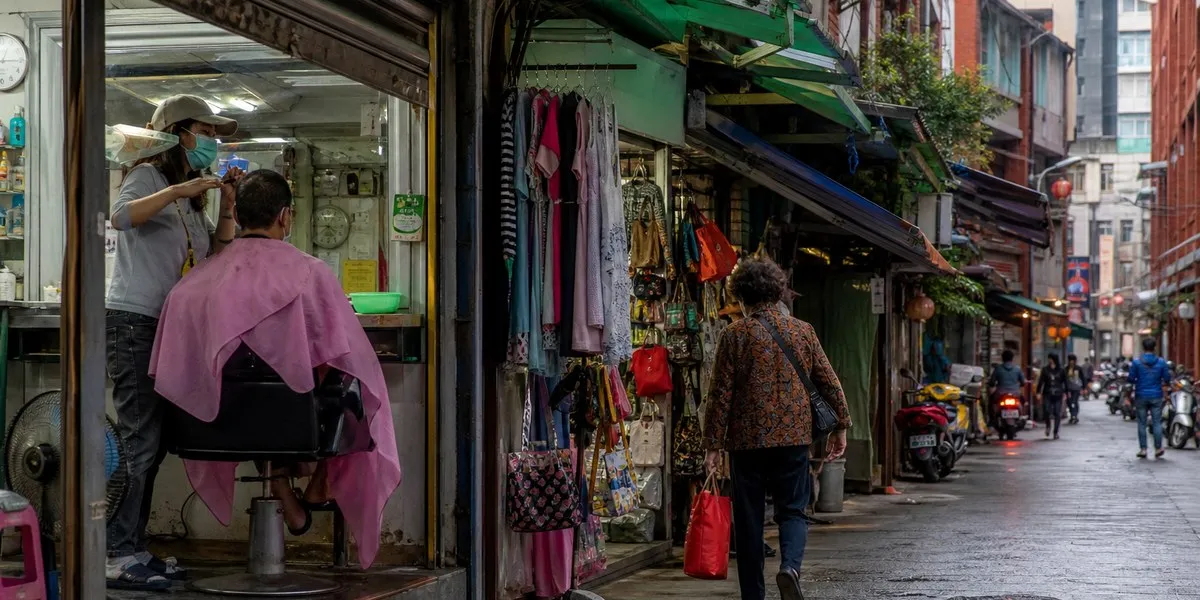
South Korean artist Ho Bin Kim dedicated a new three-channel video work to the little-known history of the Korean community in the port city of Keelung, Taiwan. The central figure of the 13th episode of his documentary series Reality Sandwich was Hwang Tae-im, one of the last Korean residents of Shengli Lane, formerly known as Korean Street, Taipei Times reports.
In 1943, around 3,000 Koreans were registered in Taiwan, including 612 in Keelung, the island’s largest Korean community. After the end of Japanese colonial rule, many Korean families from different parts of Taiwan headed to Keelung port, hoping to return to Korea. Only one ship arrived for the repatriation of civilians, so some people remained in the city. The 1947 register counted 197 Koreans in Keelung — more than half of the 358 recorded across all of Taiwan.
Work in the fishing industry
The Korean community began growing in Keelung during Japanese rule. In 1935, 358 Koreans lived there, more than in Taipei and Kaohsiung. Men mainly worked in fishing, factories, as sailors or itinerant traders. Many women worked in the service sector. After the outbreak of the Second Sino-Japanese War in 1937, some Korean women were forced or deceived into coming to Taiwan to work in the sex industry or as military “comfort women.”
More current news is available on the UA.News Telegram channel Telegram.
After the war, many Koreans who could not leave or chose to stay settled in Shengli Lane and found work in the fishing industry. Researcher Yoshihisa Amae noted that 173 of Keelung’s 197 Korean residents were connected to the Taiwan Fishery Corporation. The company provided stable employment, free housing and opportunities to serve as captains and chief engineers. A Korean elementary school opened for the community in 1949, and Taiwan’s first Korean Christian church was established in Keelung in 1950.
The story of one resident
Hwang Tae-im came to Taiwan in 1971 after getting married. She runs a hair salon, where she also sells homemade kimchi. In the artist’s video work, she talks about her own experience of living between two countries. Hwang retained South Korean citizenship, which, she says, means she does not receive social assistance or benefits for older people in Taiwan; in South Korea, she is considered an overseas Korean and therefore does not receive a pension there either.
Kim spent four months as an artist-in-residence at the Railway Warehouse art space in Hsinchu. The artist described the history of Korean migration to Taiwan as a gap that is rarely discussed in either Korea or Taiwan.


