
Columnist urges Taiwan to prepare resistance networks for possible occupation — Taipei Times
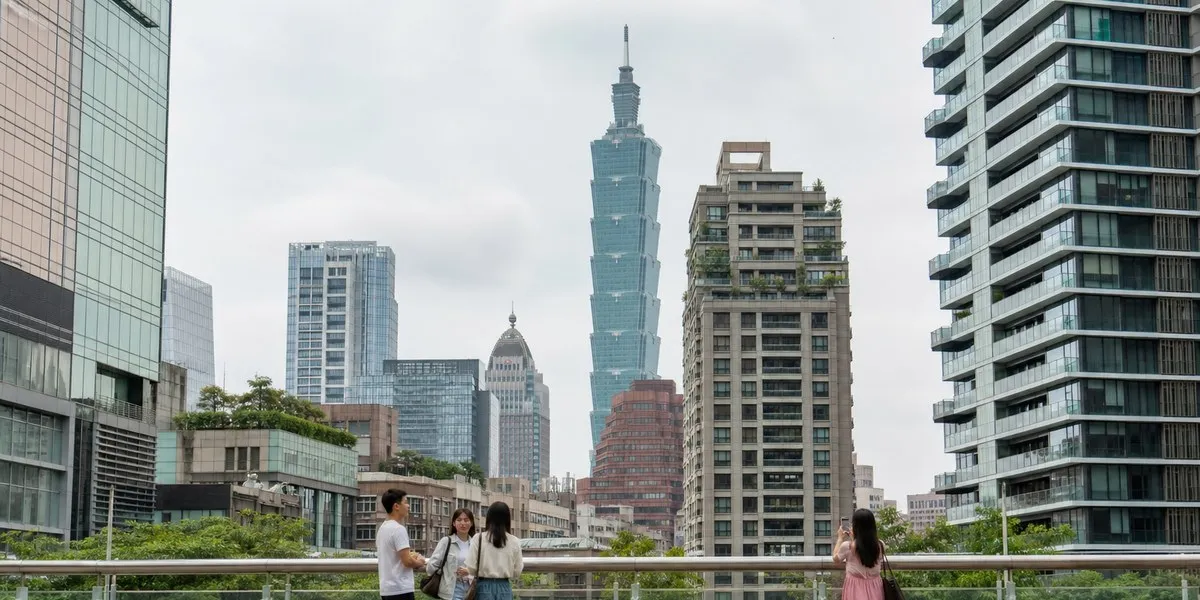
In Taiwan, US irregular warfare expert Gwirmantes Lailari, in a column for Taipei Times, called on the authorities to create a decentralized resistance system during peacetime in case of a possible occupation by the PRC. In his view, preparations should include autonomous communication channels, stocks of food and medicines, backup energy sources, and mechanisms for the continuity of local governance.
Study on occupation models
Lailari refers to the Irregular Warfare Center (IWC) study “China’s Way of Occupation: Implications for Taiwan,” published on March 5, 2026. The work, prepared by Ian K. Gleiman and other authors, analyzes Beijing’s actions in Tibet, Xinjiang, and Hong Kong.
According to Lailari’s account, the study identifies seven directions through which Beijing could consolidate control over seized territories. They include creating conditions for capitulation before an invasion, using legislation to criminalize resistance, erasing local identity, monitoring the population, economic pressure, subordination of state institutions, and a long-term policy of consolidating control.
The author also suggests that after hostilities, control over the population could be exercised not only by the Chinese People’s Liberation Army, but also by the People’s Armed Police, trained in riot suppression and urban operations.
More current news is available on the UA.News Telegram channel Telegram.
Scenarios of pressure on Taiwan
Lailari believes planners should consider not only a naval blockade or a full-scale invasion. He describes a scenario of a strike against the governance system using cyberattacks and electronic warfare assets, after which, in his view, Beijing could attempt to form a controlled administration.
Another scenario proposed by the author envisages the gradual seizure of remote islands, including Kinmen, Matsu, Dongsha, or Taiping. He also allows for a situation in which an invasion destroys central infrastructure but does not enable the PRC to establish full control over the island’s mountainous and other hard-to-reach areas.
Blockade and local preparedness
As Lailari emphasizes, unlike Ukraine, Taiwan has no overland supply routes, and a naval blockade could restrict the delivery of weapons, food, energy, and medical goods. He identifies the island’s dependence on a limited network of underwater fiber-optic cables as a separate risk.
The author proposes expanding President William Lai’s approach to whole-of-society defense resilience into a model of whole-of-society resistance. In his view, Taiwanese authorities should legislatively grant municipalities and civil defense units authority to act autonomously if communication with the central leadership is lost.




