
Swiss glaciers lost 5.5% of their ice volume in 2026 — Asharq Al-Awsat
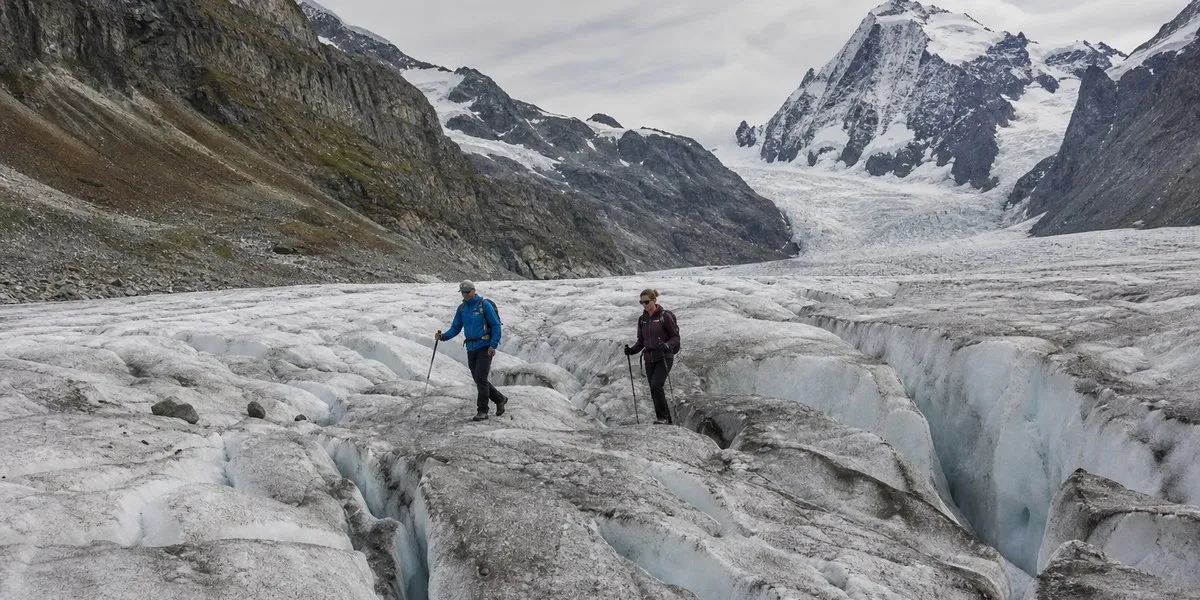
Swiss glaciers lost 5.5% of their volume in 2026 due to heat waves and low winter snowfall. This is the second-largest annual reduction in ice volume on record, Asharq Al-Awsat reports, citing the Swiss glacier monitoring service GLAMOS and the Swiss Academy of Sciences.
Ice losses are accelerating
According to experts, Switzerland's ice volume has decreased by nearly one-fifth over the past five years. GLAMOS head Matthias Huss said that current warming is 100% linked to human-caused climate change. According to him, warming would not be occurring without human emissions and the use of fossil fuels.
The record reduction of Swiss glaciers was recorded in 2022. At that time, melting was accelerated by summer heat, a lack of winter snow, and reddish dust from the Sahara that settled on the ice surface, darkened it, and increased heat absorption.
Huss explained that winter snow cover protects exposed ice from melting and also contributes to the formation of new ice at high altitudes. The longer snow remains on glaciers, the longer old ice avoids losses.
More current news is available on the UA.News Telegram channel Telegram.
Impact on water resources
From July to September, the volume of ice lost through melting amounted to about 2.2 trillion litres in water equivalent. This is approximately four times Switzerland's annual water consumption by its population of about 9.1 million people.
On average, the thickness of individual glaciers decreased by 2.5–4 metres, and by up to 10 metres in the tongue sections of some of them. The Allalin, Clariden, Rhône and Aletsch glaciers, the largest in the Alps, experienced record melting for each of them this year.
Switzerland gets more than half of its electricity from hydropower and is an important source of water for the Danube, Po, Rhine and Rhône rivers. Specialists are also studying water runoff and cracks in glaciers, including by adding red dye to streams to track water movement.




