
Lukashenko announced that his dream of acquiring Russian "Iskander" missiles had come true
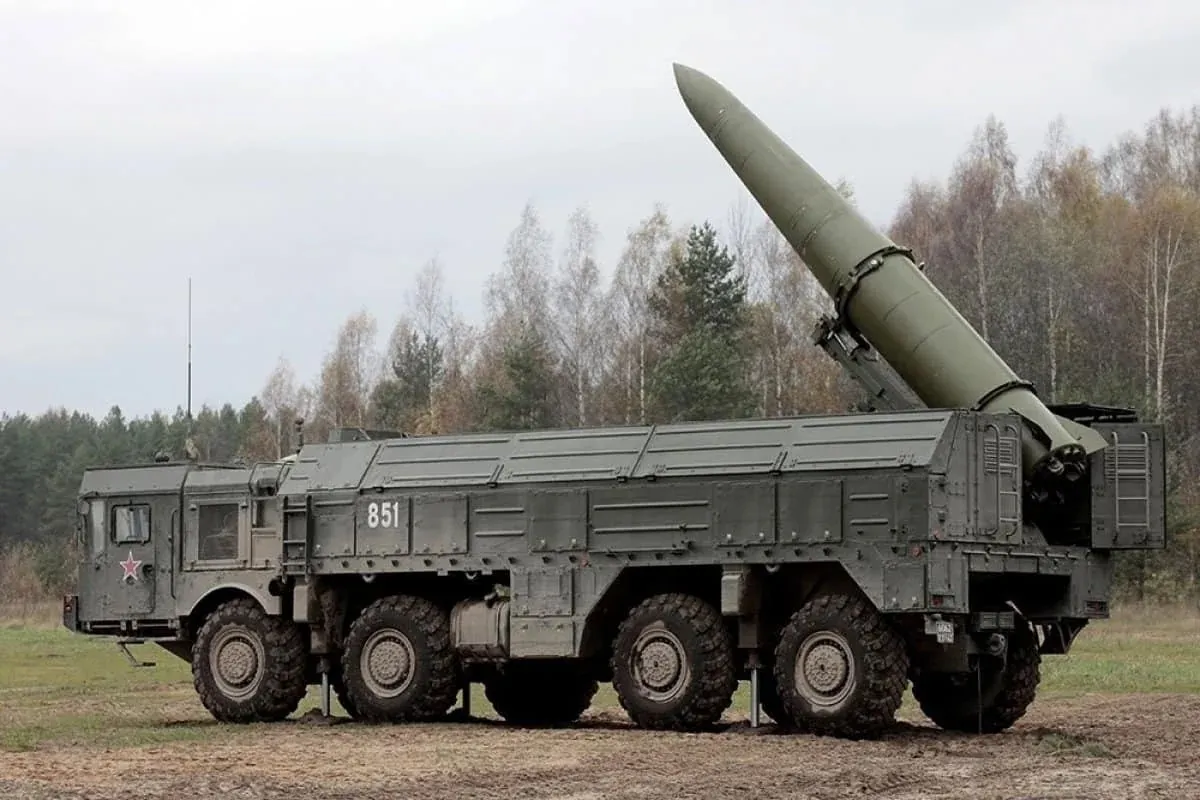
During a visit to a missile brigade of the Belarusian Armed Forces in the Osipovichi District of the Mogilev Region, Belarus’s self-proclaimed president, Alexander Lukashenko, expressed his admiration for Russia’s Iskander operational-tactical missile systems.
This was reported on Thursday, May 21, by pro-government Belarusian Telegram channels and the Belarusian Ministry of Defense.
Addressing the servicemen, the Belarusian dictator emphasized that he had long dreamed of having such combat vehicles at the republic’s disposal, and that today the country already possesses several such systems, which he called “wonderful weapons.”
During the trip, the head of state was also shown an Iskander-M launcher and briefed on a simulated missile strike conducted via electronic launch.
This visit took place against the backdrop of the start of large-scale military exercises conducted jointly with the Russian Federation. Earlier, on May 18, the Belarusian Ministry of Defense announced the start of joint training exercises for units on the combat use of non-strategic nuclear weapons. Kremlin spokesperson Dmitry Peskov called these actions a clear signal to NATO countries. At the same time, the Russian Ministry of Defense officially announced the completion of the delivery of nuclear munitions directly to field storage sites of the aforementioned missile brigade on Belarusian territory as part of the current exercises.
Russia announced the delivery of nuclear munitions to Belarus.
The Center for Strategic and Political Studies identified three main objectives of the Russian-Belarusian nuclear exercises
The Ministry of Defense of the Russian Federation officially announced the start of large-scale military exercises involving strategic nuclear forces, which will take place from May 19 to 21, 2026.
Ukraine reacted sharply to the joint nuclear exercises of Russia and Belarus, stating that they violate international treaties and pose a threat to global security. The Ministry of Foreign Affairs emphasized that Moscow is effectively turning Belarus into a nuclear springboard near NATO’s borders.


