
The IAEA has warned of an increased nuclear risk from Iran
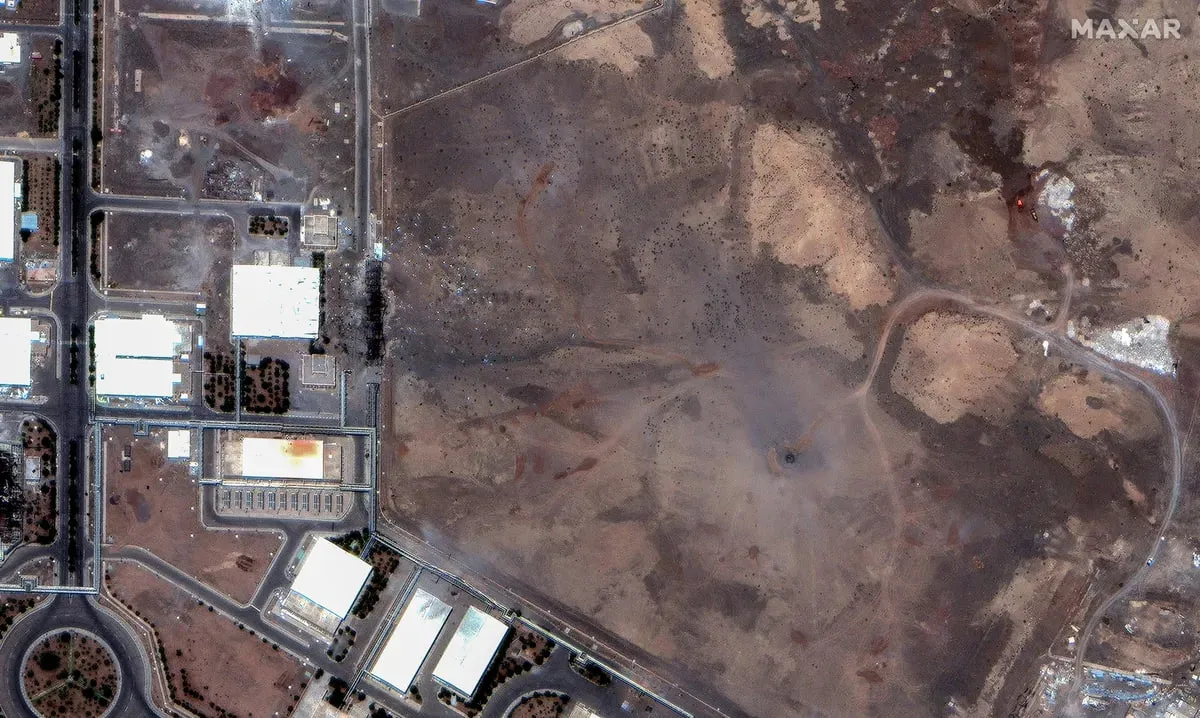
The International Atomic Energy Agency (IAEA) has stated that the risk that Iran may be secretly developing nuclear weapons is now higher than it was a year ago. The agency notes that the situation has become more complicated following the start of U.S. and Israeli attacks against the Islamic Republic.
According to the document, the International Atomic Energy Agency has warned member states of new nuclear proliferation risks associated with Iran’s large uranium stockpiles, which are nearly at weapons-grade levels. Prior to the U.S. airstrike on Iran in June 2025, which sparked a 12-day war, this material was inspected weekly by the IAEA to ensure it was not being used for weapons production. After the war, Iran imposed new restrictions. IAEA inspectors have not yet returned to the damaged facilities at Fordow, Isfahan, and Natanz, where 8,599.6 kilograms of low-enriched material and 440.9 kilograms of highly enriched uranium were last detected.
Two senior diplomats, speaking on condition of anonymity, said the IAEA report underscores how the U.S.-Israeli war against Iran has created new nuclear dilemmas that did not exist before. The longer the material remains outside IAEA oversight, the higher the risk that it could be used for non-peaceful purposes, they noted.
Currently, the IAEA “cannot draw any conclusions regarding this nuclear material,” according to a 119-page restricted-access document circulated last month in Vienna. “This raises proliferation concerns, as this nuclear material, which the IAEA has been unable to verify, contains a large amount of highly enriched uranium.”
Eliminating Iran’s nuclear ambitions has been a key goal of U.S. President Donald Trump. Although the White House claims that Iran’s nuclear program has been dismantled, it is seeking to negotiate access to the uranium. Trump has alternately proposed that the material be transported out of Iran or destroyed within the country under IAEA supervision.
However, officials are increasingly concerned that the U.S. administration’s failure to involve the IAEA in the latest rounds of negotiations could create new risks.
“We are not a party to these negotiations. We participated until the last round, which concluded in February,” IAEA Director General Rafael Grossi said in an interview with Al Jazeera on Tuesday. “What cannot be verified will lead to a bad deal.”
Bloomberg reported this after reviewing a confidential document circulated by the IAEA.
IAEA experts documented damage to the turbine hall building at the Zaporizhzhia Nuclear Power Plant.
The Ukrainian Armed Forces emphasized that Ukraine did not strike the Zaporizhzhia Nuclear Power Plant. According to them, the reports circulated by the Russian side are part of an information campaign, while Russia itself continues to use the occupied ZNPP as a tool for nuclear blackmail and a military facility.
The Russian invaders’ claims that the Ukrainian military allegedly struck the territory of the temporarily occupied Zaporizhzhia Nuclear Power Plant are yet another cheap information provocation. Ukraine strictly adheres to the norms of international law and does not conduct any combat operations on the territory of this civilian nuclear facility.


