
Poland's Independence March adopted a slogan about Poles and migrants
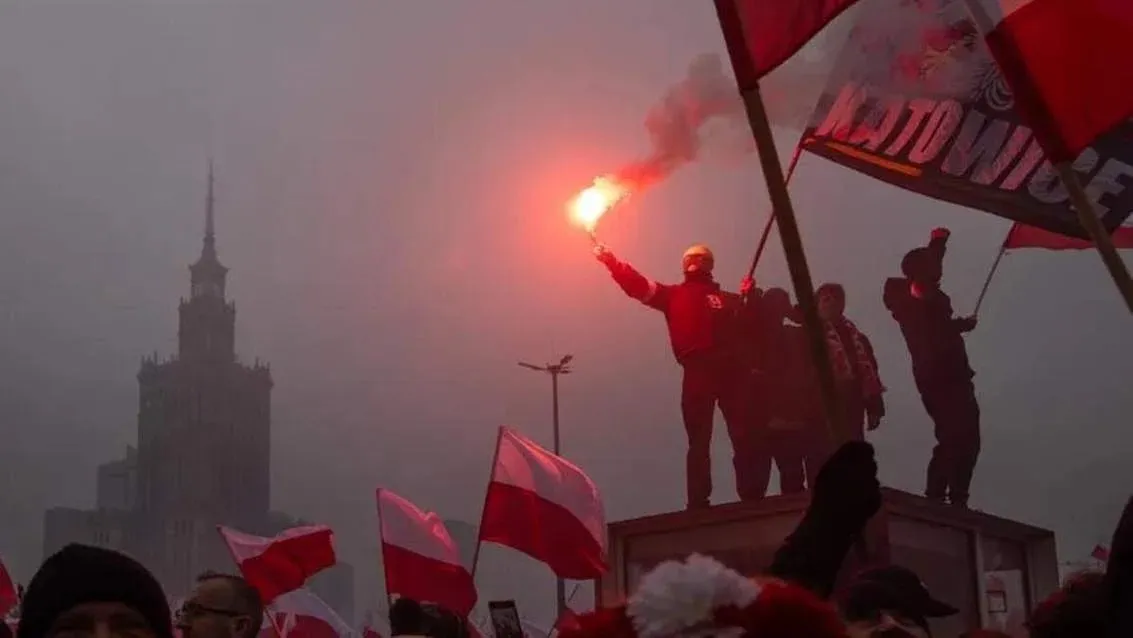
On November 11, Warsaw will host the annual Independence March, whose organizers have chosen the slogan “A Pole in Poland—the Master” this year. It has already sparked controversy, as a Polish court in Zamość recently found an activist from “All-Polish Youth” guilty specifically for using this phrase. The march organizers disagree with the ruling and link the slogan to issues of migration, national sovereignty, and the role of Poles in their own country.
Poland has announced the slogan for this year’s Independence March. On November 11, participants in the traditional event will march through the streets of Warsaw under the slogan “A Pole in Poland—the master of his own house.” This was reported by the Independence March Association. Its chairman, Bartosz Malewski, stated that the organizers want to discuss Poland’s political and economic independence, as well as who should make decisions regarding the country’s future. “We are talking about autonomy in the economy and politics, and about sovereignty both within and outside the European Union. It is the Poles who must retain their status as masters in Poland,” Malevsky said.
However, the choice of this slogan has another context. In July 2026, a court in Zamość found 21-year-old Olivia Olejniczak, an activist with “All-Polish Youth,” guilty. The case concerned her speech at an anti-immigration rally that took place in the city in July 2025. The court ruled that some of her statements contained incitement to hatred on national, racial, and religious grounds. Among other things, the court highlighted the phrase “A Pole in Poland is the master” and the call “Down with immigration.” Olejnichak was fined 3,000 zlotys. However, the court’s decision is not final—the defense has filed an appeal.
That is precisely why the organizers of the Independence March decided to include this phrase in the title of this year’s event. They believe the court’s decision is an example of an excessive restriction on freedom of speech. Malevsky stated that he disagrees with this approach. “We have reached a time when freedom of speech is being restricted. We do not agree that Poles cannot speak about what their country should be like,” he said, explaining the organizers’ position.
Organizers Also Mention Ukrainians
During the presentation of this year’s march, the organizers spoke specifically about migration. In this context, they mentioned not only migrants from countries outside Europe but also citizens of Ukraine. Malevsky stated that he considers migration to be one of the issues affecting Poland’s security and future. “I’m talking about citizens of exotic countries, but also about our neighbors. I mean Ukrainians,” he said.
Mateusz Marzoch, head of security for the Independence March, also used harsh language regarding foreigners. “A Pole is the master in Poland, not a Ukrainian or an Indian. We cannot allow other nations to dominate our culture and society. We are the ones who must be the masters here, because this is our home. Everyone else who comes here is a guest,” Marzok stated.
The organizers emphasize, however, that they consider Poland an open and hospitable country. At the same time, they advocate for stricter control over migration and oppose what they see as foreigners exerting excessive influence on the country’s life.
Organizers Do Not Rule Out Poland Leaving the EU
Another topic raised by Malevsky was Poland’s relationship with the European Union. He stated that, for the organizers, the issue of national sovereignty is more important than the nature of Poland’s relationship with the EU. According to him, Poland can cooperate with other countries but should not give up the ability to make key decisions independently.
“We can talk to other nations, we can be hospitable, but we will not allow others to determine the color of the walls in our home,” Malevsky said. Thus, the organizers plan to use this year’s march not only as a traditional event marking Poland’s Independence Day. At the heart of their statements are migration, national identity, sovereignty, and Poland’s role in the European Union.
There were plans to hold the march in Lviv as well
Separately, in Poland this year, there were discussions about holding the Independence March not only in Warsaw but also in Lviv. The idea was proposed by 21 Polish lawmakers from right-wing political parties. Among them were representatives of “Law and Justice,” “Confederation,” “Confederation of the Polish Crown,” and “Development Plus.” They asked the Polish government whether it was prepared to approach the Ukrainian authorities and the city of Lviv regarding the organization of such an event.
The initiative sparked debate in Poland. In particular, Sejm Vice Marshal Piotr Zgorzelski stated that holding such an event in Lviv could be exploited by Russian propaganda. At the same time, the main Independence March is traditionally held in Warsaw on November 11. It is held on Poland’s Independence Day. The march first took place in 2010 at the initiative of nationalist circles and later became one of the country’s largest mass gatherings leading up to the national holiday.
Every year, tens of thousands of people take to the streets of Warsaw. This year, the march has already drawn particular attention due to its slogan, which is linked to the issue of hate speech and, at the same time, reflects the organizers’ stance on migration, national policy, and Poland’s sovereignty. A Polish publication reports on this.




