
The Matterhorn was almost completely free of snow at the end of September
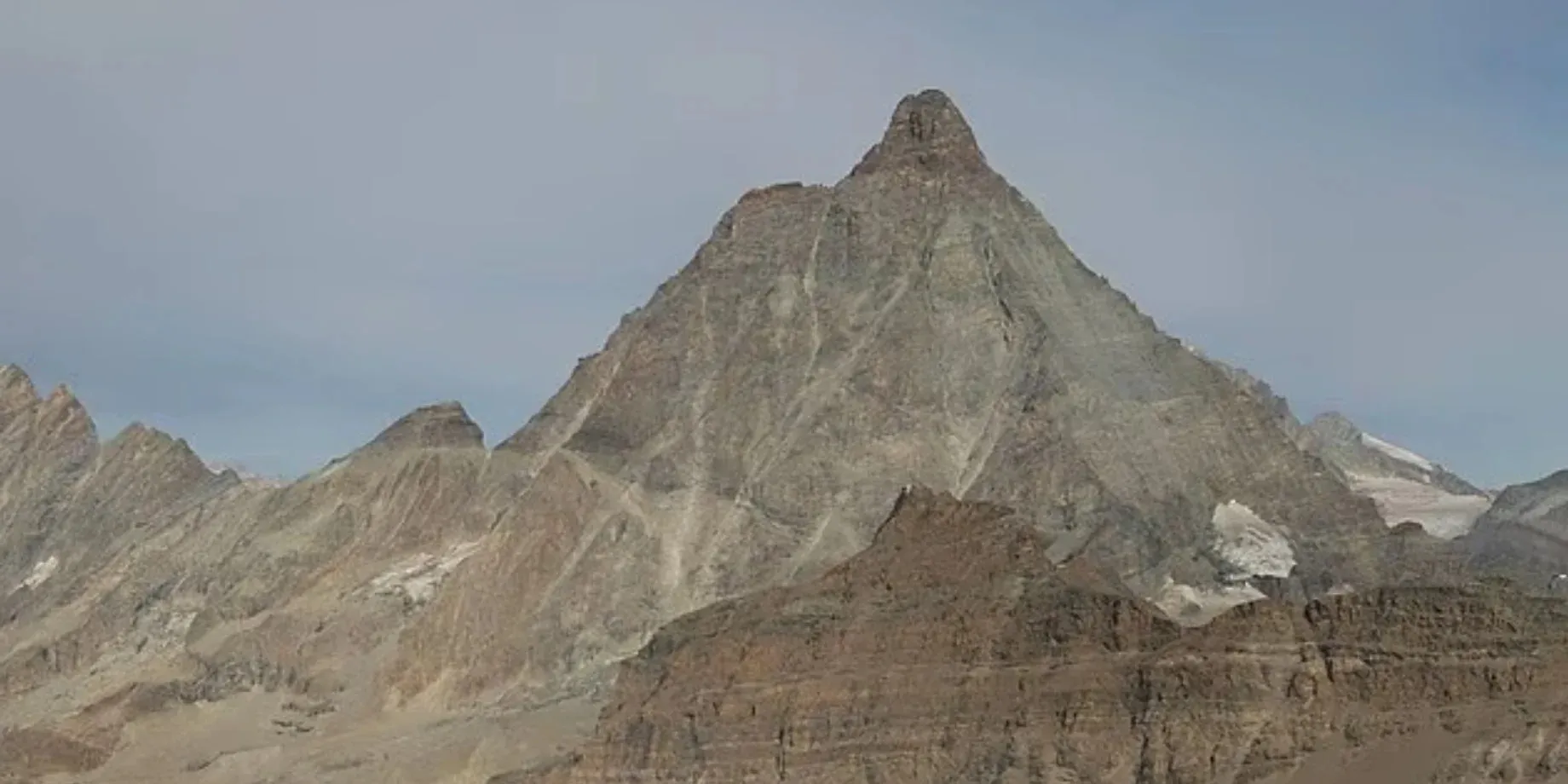
The famous Matterhorn, located on the border between Switzerland and Italy, was almost completely snow-free at the end of September. A photo of the peak, taken on September 27, quickly went viral, as this view of the mountain is unusual for this time of year. This summer was the hottest in Swiss history, and at the end of September, the country once again experienced unusually warm weather.
The famous Matterhorn, which stands on the border between Switzerland and Italy, surprised observers with its appearance in late September. In a photo from September 27, the mountain is almost completely devoid of snow, which usually remains on its upper slopes even during the warmer months. The photo quickly went viral on social media. A tourist at the Cervino Ski Paradise resort posted it with the caption: “No, this isn’t some mountain in the desert. This is the Matterhorn on September 27, 2026.”
The unusual appearance of the peak is attributed to the very warm and dry period Europe has experienced this year. In late September, temperature records were once again broken in many parts of Switzerland. For example, in Basel on September 27, the temperature rose to 30.1°C. The Swiss Meteorological Service called this the latest day on record with a temperature of 30°C north of the Alps.
This was preceded by an exceptionally hot summer. According to MeteoSwiss, the summer of 2026 was the warmest on record in Switzerland. The average temperature from June through August was 17.2°C—0.4°C higher than the previous record set in 2003. The heat also affected the high mountains. Scientists have long been monitoring how global warming is raising the altitude at which the air temperature drops to zero. The higher this threshold, the less snow can accumulate in the mountains.
For example, in June 2025, the zero isotherm in Switzerland rose above 5,000 meters for the first time. The Swiss Institute for Snow and Avalanche Research also reported that, due to high temperatures that summer, snow melted rapidly even at high altitudes. This is significant for the Matterhorn itself. Its summit is 4,478 meters high, so during very warm periods, the snow there can melt quickly. In September 2026, the warm weather persisted for an unusually long time, and the cold season in the high mountains had not yet begun in earnest.
At the same time, the lack of snow on the Matterhorn is not just an unusual sight. High temperatures are changing conditions in the mountains and can create additional risks for climbers. Dangerous avalanches have already been recorded in the Alps this summer. In August, a major rockfall occurred on the Matterhorn at an altitude of about 3,900 meters. Following this, mountain guides in Breuil-Cervinia, Italy, temporarily suspended climbs with clients. They cited unstable conditions and the risk of new rockfalls as the reason.
Similar problems arose in the neighboring Mont Blanc massif. Due to the heat and drought, rockfalls became more frequent there, and some popular routes and mountain huts were temporarily closed. The French Federation of Mountaineering Clubs directly linked the increased danger to high temperatures, which weaken the bond between rock layers. Heat affects the mountains not only by melting snow. At high altitudes, it also causes frozen rock—which has long held the slopes in place—to thaw. When these rocks become unstable, the risk of landslides and rockfalls increases. It is precisely these processes that have been observed this year in various regions of the Alps.
This is no longer an isolated incident
The Matterhorn has become just one of the most visible symbols of change in the high mountains this year. For several years now, scientists have been recording a reduction in snow cover and the melting of glaciers in the Alps. According to data from the Swiss SLF, very little snow fell in some regions during the winter of 2024–2025. By the end of April, there was about 13% less snow on the glaciers than the average for 2010–2020. After that, a severe heatwave in the summer accelerated the melting.
Similar changes are evident outside Europe as well. For example, in Japan, Mount Fuji remained snow-free for an unusually long time in 2024. The Japan Meteorological Agency recorded weather data at the summit even in early November, whereas snow usually appears there much earlier. At the same time, it’s important not to draw conclusions based on just one photo. Snow on high peaks can come and go depending on the weather, wind, and amount of precipitation. However, this year the Matterhorn looks particularly unusual against the backdrop of a record-breaking warm summer in Switzerland and unseasonably warm weather in late September.
For tourists and mountaineers, this has very practical implications. Changes in snow cover, melting ice, and unstable rock can make familiar routes significantly more dangerous. That is why this year, mountain rescue services and guides have repeatedly urged people to check conditions before climbing and not to set out on routes during hazardous weather. The Matterhorn, however, remains the same mountain, but its appearance in September shows just how unusually warm 2026 has been for the Alps. The peak, which millions of people recognize from Toblerone packaging, is greeting fall this time with almost no snow.




