
Participants in the Mecca Pact plan to rapidly deploy forces in Saudi Arabia — The National
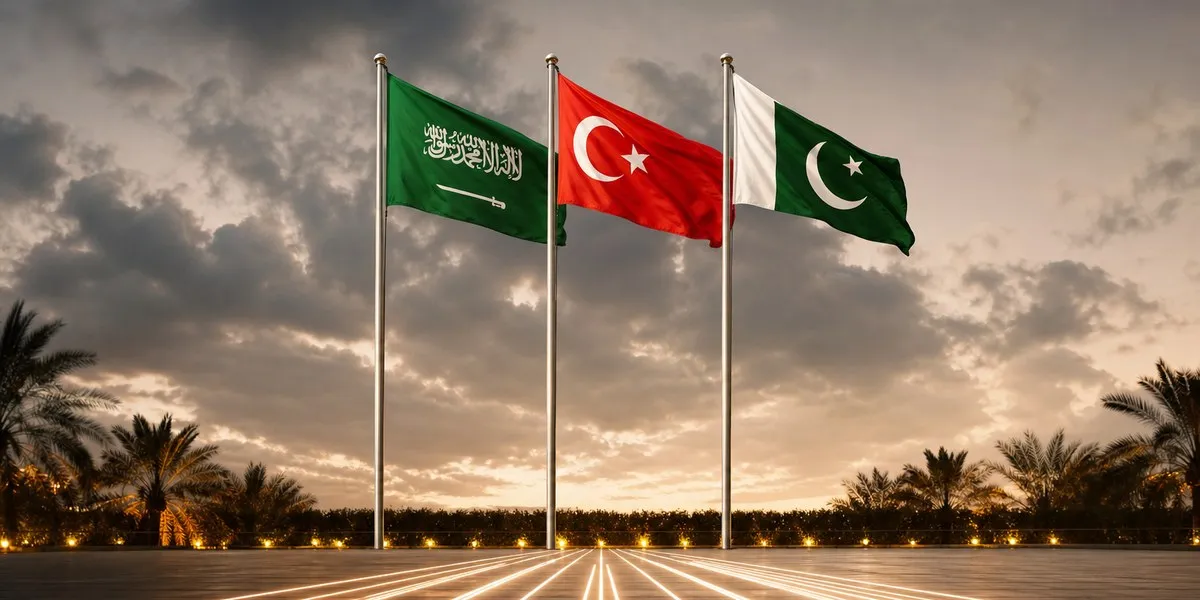
The Strategic Political and Defense Committee of the Mecca Joint Defense Pact in Riyadh decided to immediately move to the practical implementation of collective defense commitments. The participants agreed to take measures to provide Saudi Arabia with the agreed military forces and capabilities and ensure their rapid deployment in the kingdom, The National reports.
Meeting in Riyadh
The talks were attended by the defense and foreign ministers, as well as the armed forces chiefs of Saudi Arabia, Türkiye and Pakistan, Türkiye's Foreign Ministry said. According to the ministry, the participants discussed the stage they had reached in institutionalizing the alliance. The committee's first meeting was held in Istanbul in August.
Saudi officials and state media did not immediately confirm information about the meeting. Pakistan had previously said that its representatives would hold talks in the kingdom's capital with counterparts from Saudi Arabia.
A Pakistani official informed about the course of the meeting told the publication that the main topic was attacks by Yemen's Houthis on Saudi Arabia. According to the source, the group continues to launch ballistic missiles and drones at the kingdom, including attacks on energy infrastructure.
More current news is available on the UA.News Telegram channel Telegram.
Terms of the defense pact
Saudi Arabia, Türkiye and Pakistan signed the Mecca Joint Defense Agreement in August, seeking to strengthen regional security. The full text of the document was not made public. In a joint statement at the signing, the parties said the agreement was intended to strengthen collective deterrence: an attack on one member country would be considered an attack on all.
Saudi Arabia supports Yemen's internationally recognized government, which is fighting the Houthis. Rashad al-Alimi, head of Yemen's Presidential Leadership Council, announced the start of operations to retake territories seized by the group, including the Bab el-Mandeb Strait and approximately 150 kilometers of the Red Sea coast.
Final ratification of the pact requires approval by the parliaments of Türkiye and Pakistan. Ismail Numan Telci, director of the Center for Gulf Studies and Global Policies at Ibn Haldun University, suggested that the Turkish parliament could quickly ratify the agreement. According to him, before ratification Türkiye can provide bilateral defense assistance, including weapons or technical support.




