
South African cities spend hundreds of millions of rand on water tankers — Daily Maverick
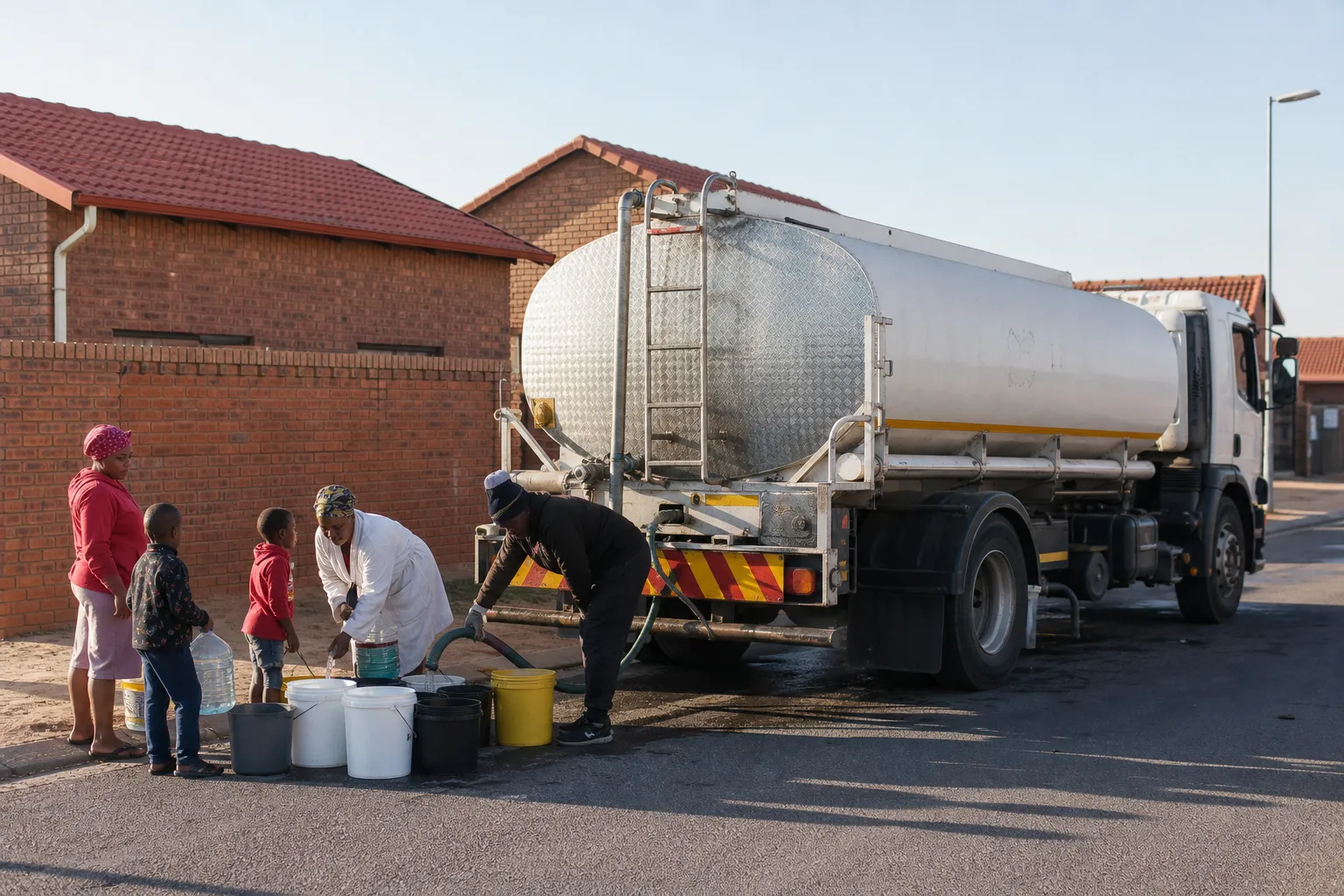
In South Africa, water deliveries by tanker trucks, which were meant to be a temporary emergency measure, are increasingly becoming a permanent response to problems with municipal infrastructure. As Daily Maverick writes, this calls into question municipalities’ ability to provide residents with stable access to water and sanitation.
Spending on emergency water supply
According to municipal data cited by the publication, Johannesburg spent about 650 million rand on water tankers over the past five financial years. Tshwane spent 621 million rand on such services in the 2024/25 financial year, after spending 322.95 million rand in 2023/24.
The publication notes that there is still no comprehensive nationwide assessment of spending on water tankers. The article’s author believes that tankers may be necessary when a community suddenly loses its water supply, but their regular use for months or years indicates not a short-term emergency, but a failure to restore a basic service.
Contracts and the condition of networks
The publication raises questions about the transparency of water delivery contracts: who receives the orders, how prices are set, how often agreements are renewed, and whether actual deliveries and water quality are monitored. The author stresses that these questions are not an accusation against all contractors or officials, but they require answers because of the substantial budget expenditures involved.
More current news is available on the UA.News Telegram channel Telegram.
In some communities, reports and claims cited by the publication also raise questions about water quality and possible cases in which operators charge residents even though municipalities already pay for the delivery. The author notes that such claims should be investigated.
Water action plan
The national water action plan, published in July, provides for short-, medium-, and long-term measures, including infrastructure investment, stronger municipal accountability, regulatory changes, and efforts to combat corruption and crime in the water sector. In the author’s view, implementing the plan requires measurable accountability, open procurement, independent water-quality monitoring, and a strategy to gradually phase out the permanent use of water tankers.
In Johannesburg, according to the publication, significant volumes of water are lost through ageing networks and burst pipes. Wealthier residents are increasingly installing boreholes and private systems, while poorer households remain dependent on the municipal network and emergency water deliveries.


