
In the Tyumen region, farmers are being forced to send their pigs to slaughter
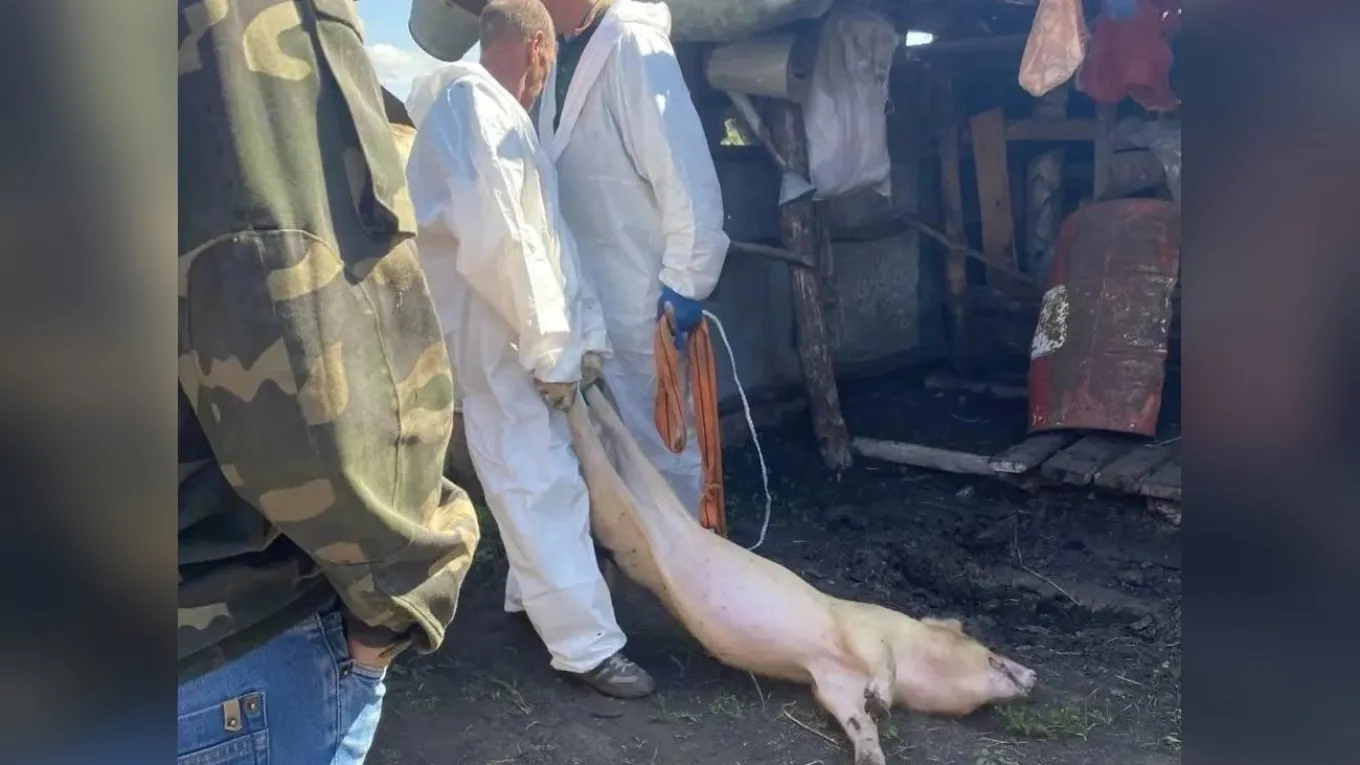
In several districts of Russia’s Tyumen Region, authorities have begun confiscating domestic pigs from local residents and sending them to slaughter. Authorities cite the risk of a dangerous disease spreading as the reason, while local residents and the Communist Party of the Russian Federation (CPRF) link the measures to a possible outbreak of African swine fever. Some farmers claim that the animals are being culled even when they appear healthy on the outside.
The regional branch of the Communist Party of the Russian Federation (KPRF) reported on the mass confiscation of animals. According to the Communists, domestic pigs have begun to be confiscated from residents of the Abatsky, Aromashevsky, Vikulovsky, and Yurginsky districts of the Tyumen region.
The animals are being sent for slaughter and disposal. Local residents complain that they do not always receive compensation for the culled livestock. “History is repeating itself: pigs are being killed and burned, but not everyone is being paid compensation. Residents are calling, but they no longer trust the authorities,” the Communist Party of the Russian Federation (CPRF) stated. The authorities do not specify the exact name of the disease in the reports cited by the Communists. The CPRF speculates that it is African swine fever. According to the “Agrarian Council,” some local residents and agricultural experts share this view.
The culling of animals began back in August
The first reports of pig culling in the Tyumen Region appeared as early as August. At that time, the measures concerned the Golishmanovsky District. According to the CPRF, veterinarians cited a decree by Tyumen Region Governor Alexander Moore. However, the name of the disease that prompted these restrictions was allegedly not explained to the public. The Communists claim that the carcasses of culled pigs have been lying in one of the fields in the Golishmanovsky District for about a week and a half.
According to them, the animals are not being properly incinerated, and their carcasses are being scattered by wild animals and birds. Representatives of the CPRF also state that the pigs remaining on the farms show no obvious signs of disease. The party reported that, due to the situation, it has sent an appeal to Alexander Bastrykin, chairman of the Investigative Committee of Russia. Meanwhile, in the Yurginsky District, according to the Communists, they have succeeded in halting the culling of animals.
Farmers Complain About Lack of Documentation
The situation with the seizure of livestock is causing discontent in other regions of Siberia as well. Earlier, mass seizures of cows, goats, sheep, and pigs from farmers began in the Irkutsk region. There, authorities attribute their actions to an outbreak of nodular dermatitis among cattle. A state of emergency has been declared in part of the Irkutsk region.
Regional officials stated that the villages of Butyrki and Koty were within the infected zone. As of September 5, eight epizootic outbreaks had been identified there. Authorities cited “the illegal importation of small ruminants” as the cause of these outbreaks. Local residents reported that an animal burial site had been set up on the outskirts of Butyrki. According to them, about 100 head of cattle had already been incinerated there.
Farmers claim that they were not shown the relevant documents before the animals were seized. They also stated that some of the animals were not tested, and even livestock that appeared healthy were sent for disposal. The Russian authorities’ official position regarding all these allegations and the legality of specific cases of animal confiscation requires separate verification.
State of Emergency Declared in Tyumen Region
Due to a suspected outbreak of African swine fever in the Tyumen region, a state of emergency has been declared in the Uporovsky, Ishimsky, Omutinsky, and Yurginsky districts. Prior to this, a quarantine had also been declared in the Yalutorovsky district.
African swine fever is a viral disease that affects domestic and wild pigs. The disease poses no danger to humans, but it can have serious consequences for the pig industry. If an infection is confirmed, authorities may impose quarantine restrictions, control the movement of animals, and take measures to eliminate disease outbreaks.
This is how Russian authorities explain the removal and destruction of animals in the affected areas. At the same time, reports of specific cases where apparently healthy pigs were slaughtered without testing remain a subject of controversy among farmers, local activists, and officials.


