
Oil surges above $110, stocks fall — how the Iran conflict is shaking global markets
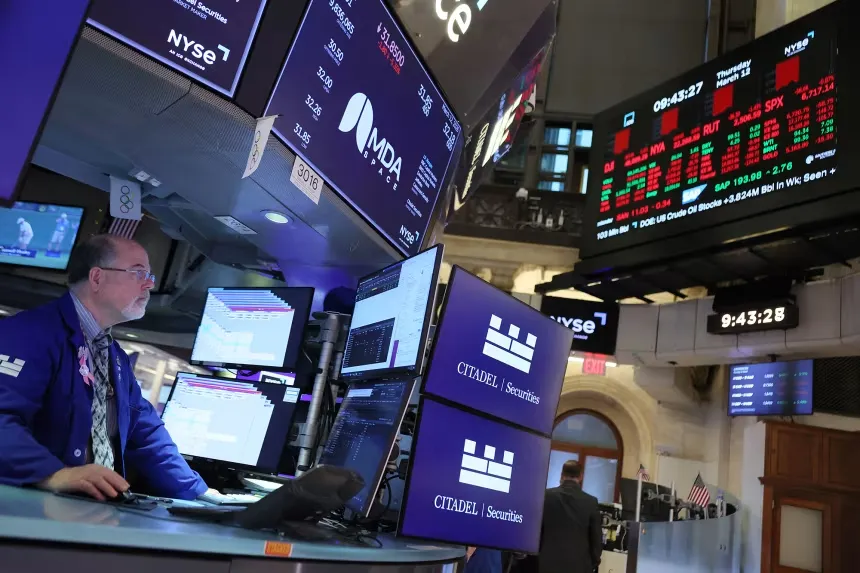
The Iran conflict has dealt a serious blow to global financial markets. Oil prices have surged, while stocks and bonds have declined. Investors are growing increasingly nervous, market volatility is rising, and the outlook remains highly uncertain, according to CNN.
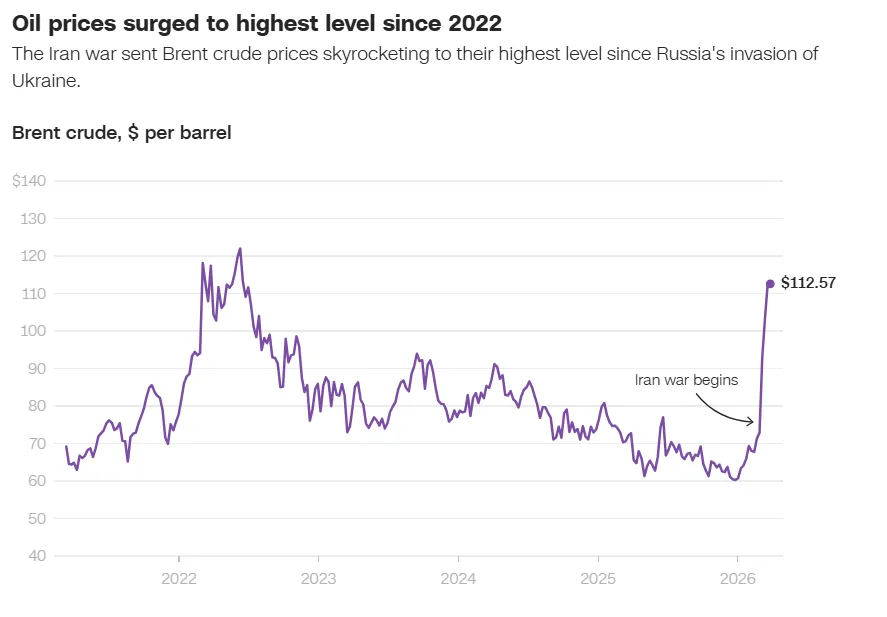
The oil market has been hit the hardest. Prices jumped sharply due to supply concerns and rising tensions in the region. One of the key factors is disruption in the Strait of Hormuz — a critical route for global oil shipments.
Benchmark Brent crude rose above $112 per barrel, its highest level since 2022. For comparison, it was trading at around $73 before the escalation. Markets are reacting not only to supply risks but also to uncertainty, as no one knows how long the conflict will last.
Meanwhile, stock markets are falling. Major US indices — the Dow Jones Industrial Average, S&P 500, and Nasdaq Composite — are on track for their worst month in a year.
The Dow has dropped about 10% from its record high in February, entering what is known as correction territory. The Nasdaq has seen similar declines, while the S&P 500 is down nearly 8% from its peak.
Analysts say markets are highly volatile. “The conflict has had a significant impact. The market has become dynamic and unpredictable,” said Ed Egilinsky, managing director at Direxion. He added: “Investors should prepare for further volatility. Prices could move in either direction until there is more clarity.”
Another key shift is in the bond market. US government bonds have fallen this month, pushing yields higher. This suggests that investors are selling off bonds and anticipating higher inflation.
The yield on 10-year US Treasuries rose to 4.48%, its highest level since July. It later eased slightly but remained elevated.
Expectations for Federal Reserve policy have also changed. Earlier this year, markets were pricing in two rate cuts, but the outlook has shifted. Investors are no longer certain that rates will be reduced at all, and some are even considering the possibility of further hikes.
“That is what is currently worrying bond investors,” said Robert Tipp, head of global bonds at PGIM. “Markets are beginning to doubt that rates will be cut and are even thinking about potential increases.”
Overall, global markets are in a state of turbulence. As long as the conflict continues and uncertainty persists, investors are likely to remain cautious and volatility may intensify.
Israeli Air Force fighter jets carried out a series of overnight airstrikes on several Iranian weapons production facilities in Tehran.
Earlier, Israeli Defense Minister Yoav Gallant warned that Israel’s strikes on Iran would intensify and expand to new targets. This comes in response to continued Iranian missile attacks on Israeli civilians. Authorities say Iran will “pay a high and increasing price” for these actions.
Israel has also killed Alireza Tangsiri, commander of the naval forces of Iran’s Islamic Revolutionary Guard Corps. According to media reports, he was involved in plans to close the Strait of Hormuz, one of the key maritime routes for global trade.


