
The world's largest steam locomotive has set out on a grand journey across the United States
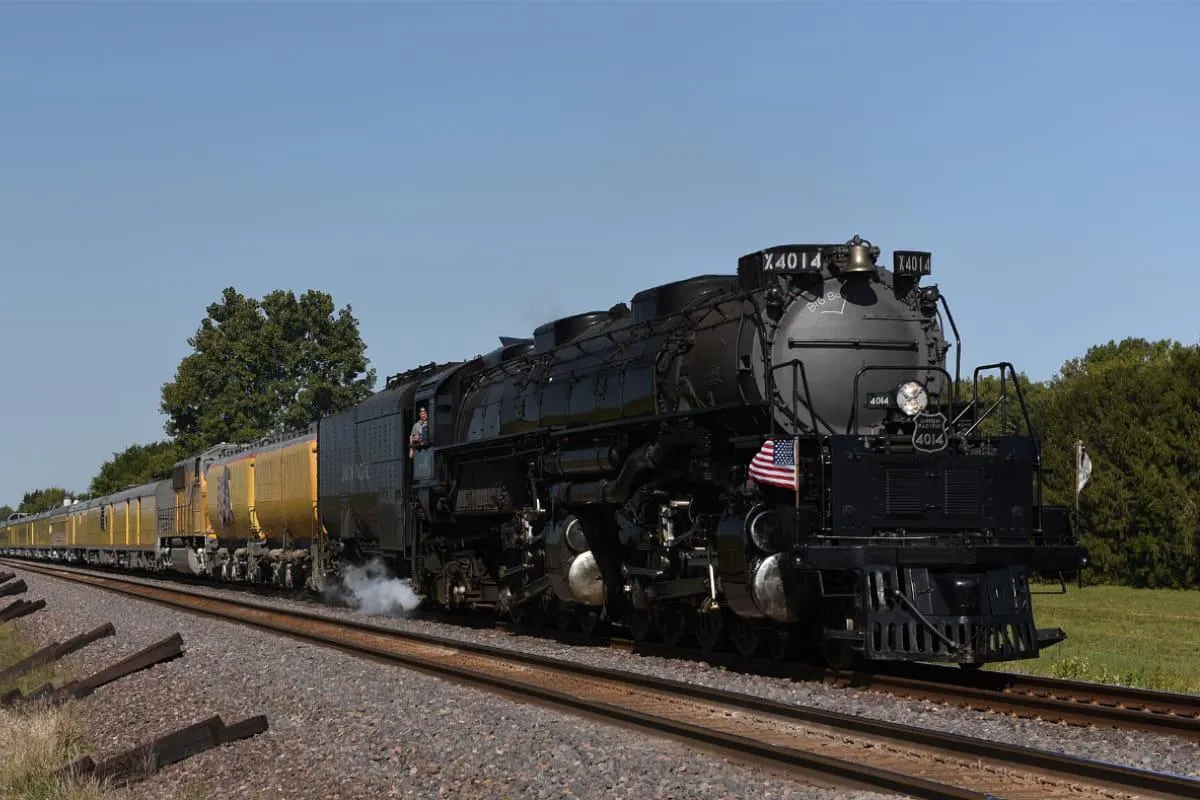
The world’s largest operating steam locomotive, Big Boy No. 4014, has set out on a major journey across the United States. The legendary locomotive will pass through dozens of cities, and its tour is dedicated to the 250th anniversary of the United States.
In every city, thousands of people turn out to greet the giant. For many, this is a unique opportunity to see in person a machine that has long been a symbol of American railroad history.
The world’s largest operating steam locomotive, the Big Boy No. 4014, has once again taken to the tracks and set out on a journey across the United States, according to Smithsonian Magazine. This locomotive is impressive in size. It is 41 meters long and weighs about 544 metric tons.
In early July, the Big Boy passed through Valley Forge National Historical Park in Pennsylvania. The appearance of the legendary steam locomotive was a major event—people flocked to the platforms and along the tracks to see it with their own eyes.
One eyewitness shared his impressions. “It was amazing. When it whistled right next to us, it felt like the sound was passing right through you,” he said. This year’s journey is dedicated to the 250th anniversary of the United States.
On July 4 and 5, the locomotive stopped in Philadelphia before continuing its journey across the country. The route passes through the states of Ohio, Indiana, Illinois, Missouri, Kansas, and Colorado. At the end of July, the Big Boy is scheduled to return to its permanent home in Wyoming. At the controls of this legendary locomotive is engineer Ed Dickens, senior manager of Union Pacific’s historic division.
He explains that operating such a locomotive is nothing like driving modern trains. “Everything here is controlled manually; there’s nothing automatic. Every sound, every movement is controlled by human hands. It’s just 1940s technology—very pure in its own way,” said Dickens. The crew’s job is not easy.While the train is moving, the temperature near the firebox rises to extremely high levels, so the engineers wear protective goggles and earplugs.
Because of the intense noise, they can barely talk to each other and communicate mostly through gestures. The Big Boy’s story began over 80 years ago. Union Pacific ordered a series of 25 such locomotives, which were manufactured by the American Locomotive Company between 1941 and 1944.
These powerful machines were designed to haul heavy freight through the Wasatch Mountains between the states of Utah and Wyoming. Thanks to their powerful cylinders and additional wheels, they could pull up to 120 cars with a total weight of approximately 3,800 metric tons at a speed of about 64 kilometers per hour. In December 1961, Big Boy No. 4014 was retired after covering more than a million miles.
Afterward, the locomotive became a museum exhibit in California. In 2013, Union Pacific purchased it from the RailGiants Museum and began a major restoration. The work took several years.
In 2019, marking the 150th anniversary of the completion of the first transcontinental railroad in the United States, Big Boy No. 4014 returned to the tracks. Today, it is the only operational Big Boy locomotive out of the eight that have survived to this day. According to engineer Ed Dickens, this journey was special not only for the crew but also for the millions of people who come out to greet the legendary steam locomotive. “I think I can speak for all of us: this is the trip of a lifetime. The crowds that come out to greet this locomotive number in the millions. And it’s mile after mile of genuine emotion—it’s just wonderful to witness,” he said.
Today, Big Boy No. 4014 remains not only the largest operating steam locomotive in the world but also a true symbol of American railroad history. Its current tour gives thousands of people the opportunity to see with their own eyes the legendary machine that, more than half a century ago, helped transport the heaviest loads through the mountainous regions of the United States. Smithsonian Magazine reports on this.


