
The largest scorpion in Earth's history was discovered in a museum collection
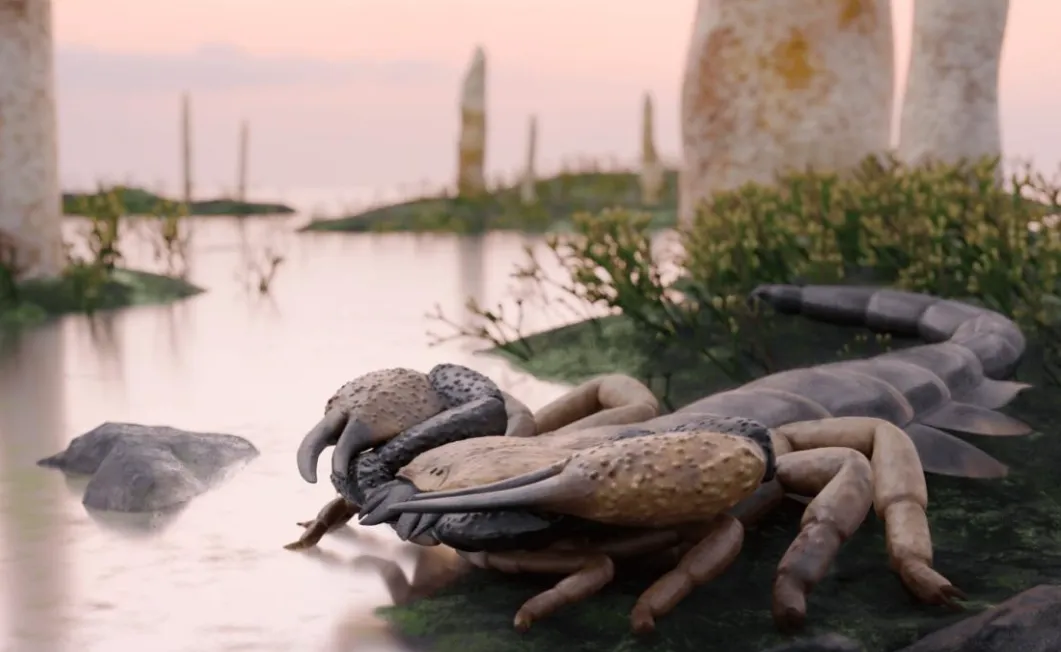
Scientists from the University of Manchester have determined that the fossilized remains of the largest known scorpion on Earth had been in a museum collection for over 150 years. The species in question is Praearcturus gigas, which lived approximately 415 million years ago during the Early Devonian period.
This predator was about one meter long, and its claws grew up to 15.7 centimeters. Researchers note that it was one of the largest arthropods that ever existed.
According to study leader Richard Howard, Praearcturus lived at least 50 million years earlier than the known giant arthropods of the Carboniferous period. At that time, there were no forests on the planet yet, and the land was covered only by small plants and fungi.
Scientists believe that the absence of major competitors allowed this scorpion to occupy the top of the food chain. Researchers also suggest that it may have led a partially aquatic lifestyle. This is indicated by features of its body structure, particularly the lateral plates, which resemble structures characteristic of aquatic arthropods.
According to scientists, the significant size of Praearcturus gigas may have been linked specifically to its aquatic habitat. The species lived during a period when animals were just beginning to colonize land, making it an important link in the history of life’s evolution on Earth.
Source: Interesting Engineering.
In Italy, during the construction of a highway, workers stumbled upon the remains of an ancient sanctuary dating back to the 5th century BCE. The unique discovery was made near the town of Pons, located about 72 kilometers from Venice. After the artifacts were discovered, large-scale archaeological research began immediately at the site.


