
Scientists warn of risk of new floods and landslides in Nepal
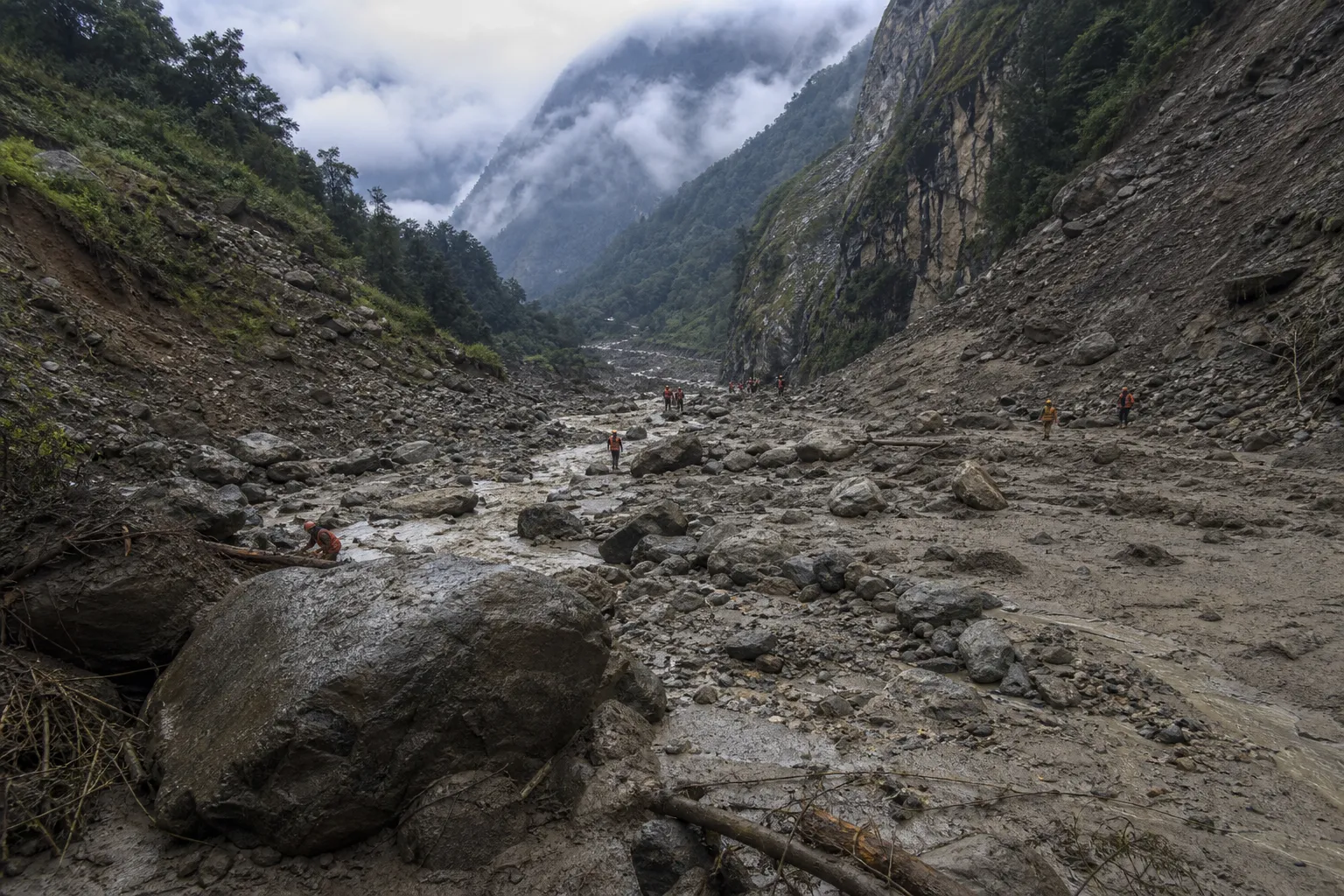
Scientists are monitoring a Himalayan valley on the border between Nepal and Tibet after a massive collapse of rock and glacial ice caused a destructive flood. Unstable terrain and layers of silt and stones several metres thick could be moved again by heavy monsoon rains, creating a risk of new floods and landslides, Channel NewsAsia reports.
A chain of hazards
Maximillian van Wyk de Vries, an associate professor of natural hazards at the University of Cambridge, called the event “a cascade of many hazards.” According to him, the rock and ice slide caused a major flood, while secondary landslides were also recorded.
Specialists are monitoring both the site of the initial collapse, where the terrain may have weakened, and the valley downstream. Satellite imagery helps track changes in hard-to-reach mountainous terrain and can detect signs of instability, including cracks on slopes or initial movements. Researchers saw some early signals in the area of the glacial collapse, but some landslides may occur without warning signs visible from satellites. In such cases, scientists use weather data to forecast risks.
More current news is available on the UA.News Telegram channel Telegram.
Monitoring and preparedness
Benjamin Horton, dean of the School of Energy and Environment at City University of Hong Kong, noted that humanitarian consequences depend not only on the natural hazard itself. Important factors include the location of people and infrastructure, the availability of warning systems, building standards and community resilience.
Horton called for improved data sharing and investment in comprehensive monitoring programmes. At the same time, van Wyk de Vries stressed that observing all Himalayan glaciers is extremely difficult, as each glacier and the surrounding terrain have their own characteristics. In his view, a similar flood could potentially occur in around a hundred other Himalayan valleys, so risks should be assessed not only in the affected valley.
Impact of warming
According to Horton, temperatures in the Himalayas have risen by more than 1°C over the past 50 years, while climate change is increasing the frequency of extreme events. At the same time, van Wyk de Vries cautioned that it is currently difficult to determine to what extent climate change influenced this particular collapse. Although warming accelerated glacier retreat in the area of the event, scientists are still determining the details and mechanism of the destruction.


