
Netanyahu called Israel’s elections a battle between the left and right — Jerusalem Post
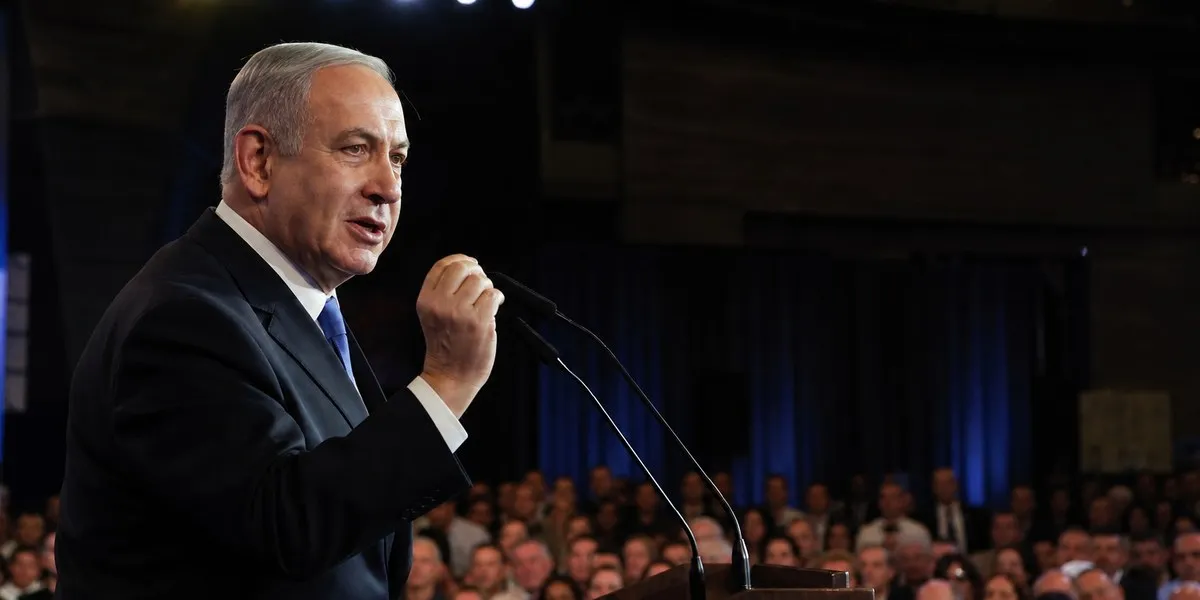
Israeli Prime Minister Benjamin Netanyahu said at a Likud party rally in Tel Aviv that the upcoming Knesset elections would be a direct confrontation between right-wing and left-wing forces. He also criticized Yashar party leader and prime ministerial candidate Gadi Eisenkot, the Jerusalem Post reports.
Netanyahu said there was no separate political alternative called Yashar, describing this positioning as a bluff. He stressed that Likud belongs to the right-wing political camp.
Criticism of Eisenkot
The prime minister devoted a significant part of his speech to political attacks on Eisenkot. Netanyahu criticized his decisions while serving as chief of the General Staff of the Israel Defense Forces, as well as his work as a Cabinet member during the war.
Netanyahu claimed that a government led by Eisenkot would include Yair Golan, Avigdor Lieberman, Naftali Bennett, Yair Lapid, and Arab parties. According to him, such a government would reverse the achievements of the current authorities, facilitate the creation of a Palestinian state, and withdraw Israeli forces from security zones.
In response, Eisenkot posted on social media an edited image of Netanyahu with a road sign against the backdrop of footage showing Hamas militants and other groups infiltrating southern Israel on October 7.
More current news is available on the UA.News Telegram channel Telegram.
Netanyahu also criticized Democratic Party leader Yair Golan over his statements about the actions of the Israel Defense Forces and the dispute surrounding the military advocate general. The prime minister said he intended, together with Justice Minister Yariv Levin, to advance a government bill that, according to him, would financially affect those who disparage the Israeli army abroad.
War and Iran
At the end of his speech, Netanyahu urged right-wing voters not to support parties that may fail to pass the electoral threshold. He also said that an Israeli prime minister must be able to mobilize allies, primarily in the United States, and, if necessary, uphold disagreement with Washington.
The prime minister credited his government with changing the situation in the Middle East and mentioned the elimination of Hezbollah leader Hassan Nasrallah and Hamas leader Yahya Sinwar. He said that the decision to act against Iran’s nuclear program, in his view, averted an existential threat to Israel.
Netanyahu also named the fall of the Iranian regime and the elimination of Hezbollah and Hamas as goals that Israel, he said, must complete.


