
Autumn Sky of 2026: Planetary Oppositions and Meteor Showers — Live Science
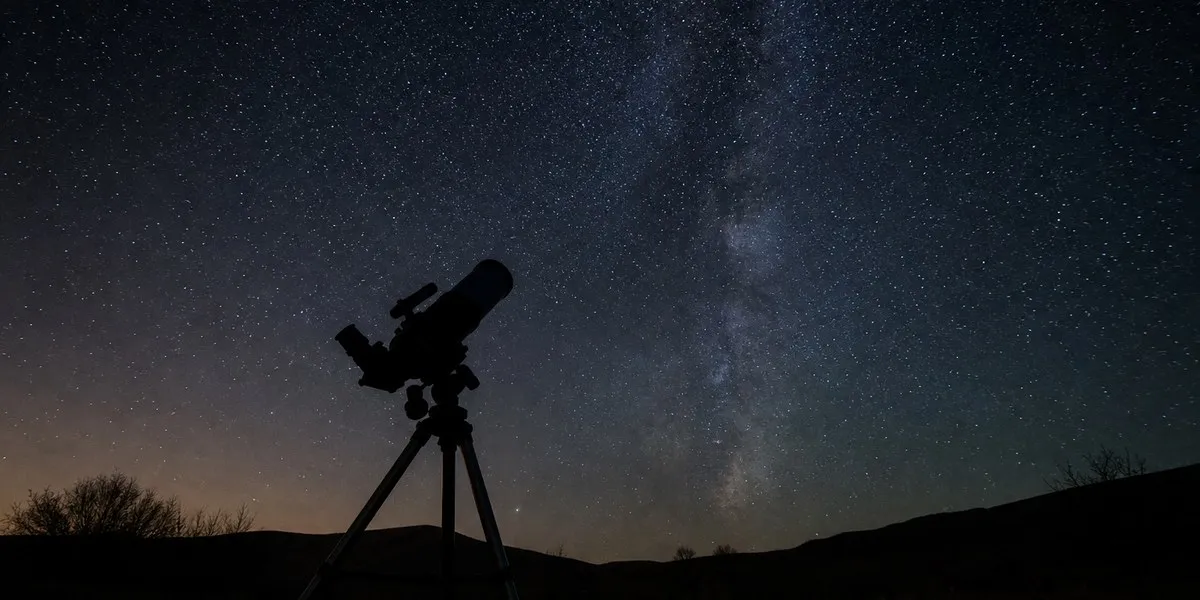
In autumn 2026, astronomy enthusiasts will be able to observe the oppositions of Neptune, Saturn and Uranus, four meteor showers, the Pleiades star cluster and the Andromeda Galaxy. Live Science published an overview of the most notable celestial events from September through November.
Planets and the supermoon
Neptune will reach opposition on September 26 at 02:00 UTC and will have an apparent magnitude of +7.8. A telescope with an aperture of at least 150 mm will be needed to find it, although an instrument with an aperture of 200 mm or more will increase the chances of seeing the planet’s small bluish disk. The full Moon during this period will make observations more difficult.
Saturn will be at opposition on October 4 at 12:00 UTC, shining at an apparent magnitude of +0.3. The planet will be visible to the naked eye, but a telescope with an aperture of 100–125 mm or more will be needed to observe its rings and largest moons. The Cassini Division will be visible in larger telescopes. Uranus will reach opposition on November 25 at 23:00 UTC; the publication recommends a telescope with an aperture of 150–200 mm or more to observe it.
On November 24, the full Moon known as the Beaver Moon will occur. It will be the first supermoon of the autumn-winter season: according to the publication, the Moon will appear about 15% brighter than an ordinary full Moon.
More current news is available on the UA.News Telegram channel Telegram.
Meteor showers
The Draconids will be active from October 6 to 10, with their peak falling on the night of October 8–9. Under ideal conditions, about 6–10 meteors per hour can be expected; they are best observed in the evening before midnight. The shower is associated with debris from comet 21P/Giacobini–Zinner.
The Orionids will last from October 2 to November 7, with the peak expected on the night of October 21–22. They can produce 10–20 meteors per hour under dark skies and are associated with the trail of Halley’s Comet. The Southern Taurids will peak on November 4–5, and the Northern Taurids on November 12; their intensity is about five meteors per hour, but this shower is known for bright, slow fireballs. The Leonids will peak on the night of November 17–18, when 10–15 meteors per hour are possible.
The Pleiades and distant objects
In October, the Pleiades, or M45, in the constellation Taurus will begin appearing in the evening sky. The cluster is located about 440 light-years from Earth and is visible to the naked eye under dark skies, although binoculars or a telescope will provide a clearer view. Nearby are the Hyades, which form the V-shaped part of the constellation Taurus.
In October and November, the Andromeda Galaxy M31, located about 2.5 million light-years from Earth, will also be convenient to observe in the evening. Under clear, dark skies, it may be visible to the naked eye as a faint smudge. Among other autumn targets, the publication names the Great Square of Pegasus, the constellation Cassiopeia, the clusters NGC 457 and NGC 7789, as well as the Helix Nebula NGC 7293 in the constellation Aquarius.


