
The remains of Tsar Samuel were returned to Bulgaria after 60 years
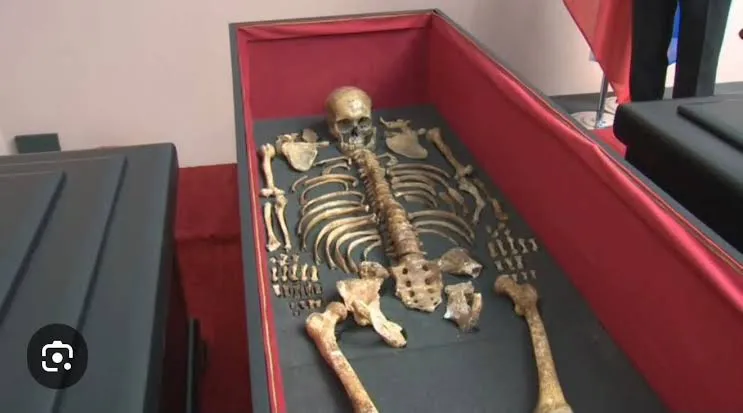
Greece handed over to Bulgaria the remains identified as those of the medieval Tsar Samuel, which had been kept in Greece for over 60 years. On October 3, they were ceremoniously transported to Sofia and received with full state honors. The return was part of an agreement between the two countries on the exchange of historical and religious relics.
King Samuel’s remains were returned to Bulgaria after decades of negotiations with Greece. They were handed over to the Bulgarian side during a ceremony at the Museum of Byzantine Culture in Thessaloniki. The event was attended by the prime ministers of both countries—Rumen Radev and Kyriakos Mitsotakis.
After the ceremony, the remains were transported to Sofia by military aircraft. They were received with full state honors in the capital. An honor guard carried the coffin in a solemn procession to the Basilica of Saint Sophia, where the remains were laid to rest.
For Bulgaria, this event holds special symbolic significance. Samuel is considered one of the country’s most important medieval rulers and a symbol of Bulgarian national identity.
Who Was Tsar Samuel?
Samuil ruled the First Bulgarian Empire from 997 to 1014. He spent much of his reign fighting the Byzantine Empire. During his reign, Samuel expanded his rule over a significant portion of the Balkans. The heart of his realm was the territory around Lakes Prespa and Ohrid, which today lie primarily within North Macedonia.
In the early 11th century, Byzantium intensified its offensive against the Bulgarians. In 1014, Samuel’s army suffered a crushing defeat at the Battle of Kleidion. Historical sources recount that after this battle, the Byzantine Emperor Basil II ordered that thousands of captured Bulgarian warriors be blinded.
According to legend, Samuel was deeply shaken when he saw his soldiers. He died shortly thereafter. Bulgaria finally came under Byzantine rule in 1018, four years after the tsar’s death.
Where the Remains Were Found
The remains believed to be those of Tsar Samuel were found in Greece in 1965. They were discovered during archaeological excavations at the Basilica of Saint Achillius on an island in Lake Prespa. Greek archaeologist Nikolaos Moutsopoulos discovered four sarcophagi and anthropological materials at that time. Subsequently, these remains were housed at the Museum of Byzantine Culture in Thessaloniki.
Bulgaria had been trying for many years to have them returned to the country. Negotiations with Greece lasted for decades and culminated in an agreement on the mutual transfer of historical artifacts. At the same time, it is important to note that the remains have been identified as those of Samuel, but have not been definitively confirmed by modern genetic testing. According to UNN, there is no genetic confirmation of this identification.
What Bulgaria Is Returning to Greece
The return of the remains is part of a broader agreement between Sofia and Athens. In exchange for Samuel’s remains, Bulgaria is returning 48 church relics to Greece. These items were taken by Bulgarian troops from Greek churches and monasteries in 1917, during World War I. They include icons, crosses, and other church artifacts.
For over a century, the relics were kept in Bulgaria, specifically at the National Historical Museum in Sofia. Now they will be returned to Greece. Before their final return, some of the artifacts will be displayed at the Museum of Byzantine Culture in Thessaloniki.
“This is our shared memory”
Bulgarian Prime Minister Rumen Radev called the transfer of these historical artifacts an important event for both countries. “Our joint efforts have allowed us to leave the shadows of the past behind and build a relationship of mutual respect and friendship,” he said.
Radev also emphasized that Bulgaria and Greece now cooperate closely in various fields.
During the ceremony, he spoke specifically about the historical memory of the two nations: “These are items that belong to both our peoples; they are our memory and our bond, and our compatriots and future generations deserve and must have the opportunity to honor their ancestors.”
Why This History Is Important to Greece
The ceremony marking the return of the relics also provided Greece with an opportunity to highlight other historical disputes regarding cultural heritage. During the event, Prime Minister Kyriakos Mitsotakis once again mentioned the Parthenon Marbles, which are housed in the British Museum. According to him, historical artifacts should not be viewed as war trophies or simply objects that can be transferred between countries.
Mitsotakis stated that Greece will not agree to any arrangements that recognize another state’s claim to its cultural treasures. He added that Athens will continue to seek the return of the Parthenon Marbles. Thus, the return of King Samuel’s remains was not merely a historic event for Bulgaria. It also demonstrated that long-standing disputes over cultural heritage can be resolved through negotiation and mutual exchange.
For Bulgaria, however, this is first and foremost the return home of the remains of a ruler who, over a thousand years ago, led the country’s struggle against Byzantium and remains an important figure in its historical memory to this day. Euronews reports on this.
Greece has proposed that the European Union establish an emergency response mechanism that would allow for the temporary suspension of asylum applications during large-scale migration crises.




