Pérez Art Museum Miami: UA.News tells you what to see at one of Miami’s best museums
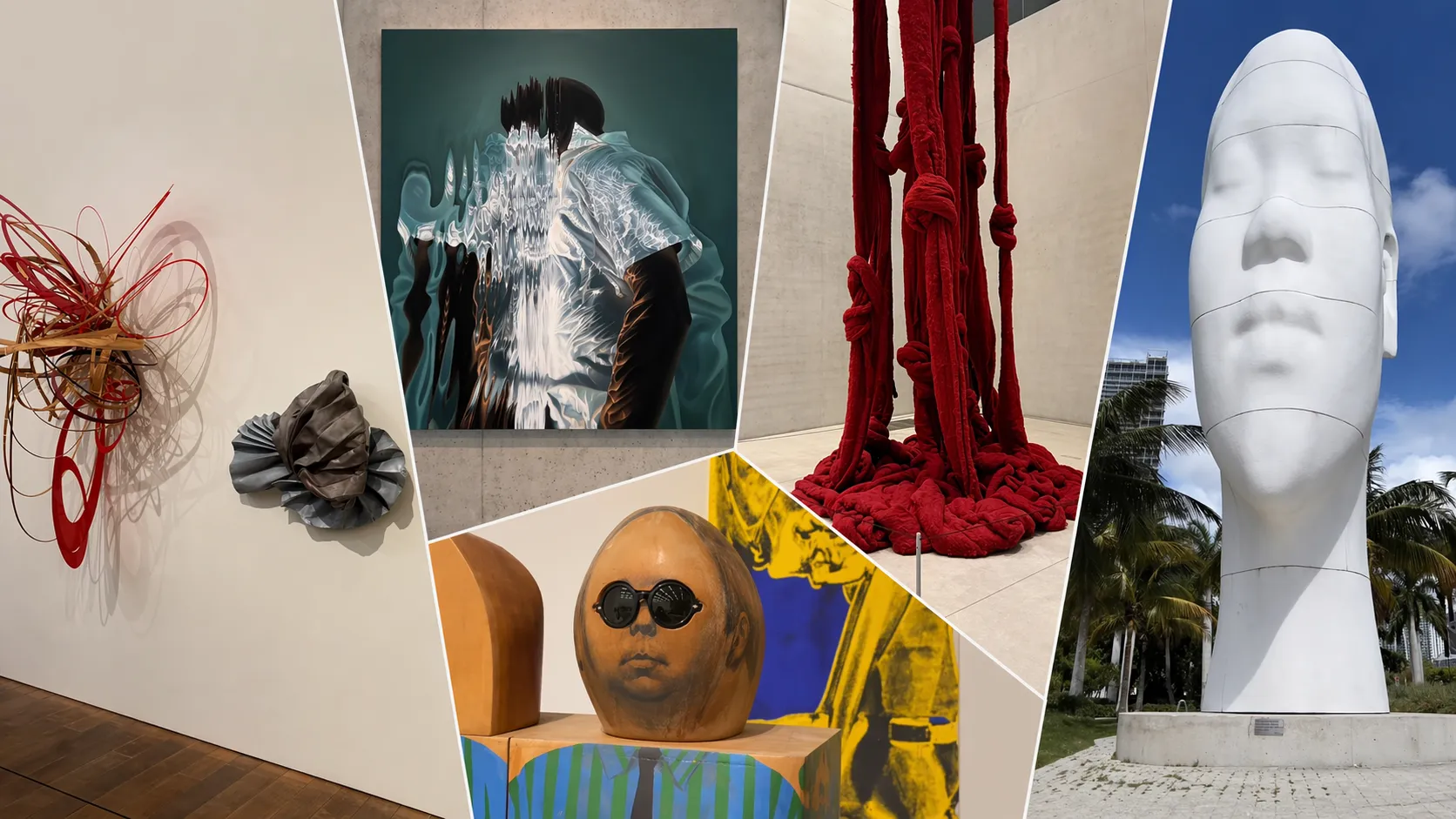
There are places where people go for culture, and there are those where you can literally feel the city’s pulse. The Pérez Art Museum Miami—PAMM—undoubtedly falls into the latter category.
From the very first steps through the museum grounds, as Biscayne Bay opens up behind the building and tropical light floods the architecture, it becomes clear: this is not a cold institution, cut off from reality. It is an open, vibrant, and multifaceted space.
A visit to PAMM is not just an introduction to art, but also an attempt to understand why the museum has become one of South Florida’s key cultural landmarks. What is presented here is not a static collection, but a living conversation about language, migration, memory, identity, race, and the emotional contradictions of the modern city. It feels as though Miami itself has been translated into the language of visual imagery.
This is precisely where PAMM’s greatest strength lies: the museum does not try to flatter the viewer. It captivates with its space, light, and powerful installations, yet simultaneously challenges our comfort zones. Here, visitors are not invited to view art from a safe distance—on the contrary, they are invited to step into the conversation.
Our correspondent visited PAMM and shares insights into the most intriguing corners of the space.
A giant white face by the water
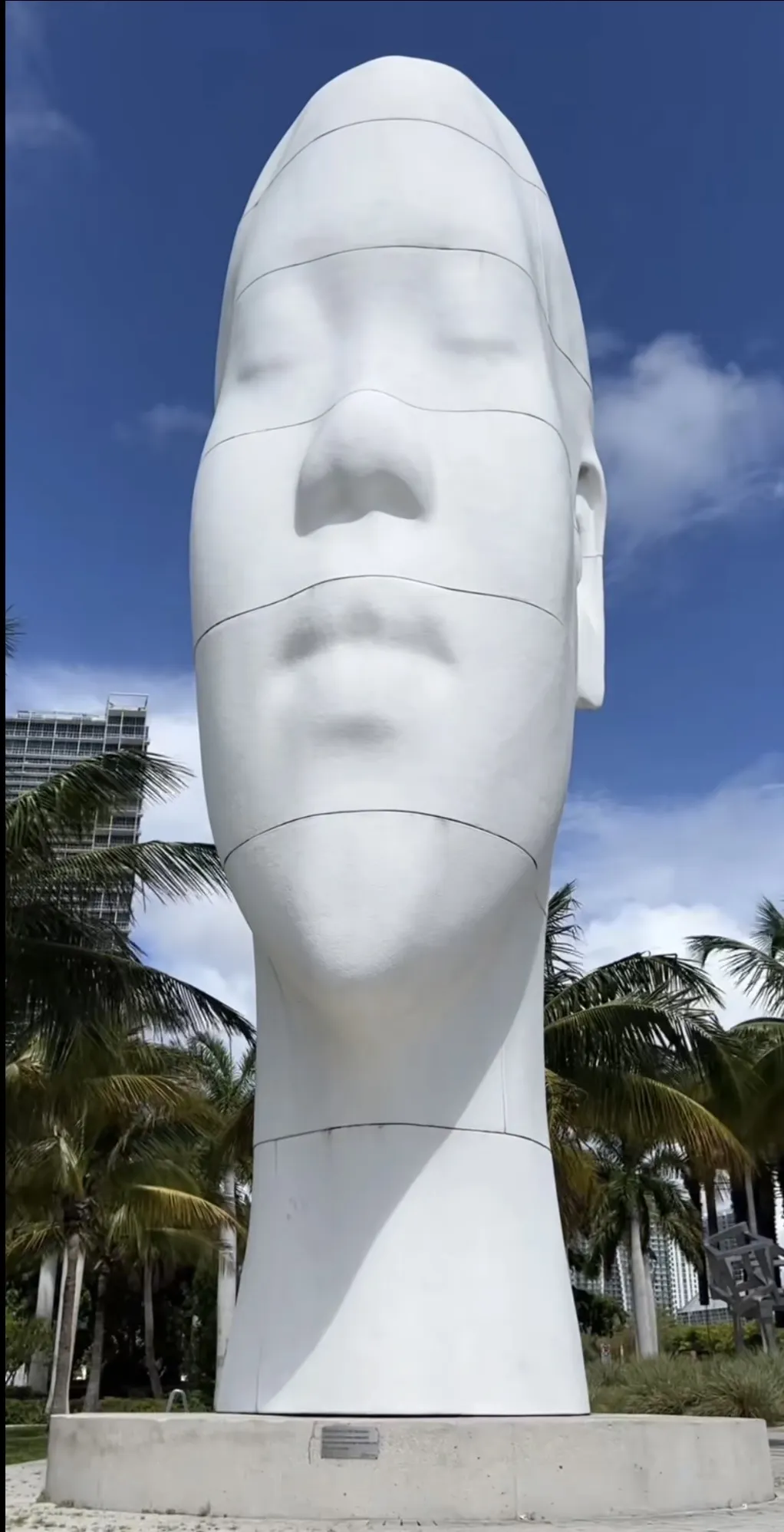
One of the most recognizable works associated with the museum is Jaume Plensa’s monumental white head, “Looking Into My Dreams, Awilda.” In person, the sculpture makes a much stronger impression than in photographs. It is massive, yet does not seem aggressive at all. On the contrary: its closed eyes and serene expression give it an almost meditative power.
Next to this work, a sense of slowness emerges—a rarity in Miami. In a city that often lives in a state of constant ostentation, the sculpture brings silence to the space. It does not compete with the horizon or drown out the urban landscape—it alters the emotional temperature around it.
A witty face in dark glasses
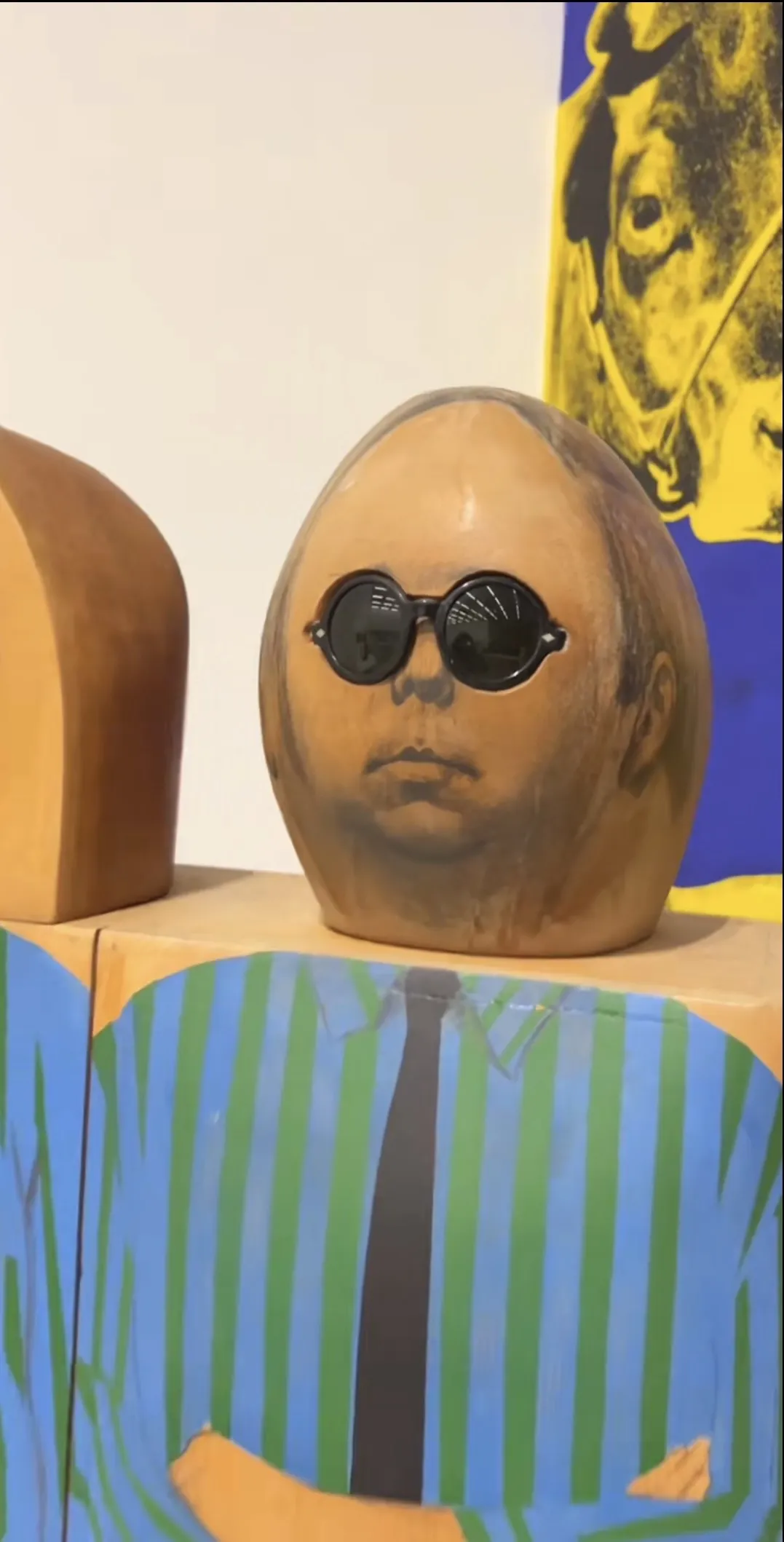
Among the works, Marisol’s Study for a Portrait of Sidney Janis stands out. At first glance, it even brings a smile: a rounded sculptural head, dark glasses, a facial expression that is both serious and slightly absurd. But the longer you look, the clearer it becomes: here, humor turns into commentary.
This is a work about public identity and social roles—about how authority is often constructed through image. It does not beg for attention or try to please, but it certainly captures the gaze.
A sculpture about exile, separation, and pain
Another important work is George Segal’s *Abraham’s Farewell to Ishmael*. It is one of the most emotional pieces in the museum. Segal’s figures do not portray suffering in a theatrical way—they hold it within.
The pain manifests in the distance between the bodies, in the weight of the embrace, in the tension between closeness and loss. The work transcends the biblical narrative and speaks to the present: migration, exile, separation, and the breakdown of family ties. For Miami—a city shaped by movement and constant self-reinvention—this context resonates particularly strongly.
Language, Arrogance, and the Cruelty of Exclusion
Among the most powerful installations is a text-based work that begins with the phrase: “Anyone who can’t read English is stupid,” and then repeats this statement in other languages.
This is an example of art that has an immediate impact. The work exposes the violence hidden within the linguistic hierarchy. Language here appears not only as a means of communication, but as an instrument of access, status, and, at the same time, exclusion.
“Us” and “Them”: a simple form—a complex meaning
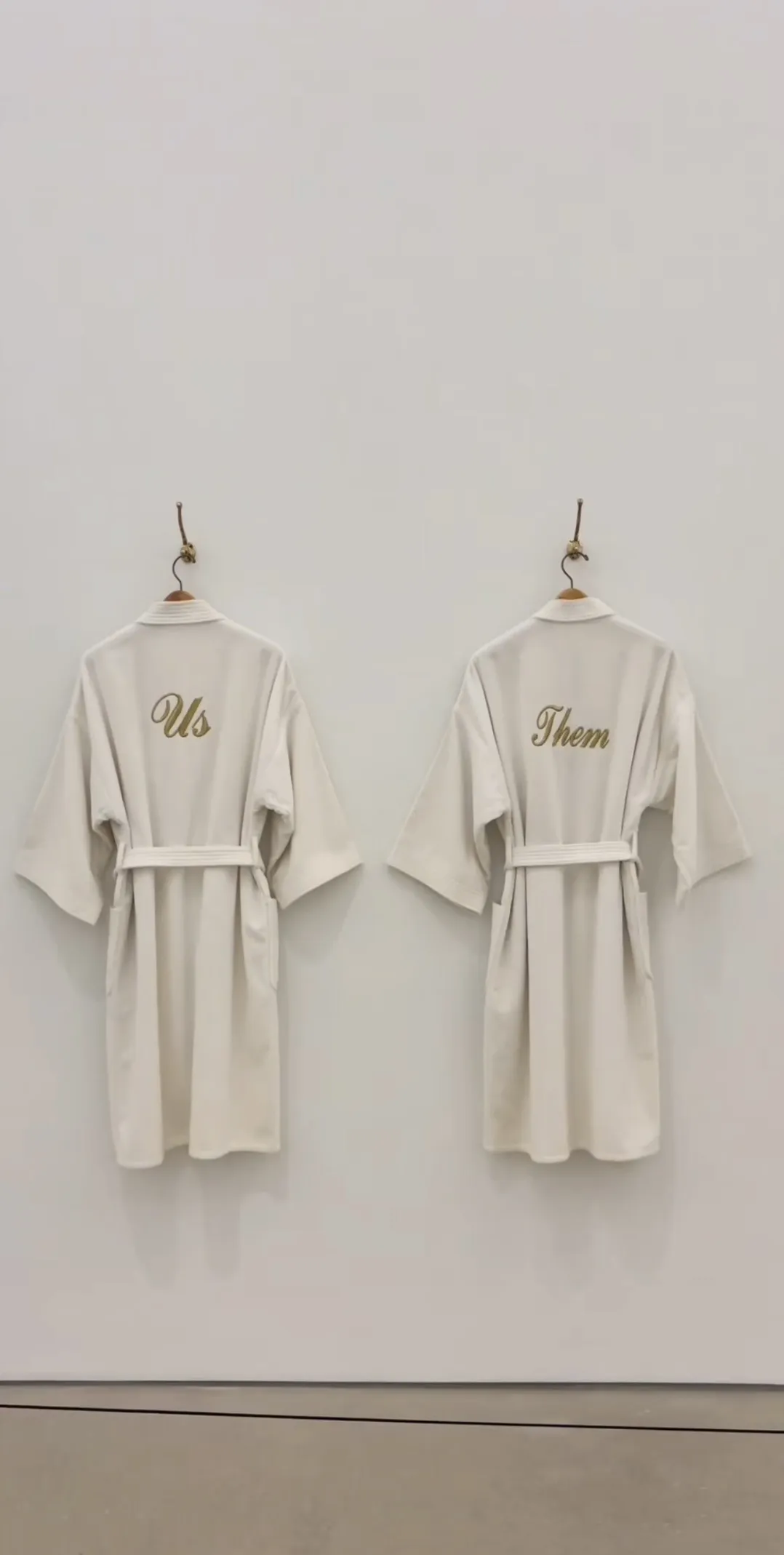
Two white lab coats with the words “Us” and “Them” — one of the most concise and, at the same time, most striking works in the exhibition.
Through minimalism, it demonstrates how easily social boundaries are formed. Race, class, nationality, language, or citizenship—all of these can fit into a simple division between “us” and “them.”
Yayoi Kusama and the Allure of Infinity
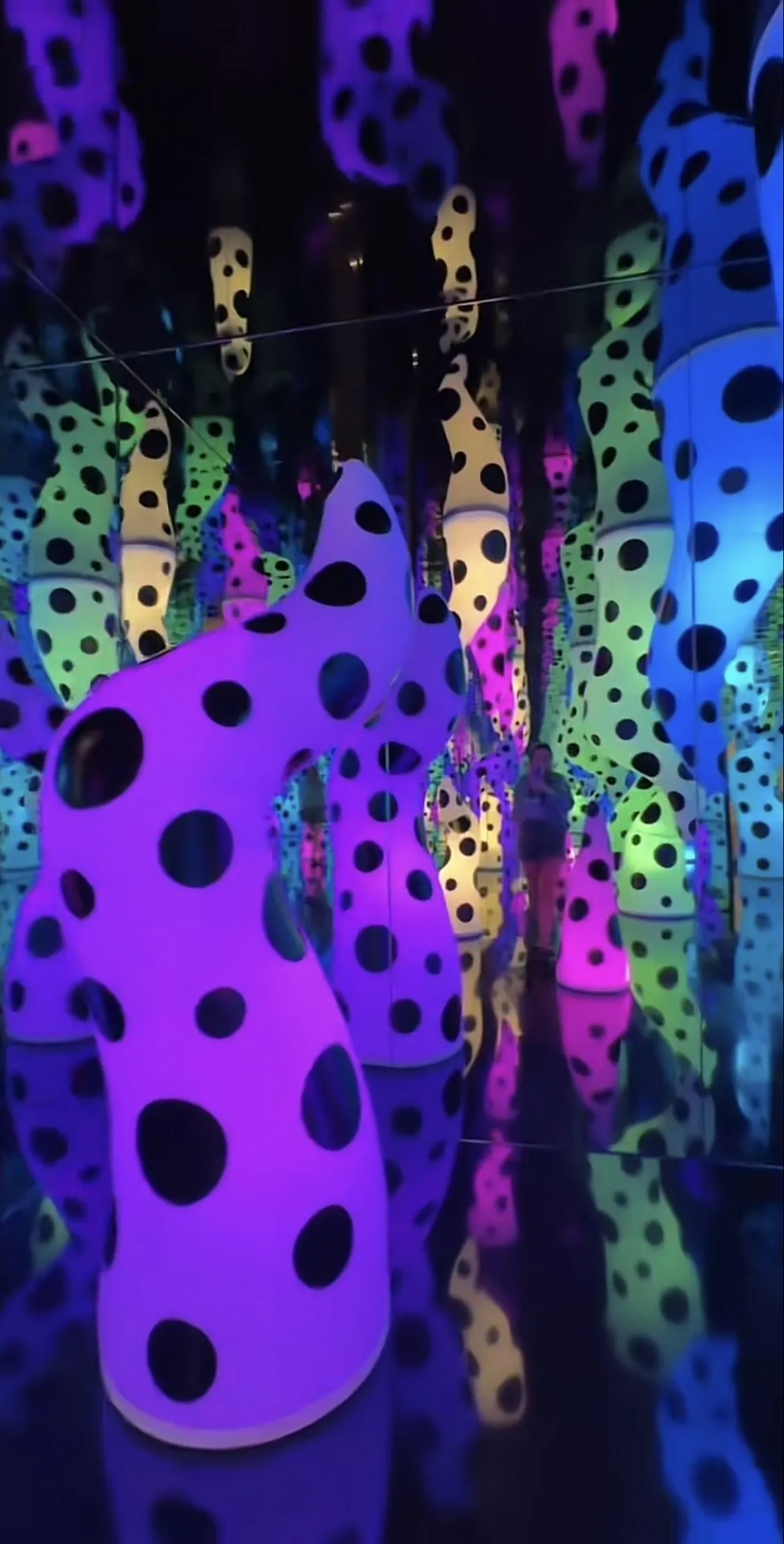
Yayoi Kusama’s immersive installation occupies a separate space. A mirrored room with light forms that multiply endlessly in reflections transforms the hall into a kaleidoscope of color and repetition.
Despite its visual appeal, this experience is not just about aesthetics. It creates a dual sensation—awe and, at the same time, fragility—as infinity begins to destabilize perception.
Works that require no captions
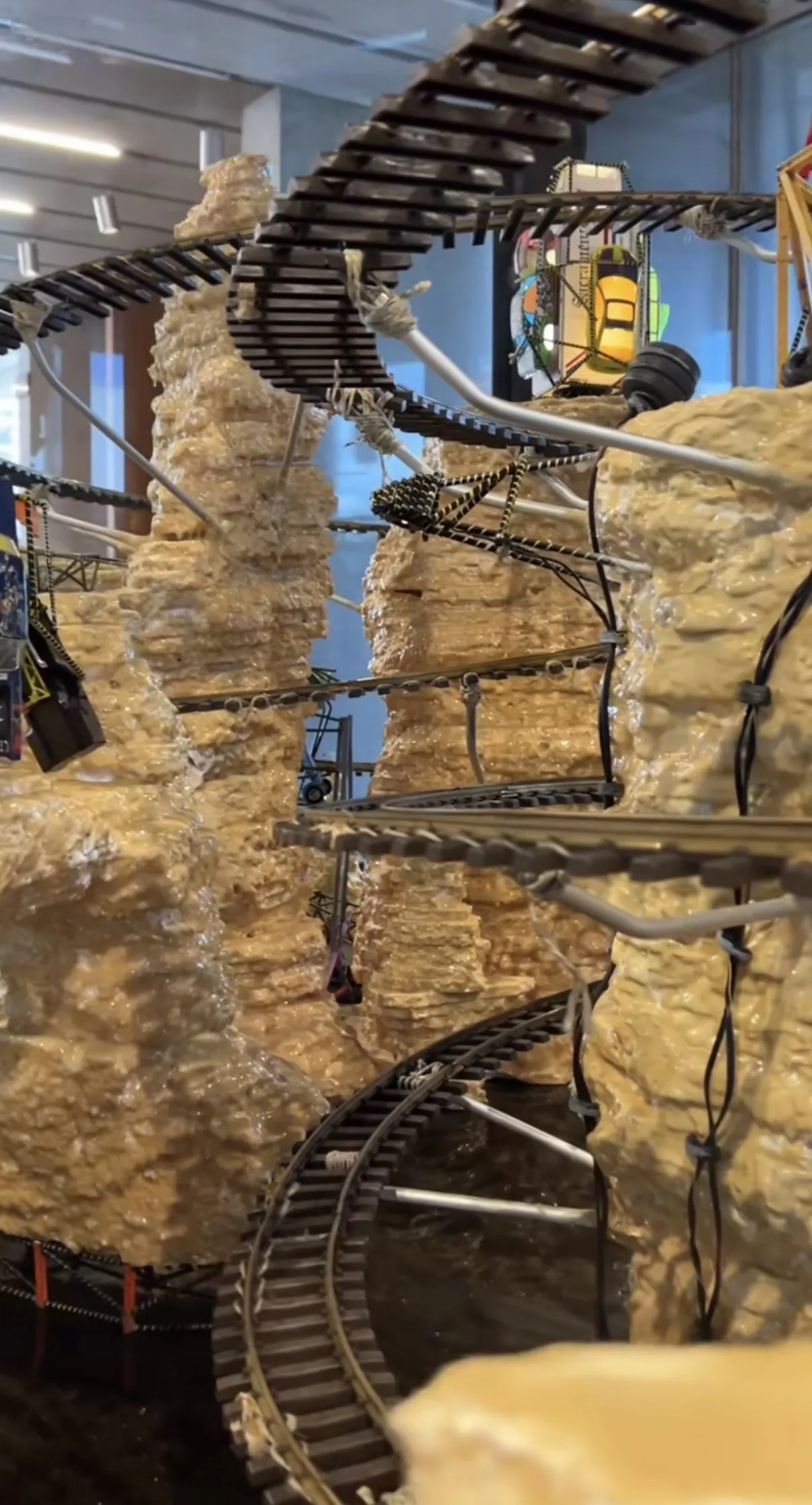
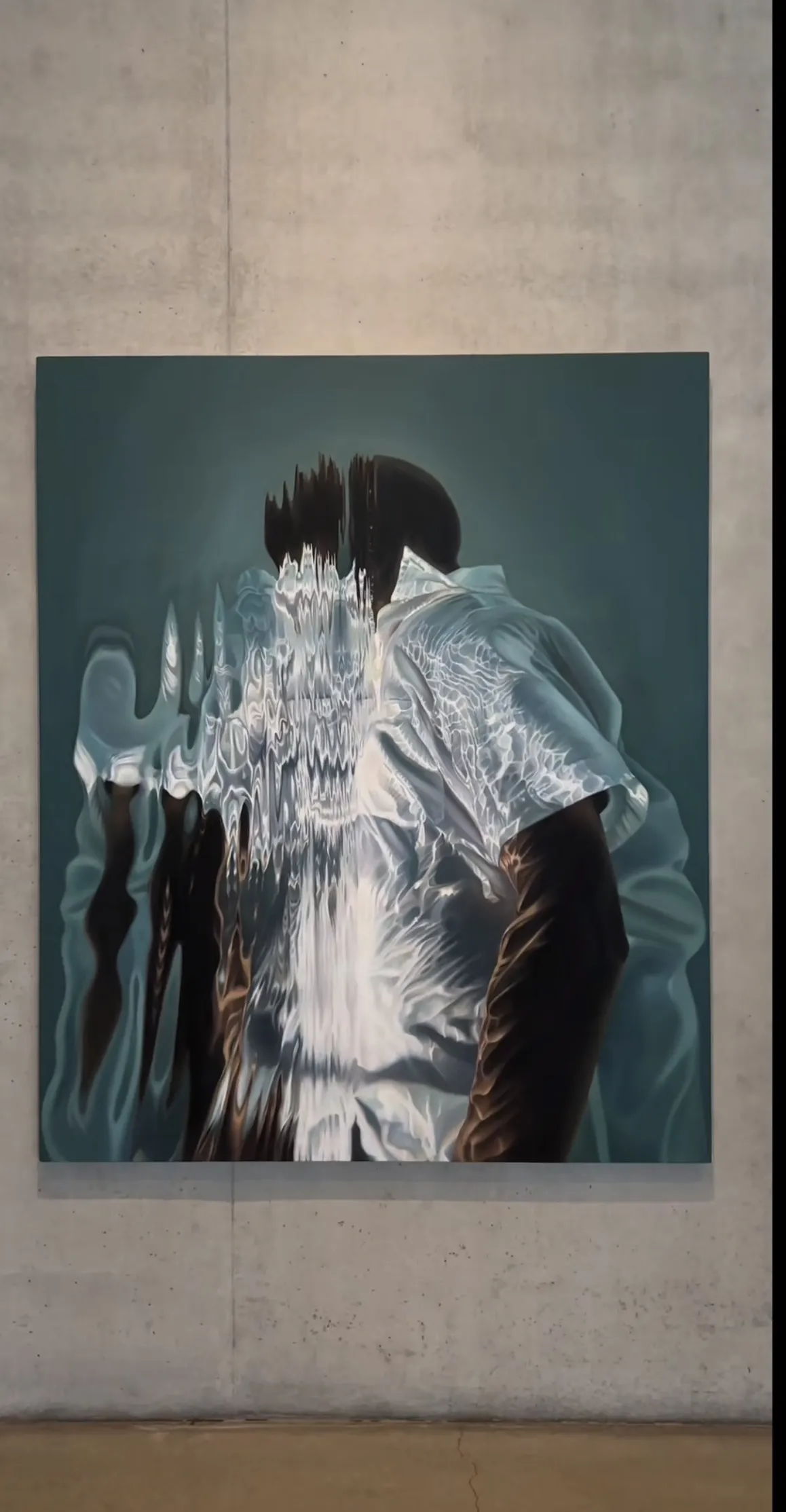
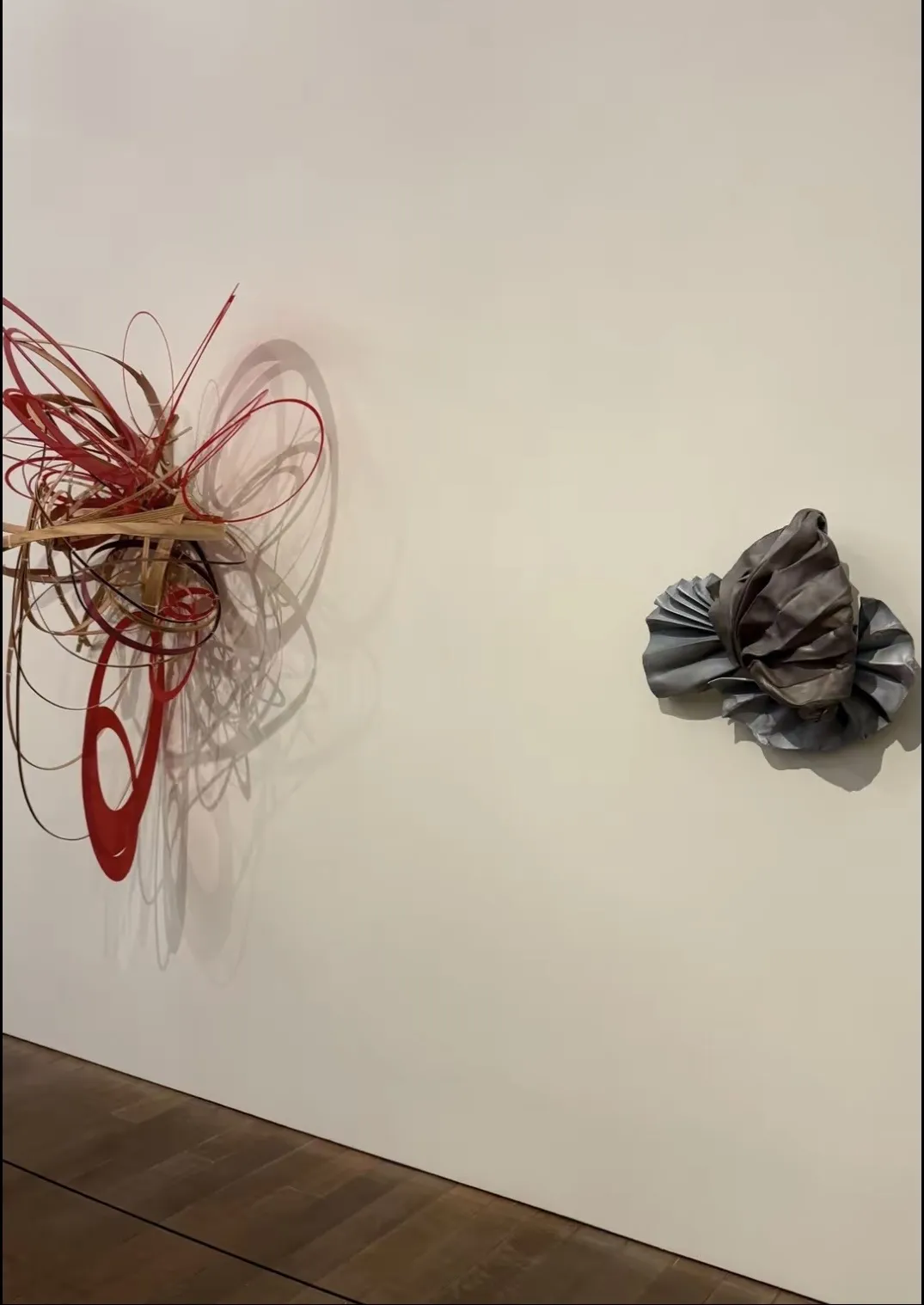
Not all works are easily identifiable at first glance, but this does not hinder perception. Abstract canvases, glossy figurative compositions, wall sculptures—all of this forms a sense of a cohesive curatorial logic.
PAMM does not look like a collection of separate “trophies.” It is rather a field of tensions: between abstraction and figuration, politics and sensuality, clarity and ambiguity.
Why this museum matters
The Pérez Art Museum Miami works not only with form but also with context. It accurately captures the state of the modern world—fragmented identities, migration, social tension, and the need for new ways of understanding reality.
This is a museum where Miami ceases to be a postcard and emerges as a complex, multi-layered idea—beautiful, contradictory, and alive.