
South Korea has called on U.S. businesses to collaborate in manufacturing and AI
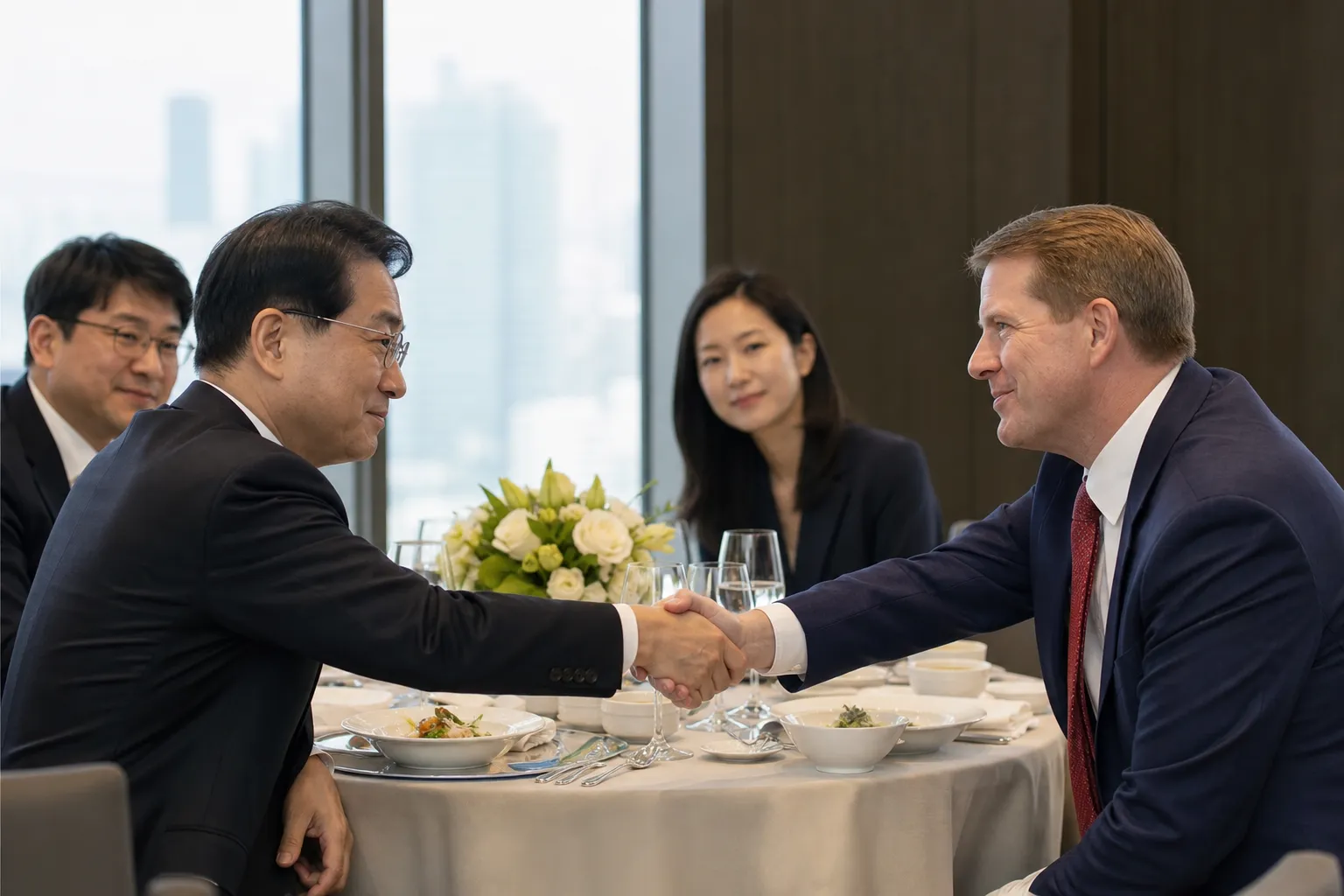
South Korean Deputy Prime Minister and Minister of Finance Koo Young-chul, during a meeting with representatives of U.S. businesses in Seoul, presented a strategy to attract investment and deepen cooperation with the U.S. in the field of artificial intelligence. He also pledged to continue financial market reforms aimed at facilitating access for international investors, according to the Korea Herald.
The luncheon was organized by the American Chamber of Commerce in Korea. It was attended by about 150 government officials and executives from Korean and international companies. Koo stated that the government would strive to treat foreign companies equally and improve conditions for businesses using South Korea as a springboard to global markets.
The minister reiterated the government’s “3-4-5” vision: to raise the economy’s potential growth rate to 3%, become one of the world’s top four exporters, and increase per capita income to $50,000. He identified semiconductors, AI data centers, and physical artificial intelligence as the key areas of this strategy.
For more breaking news, follow the UA.News Telegram channel.
Koo also mentioned steps toward the internationalization of the South Korean currency. Specifically, on July 6, the country switched to round-the-clock trading on the foreign exchange market, and in January, it plans to launch an offshore settlement system in won. According to him, the government took into account the recommendations of the American Chamber of Commerce, particularly regarding raising the reporting thresholds for foreign bank branches’ foreign exchange loans and the limits on corporate cash pooling—from at least $50 million to $100 million.
Separately, the parties discussed the implementation of the $350 billion Korea-U.S. Strategic Investment Framework. Seoul and Washington are continuing negotiations on projects in the energy, shipbuilding, biotechnology, critical minerals, and artificial intelligence sectors. Koo emphasized that combining U.S. developments in software and large language models with South Korea’s manufacturing base could create an advantage in the field of physical AI. He also called on members of the American Chamber of Commerce to propose commercially viable projects for bilateral cooperation.




