
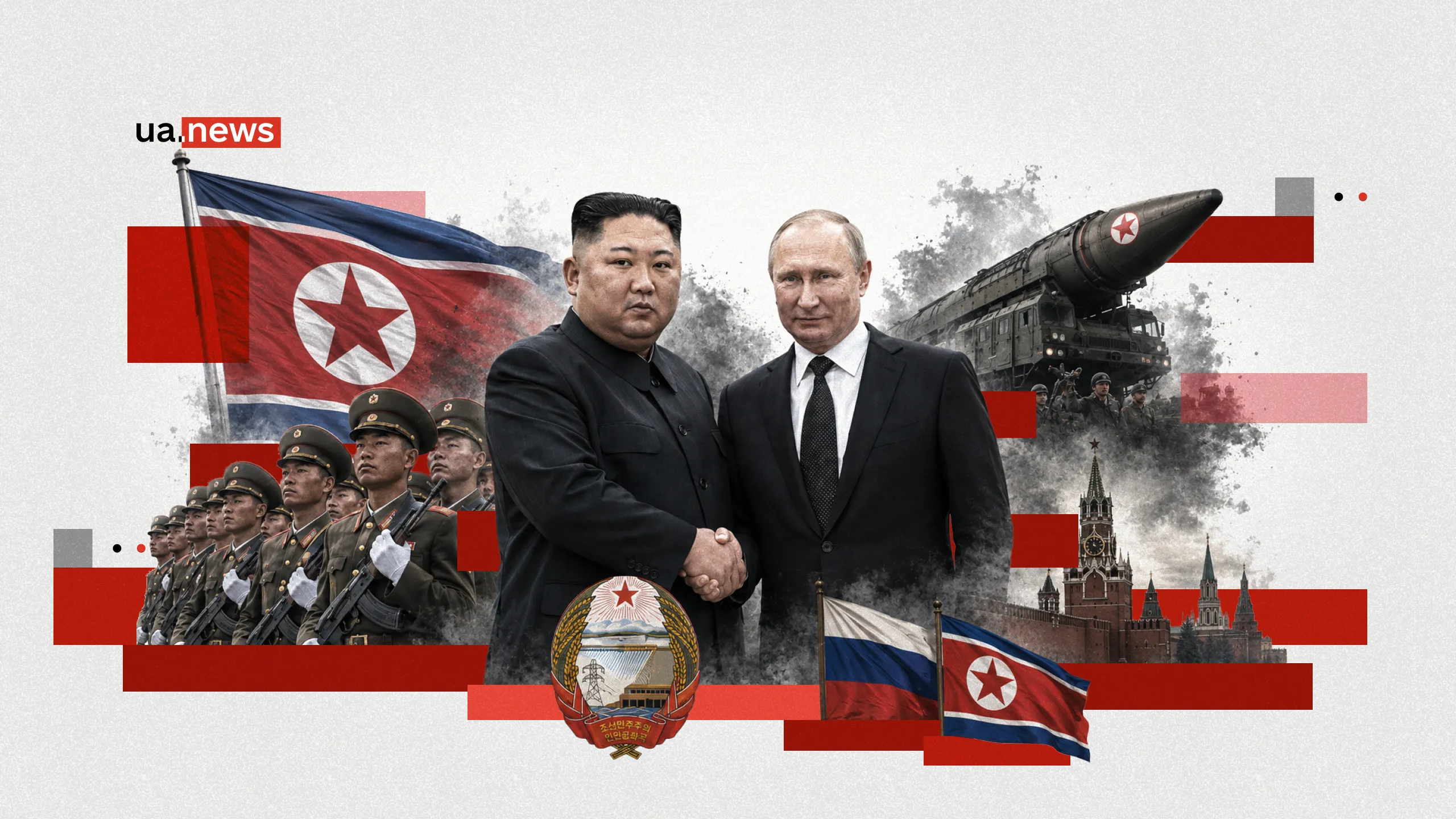
Today’s news from the Main Intelligence Directorate of the Ukrainian Ministry of Defense regarding Russia’s intentions to deploy up to 50,000 (!) North Korean troops in its border regions to replace Russian soldiers is very revealing. It forces us to take another look at the broader picture of North Korea’s involvement in this war. Pyongyang often remains in the shadow of its “elder Russian brother,” and quite undeservedly so.
The Main Intelligence Directorate has indicated that currently, approximately 8,500 soldiers from the DPRK have already been organized into several brigades and are securing the Russian border as part of the “Sever” group. They are not being thrown into “meat grinders” against Ukrainian trenches, but are being used differently: as garrison troops to free up Russian forces for the front lines.
This situation is a vivid illustration of just how deep and multifaceted North Korea’s integration into the Russian military machine has become. Over the past four and a half years of war, Pyongyang has evolved from a toxic diplomatic “pariah” that simply parrots the Kremlin’s line to a key arms supplier and, now, a guardian of Russia’s rear.
How did North Korea come to play such a role in the war and become Russia’s key military ally? How and why exactly has North Korea become a true strategic rear for Russia? UA.News political analyst Mykyta Trachuk, together with experts, examined the issue.
Political Zero and “Paper Solidarity”
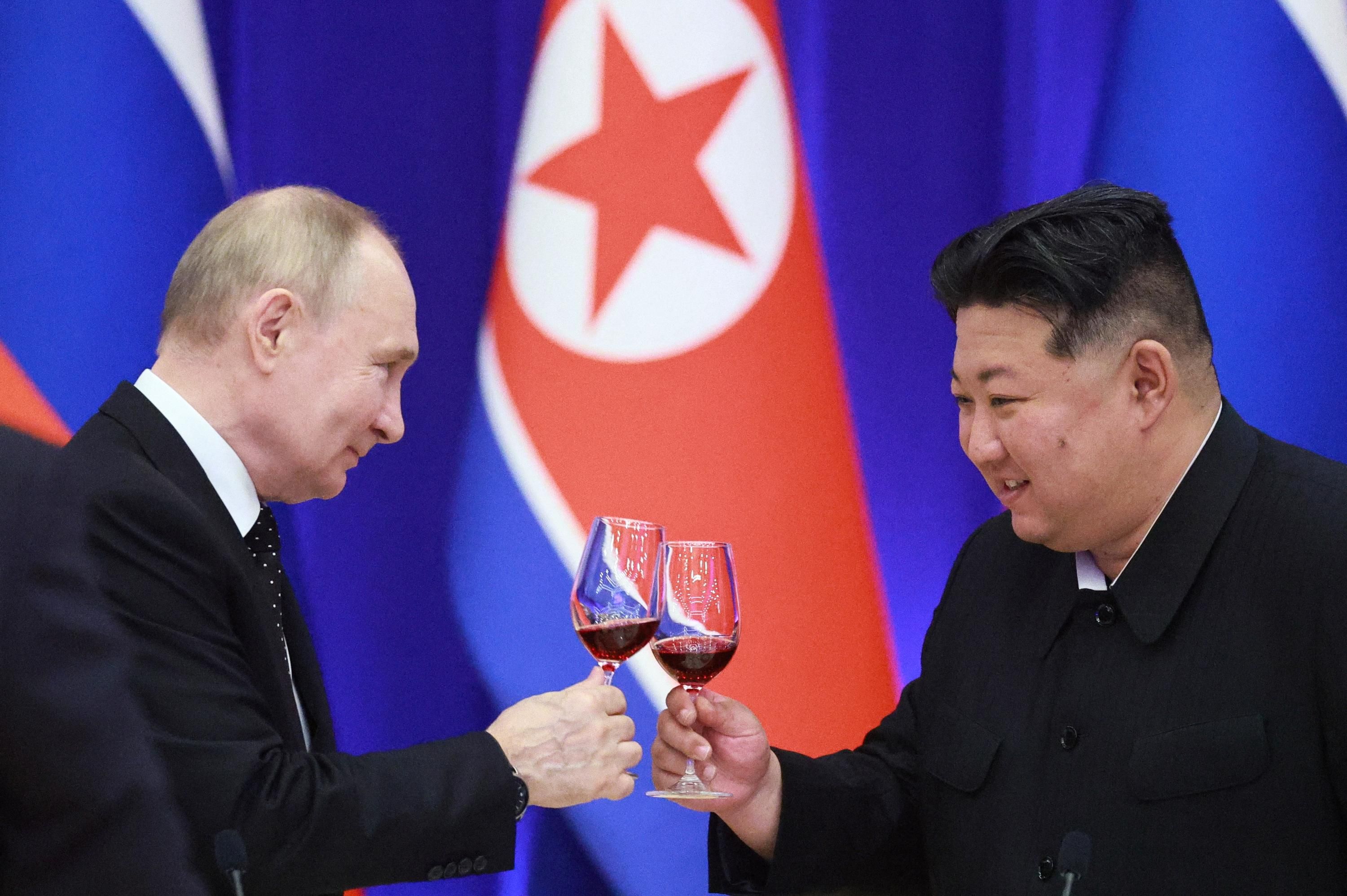
When it comes to the DPRK’s political weight on the world stage, let’s be frank: it’s approaching absolute zero. Until recently, Pyongyang — a “pariah state” that the international community is forced to tolerate solely because of its vast stockpile of nuclear weapons and fear of a totally unpredictable, textbook-perfect totalitarian regime. Therefore, all the diplomatic support that Kim Jong-un could provide—and does provide—to Vladimir Putin is nothing more than a formality that has no impact whatsoever on the actual state of affairs in international corridors of power.
Let’s recall the timeline of this “paper solidarity.” North Korea was one of the few countries (along with another “failed state”—Syria) that recognized the so-called “DPR” and “LPR” even before the full-scale invasion. Later, in September 2022, Pyongyang supported the sham “referendums” on the annexation of the Zaporizhzhia and Kherson regions without hesitation.
For the Kremlin, this was, of course, a welcome public relations opportunity—as if to say, “we have support on the international stage” (even though that support comes from a blatantly marginal state). But in reality, what did this change? Nothing. No serious global player looked at Pyongyang’s position and said, “Oh, well, since the DPRK itself has recognized these territories as Russian, we should too!” That’s nonsense.
North Korea’s diplomatic support is like sparse applause in an empty hall. It adds no legitimacy whatsoever; it only underscores the isolation and loneliness of the one being applauded.
North Korea’s
Military Logistics: Shells, Missiles, and People
So, diplomatic support for North Korea exists more as a formality. Military cooperation, however, is an entirely different matter. This is where the true value of North Korea to the Kremlin lies, and this role cannot be overstated, especially during the most difficult periods for the Russian army in 2022–2023, as well as in 2024 during the battles for the Kursk region.
When the Russian military-industrial complex was still struggling, having failed to reach full capacity, and warehouses were being depleted at a breakneck pace, it was precisely the North Korean railcars carrying ammunition that allowed Russian artillery to maintain the very same intensity of fire that wiped Bakhmut, Avdiivka, and other cities in the Donbas off the face of the earth. We’re talking about millions (!) of shells.
Ballistic missiles are a separate story. For decades, the DPRK has been developing its missile program in conditions of total isolation, and now this arsenal is being used against Ukraine. Just on August 10—a little over a week ago—reports emerged that Russia had received another shipment of ballistic missiles from North Korea. And these missiles aren’t flying just anywhere—they’re targeting Kyiv and other Ukrainian cities. Of course, there’s no question of any high technology in a communist dictatorship, which is why the accuracy of these missiles is severely lacking. They often miss their targets, striking a random residential building several kilometers away instead. They often fall in fields or explode in midair. But when they do hit their mark, the destruction is colossal. These are weapons of pure terror, and their presence in the Russian arsenal is a direct consequence of the alliance with Pyongyang.
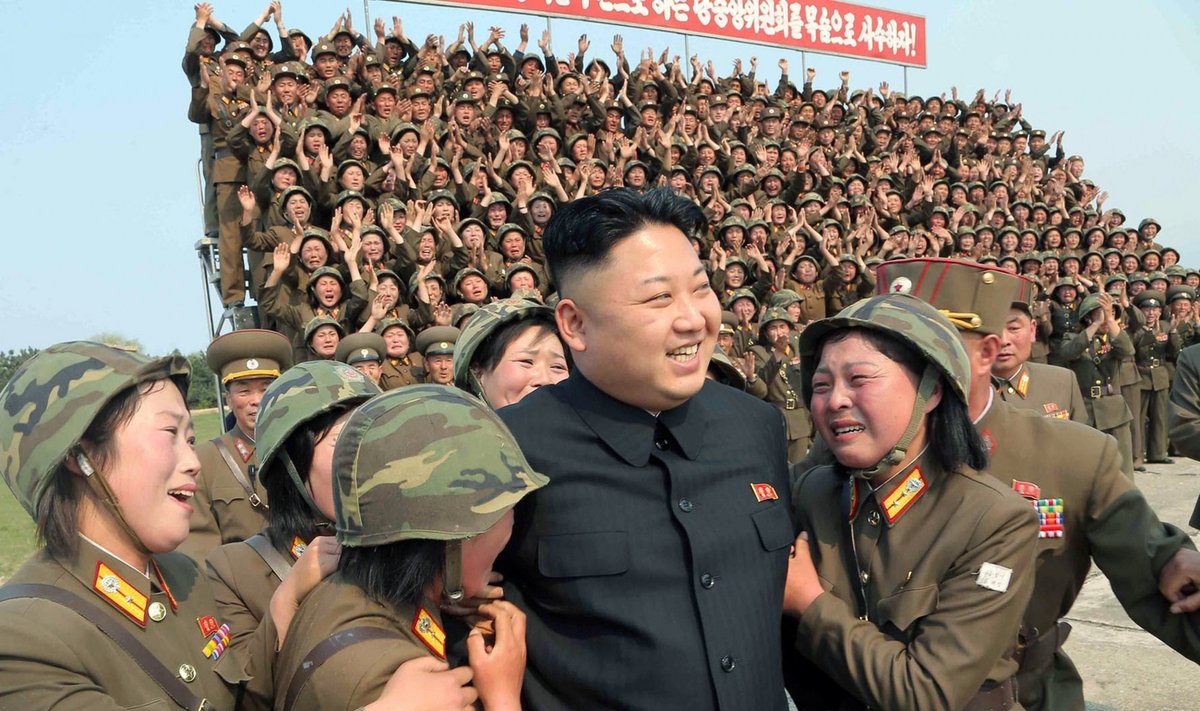
And then, of course, there are the people. In the fall of 2024, the world watched in astonishment as the North Korean army appeared in the Kursk region. This was the first time since the Civil War of 1917–22 that a foreign army in such numbers had entered Russian territory to fight on Russia’s side.
The Koreans’ losses were enormous, and their tactics were outdated, but the very fact of their participation showed that Pyongyang is willing to pay with blood for Russian support (Russia shares oil, money, technology, and food with North Korea). Now, however, the role of Kim Jong-un’s infantrymen appears to have evolved. They are no longer being thrown into head-on attacks but are instead being redeployed to guard the borders. This makes sense from the Kremlin’s perspective: keeping North Koreans in the Belgorod or Kursk regions so that Russian troops deployed in those areas can be sent to kill Ukrainians in the Donbas or in the south.
Pyongyang’s Competitive Advantages and the Paradox of Putin’s Luck
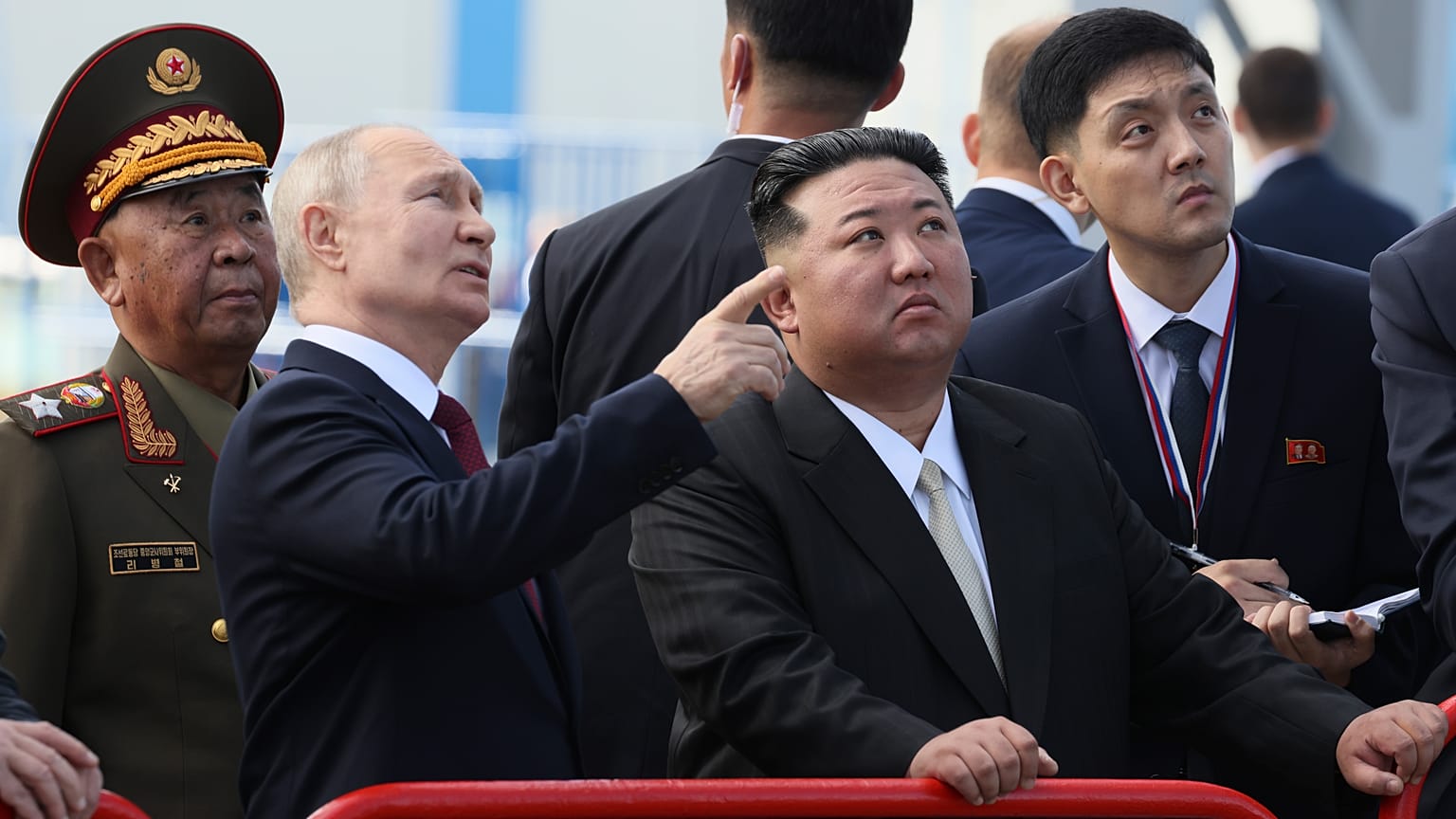
What, then, is the phenomenon of North Korea as an ally? Why has Russia—without irony—been so lucky to have such a friend? The answer lies in two unique advantages this country offers Russia.
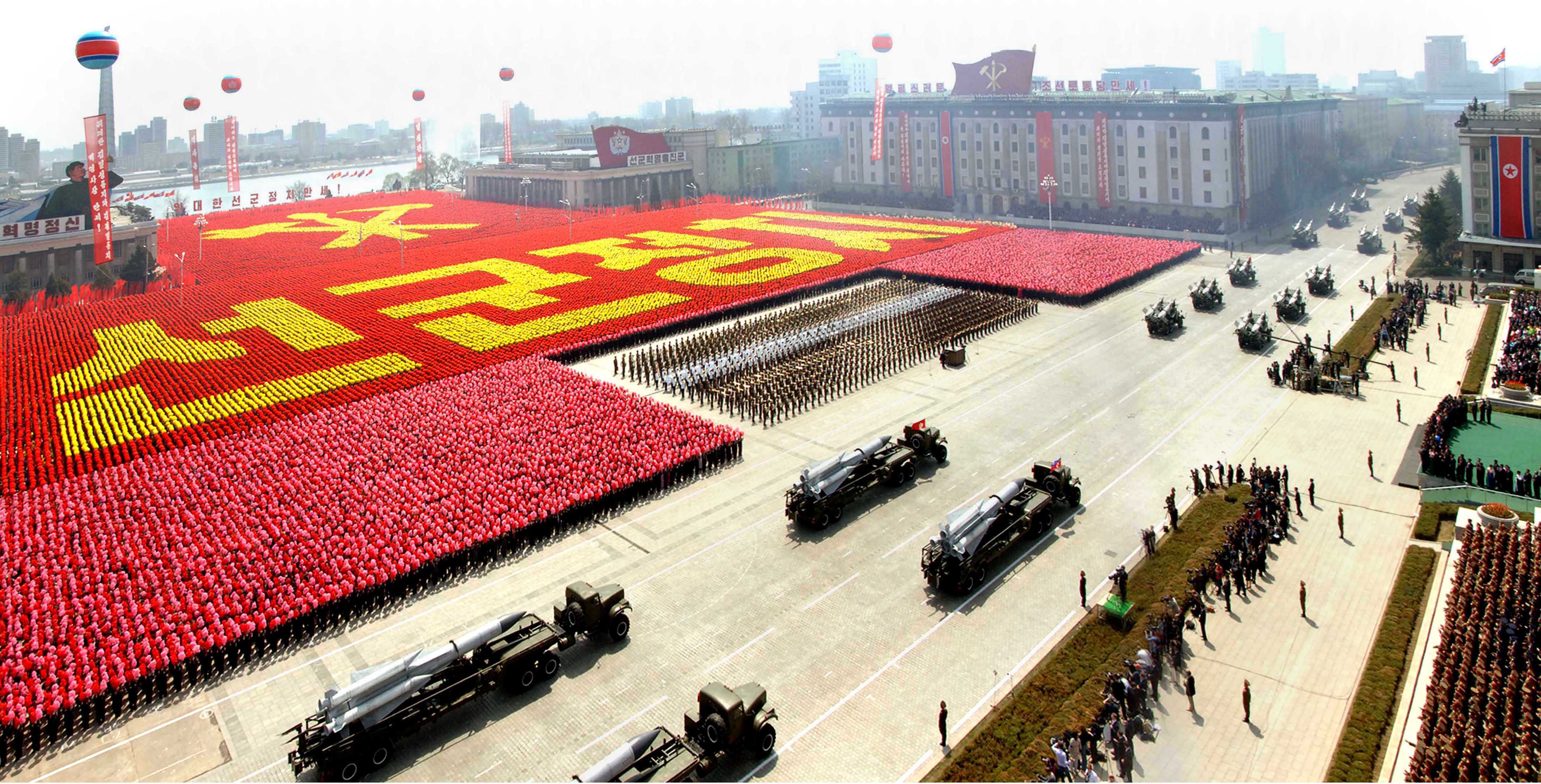
The first is the colossal stockpile of mothballed Soviet weapons and a tireless military-industrial complex geared toward a potential war. North Korea is, in essence, a giant military factory operating at full capacity, completely disregarding the population’s low standard of living. It is an ideal supplier for the Russian military.
The second advantage is absolute immunity to sanctions and reputational damage. This is a country that is politically stuck somewhere in the Stalinist 1950s. It is already subject to so many international restrictions that new sanctions are like a speck of dust to an elephant. Pyongyang simply has nothing to lose, so it couldn’t care less even about a formal commitment to international law. No democratic procedures, no parliamentary delays, no public protests—that’s what the DPRK is all about.
And here lies a bitter paradox that must be acknowledged: Russia has, quite literally and without irony, been very lucky to have such an ally—of course, if one looks at the situation purely pragmatically and even cynically. The Kremlin has found a partner that asks no unnecessary questions and is ready to provide exactly what is lacking: cheap weapons, ammunition, and “cannon fodder” to cover the rear. Ukraine, with its orientation toward Western democracies, has to wait months, if not years (!), for approval of various shipments, navigating bureaucratic hurdles, debates, and domestic political crises among its partners, and so on. Meanwhile, trains loaded with North Korean ammunition simply roll along the tracks, and that’s it.
It’s important to clarify: this doesn’t mean that Ukraine needs the same kind of ally—a global outcast. Nor does it mean that an Asian despotism, which has turned an entire country into one giant factory for the production of weapons of mass destruction, is a good example to follow. But, unfortunately, in times of crisis, such regimes can indeed be an order of magnitude more effective than democracies, with their focus on formalities, procedures, human rights, and all that other “nonsense” that every self-respecting dictator considers utterly superfluous and unworthy of attention.
Without North Korea’s help, Russia would obviously have managed anyway. The Russian Federation, unfortunately, has enough of its own human resources, money, and military-industrial complex capacity to wage war for many more years. However, the cost of the war for the Kremlin would have been quite different. Without North Korean shells, Russian artillery would have had much longer lulls, and the offensive in Donbas could have stalled as early as 2023. Without North Korean missiles, the strikes on Ukraine would have been an order of magnitude less intense. And without North Korean soldiers in Kursk and along the Russian border, Russia would have had to withdraw significantly more forces from the front lines to liberate its own territory.
Expert
Opinions
Military expert and IDF reserve officer Igal Levin commented on the “North Korean problem” to UA.News.
“North Koreans will be deployed primarily for engineering work, security duties, and as operators of various systems—including unmanned systems—on the territory of the Russian Federation. And, of course, all of this will take place as part of supporting Russia’s overall efforts in its aggression against Ukraine. But primarily, fighters from the DPRK are needed in the three capacities mentioned above. As for the question of whether Russia could have managed in the war without North Korea, it’s not a valid one, because the war isn’t over yet—it’s still going on. But would it have been harder for Russia without the North Koreans? Yes, it definitely would have been harder. North Korea is indeed providing the Russian Federation with enormous assistance. And not so much in terms of personnel as in terms of ammunition. That is absolutely true, and it is a major problem,” says Igal Levin.
Military expert and retired U.S. Navy Captain Harry Tabach believes it’s necessary to take a broader view of things and connect the dots. And also—not to put too much faith in intelligence, especially in a country at war.
“I wouldn’t take what intelligence says at face value, especially when it comes to North Korean forces. Intelligence agencies quite often lie or spread disinformation. Intelligence agencies don’t just share information with the public or society for no reason. They do that very rarely. After all, intelligence agencies can make mistakes. But even if we consider the rumors that Russia is allegedly recruiting North Korean soldiers to guard Russia itself or even to serve as Putin’s personal bodyguards—because he doesn’t trust his own security detail—this needs to be viewed in a much broader context. I’d say that if this is really happening, then perhaps Putin is bringing them in because they’re much shorter than he is, and so he isn’t afraid of them. That’s a joke, of course.
But seriously, we cannot look at this issue one-sidedly. First and foremost, we have the problem of China. If we deal with China, we will, to a large extent, also deal with Russia, North Korea, and all other similar problems. We also have the problem of Hamas, Hezbollah, and other terrorist groups. If we deal with Iran, we’ll largely resolve the issue of these groups that it funds. And once we deal with the UN and Europe, I think we’ll resolve all the world’s problems altogether. After all, what exactly does the claim mean that Russia is “gathering” North Korean military personnel on its territory? After all, it’s obvious that this isn’t happening without some kind of permission or, at the very least, without coordination with China. That’s why we need to look at this problem from a broader perspective,” Harry Tabakh is convinced.
Furthermore, according to the expert, one cannot claim that Russia would not have been able to cope in this war without North Korea’s support.
“It’s roughly the same as saying that the Soviet Union could not have won without Lend-Lease. This claim falls into the category of historical speculation, which history itself does not tolerate. Who knows what would have actually happened? We can only speak about the facts before us and what is happening now, not about ‘what ifs,’ ‘possibilities,’ ‘probabilities,’ and so on. “Therefore, we must first and foremost proceed from real facts and current processes, and only then draw conclusions,” Harry Tabakh concluded.
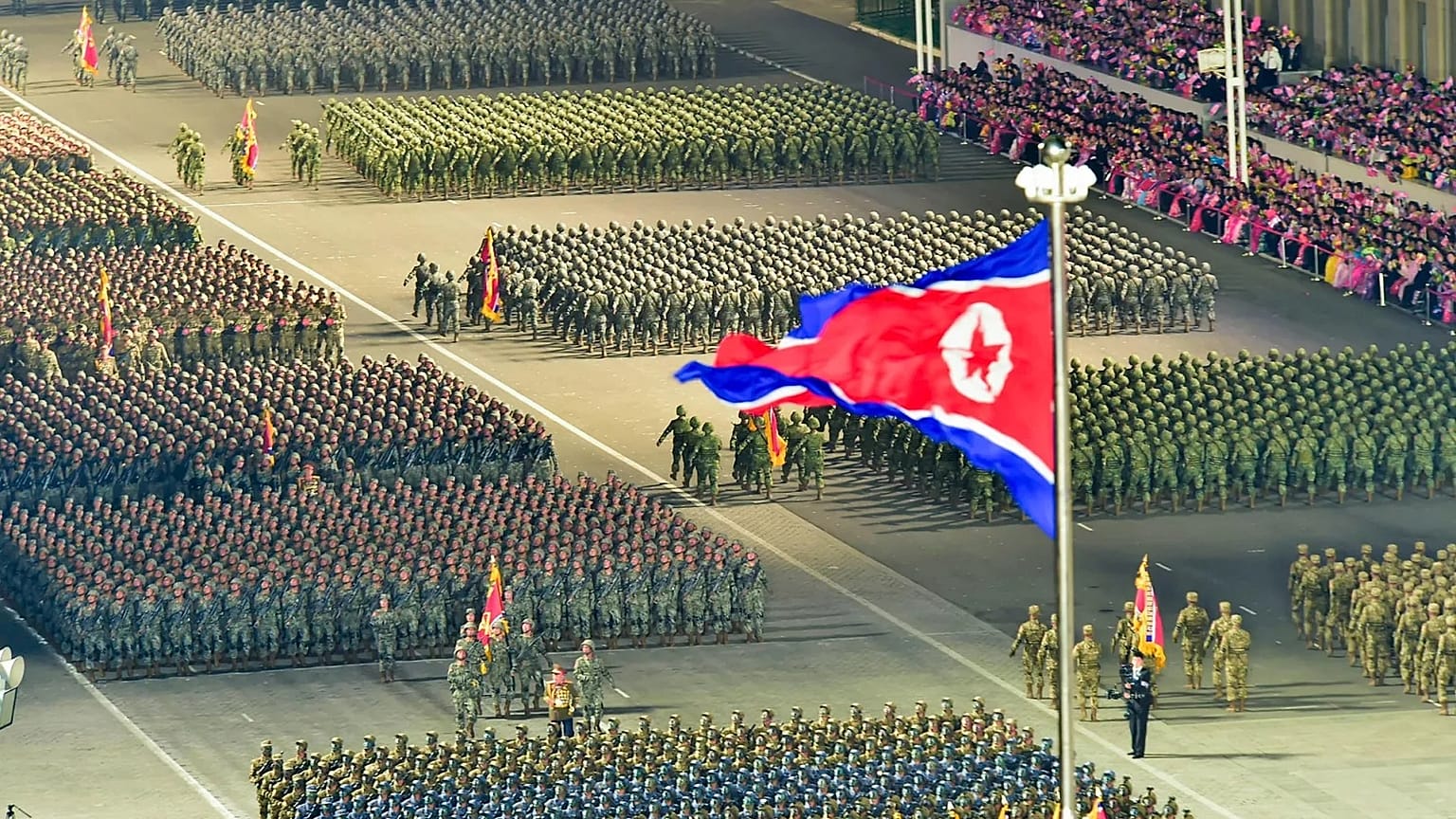
Political analyst Maxim Goncharenko points out that North Korea has long been a key source of support for Russia in its aggression against Ukraine. As of today, North Korea has already supplied Russia with 15 million artillery shells and provided approximately 14,000–15,000 military personnel. Additionally, as part of the strategic partnership agreement signed in June 2024, approximately 30,000 North Korean workers are currently employed in Russia.
“But why did Russia, which has positioned itself as a strong opponent of the ‘collective West,’ need support in the first place? The most painful issue for Russia right now is mobilization. Up to a certain point, the Kremlin was able to adhere to a strategy where war and civilian life do not intersect in practice. Offering money to sign up for military service, especially in economically depressed regions, ramping up propaganda, and recruiting from high school graduates who want to enroll without taking entrance exams (remember the Alabuga case)—this is a scheme that works. Given this reality, it’s quite easy to engage in “patriotism,” since the war is “somewhere out there,” and supporting the government’s actions is, in every sense, free. Moscow understands perfectly well that as soon as the prospect of ending up on the front lines becomes a tangible reality for Russians, silent support will turn into dissent, and “Z-fanatics” will be among the first in line to leave the country. But Russia’s human resources are being depleted, and the solution is to recruit soldiers from North Korea. “They can be used to defend the Kursk region, to plug gaps in internal defense, and to direct Russia’s own forces directly to the front lines,” explains the political analyst.
The second aspect is material support, says Goncharenko. Pyongyang offers favorable terms for the supply of ammunition, thereby relieving the burden on the Russian military-industrial complex. In return, they receive economic, food, technological, and political support from Russia. Sending troops also benefits North Korea. The expert emphasizes that, thanks to Russia, the North Korean army is gaining what it has long lacked—real-world experience in modern combat operations.
“Whether Russia would be in the position it is in now without the DPRK’s support is a matter of debate. But one thing is certain: the lack of support from Pyongyang would have forced Moscow to make more unpopular and harsh decisions. Currently, Russia’s internal stability rests on the fact that the average Russian only encounters war directly in the news. Therefore, the complete militarization of the state would likely cause shock and paralysis in society rather than any kind of ‘patriotic surge.’ “The Kremlin will try until the very end to plug the ‘gaps’ in its personnel, military-industrial complex, and workforce with recruited foreign fighters. “So support from North Korea is a way to buy time, not to solve the problem at its root,” noted Maksym Honcharenko.
In
summary, North Korea is not Russia’s “savior” in this war in a global sense. Unfortunately, as of now, Russia is certainly not losing the war, and there is no need to save it as a whole. But North Korea has become that very crucial logistical hub that is turning this war into a war of attrition for Ukraine. And until the world finds effective levers of influence over the “Pyongyang–Moscow” axis, the shipments will continue. Consequently, this country’s role in the war will remain disproportionately large, though not decisive for the overall outcome.
The story of North Korea is a lesson in never underestimating dictatorial regimes, especially when they have been openly preparing for war their entire existence. It is also a story about just how utterly “broken” and unpredictable the modern world is—a world in which Putin himself signed sanctions against North Korea in 2017 because of its missile program (!), in 2023 he’s already trading shells and missiles with them to bomb Ukraine, and in 2024, North Koreans are actually fighting alongside the Russians against the Ukrainian Armed Forces in the Kursk region, so that as of 2026, they remain very important military and political partners to one another.




