
Pyongyang has been building Iran's missile system for decades
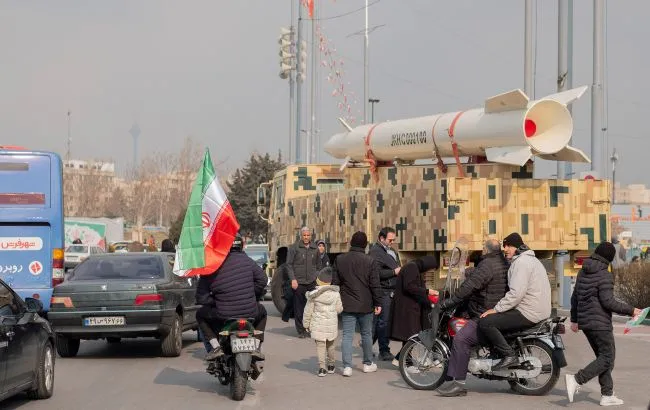
For decades, North Korea has played a key role in the development of Iran’s missile program, supplying not only weapons but also technology and engineering solutions. According to experts, it was this cooperation that allowed Tehran to transition from simple copies of Soviet missiles to modern long-range systems. Over time, this collaboration evolved into a large-scale military-technological network, UPI reports.
For over 40 years, North Korea has remained one of Iran’s main foreign partners in the field of missile technology, effectively forming the foundation of its modern missile capabilities. This is stated in reports by American experts presented at a conference in Washington and published by international media.
The cooperation began back in the 1980s, when Iran needed urgent weapons for the war with Iraq. It was then, according to analysts, that Pyongyang transferred the first batches of Scud missiles to Tehran, which became the basis for the further development of Iranian systems. “Tehran received its first 100 Scud missiles from the DPRK,” notes expert Bruce Bechtol, co-author of the book *Outcast Allies*.
Over time, the cooperation went far beyond the supply of finished weapons. North Korea transferred engineering know-how to Iran, which allowed it to modernize the missiles and create its own modifications. This led to the “Qiam” system with a range of about 800 kilometers, which served as an intermediate step toward more powerful developments.
In the 1990s, the cooperation only intensified. An Iranian delegation attended the testing of the “Nodong” missile in North Korea, after which the parties signed a contract for the supply of 150 missiles and the construction of a production plant near Isfahan. From that point on, Iran began producing Shahab-3 missiles, which became the backbone of its strategic arsenal. Today, according to experts, it is precisely these technologies that allow Iran to threaten a significant portion of the region, including the territory of Israel. The “Emad” and “Ghadr” missiles, with a range of up to 1,900 kilometers, are considered a direct result of years of cooperation with Pyongyang.
However, the cooperation is not limited to missiles. According to analysts, North Korea helped Iran build underground facilities in Natanz and Isfahan, which are effectively fortified military complexes. Such structures are extremely difficult to destroy and require extremely powerful weapons.
Additionally, DPRK specialists participated in the creation of a tunnel infrastructure for Hezbollah in Lebanon, which spans over 70 kilometers. The project’s cost is estimated at millions of dollars, underscoring the scale of this cooperation. The naval component is no less active. According to experts, Pyongyang has transferred “Yono”-class submarines to Iran, as well as high-speed boats that can be used for sabotage operations. Iran subsequently began producing some of these systems on its own.
Analysts also note that military cooperation has become an important source of revenue for North Korea. From deals with Russia alone since late 2023, the DPRK could have received about $20 billion, which is comparable to its annual economy.
International analysts are increasingly using the term CRINK—an acronym for China, Russia, Iran, and North Korea—which unites these states through military-technical cooperation, although there is no formal alliance between them. Separately, experts note that North Korean technologies have already been detected in modern conflict zones—from the Middle East to Russia’s war against Ukraine—indicating their widespread geographic reach.
In May, DTEK is sending its specialists to Middle Eastern countries to share expertise on protecting energy facilities from air attacks. This involves addressing new threats, particularly Iranian-made drones and missiles. Concurrently, the company is negotiating investments in Ukraine’s energy sector.


