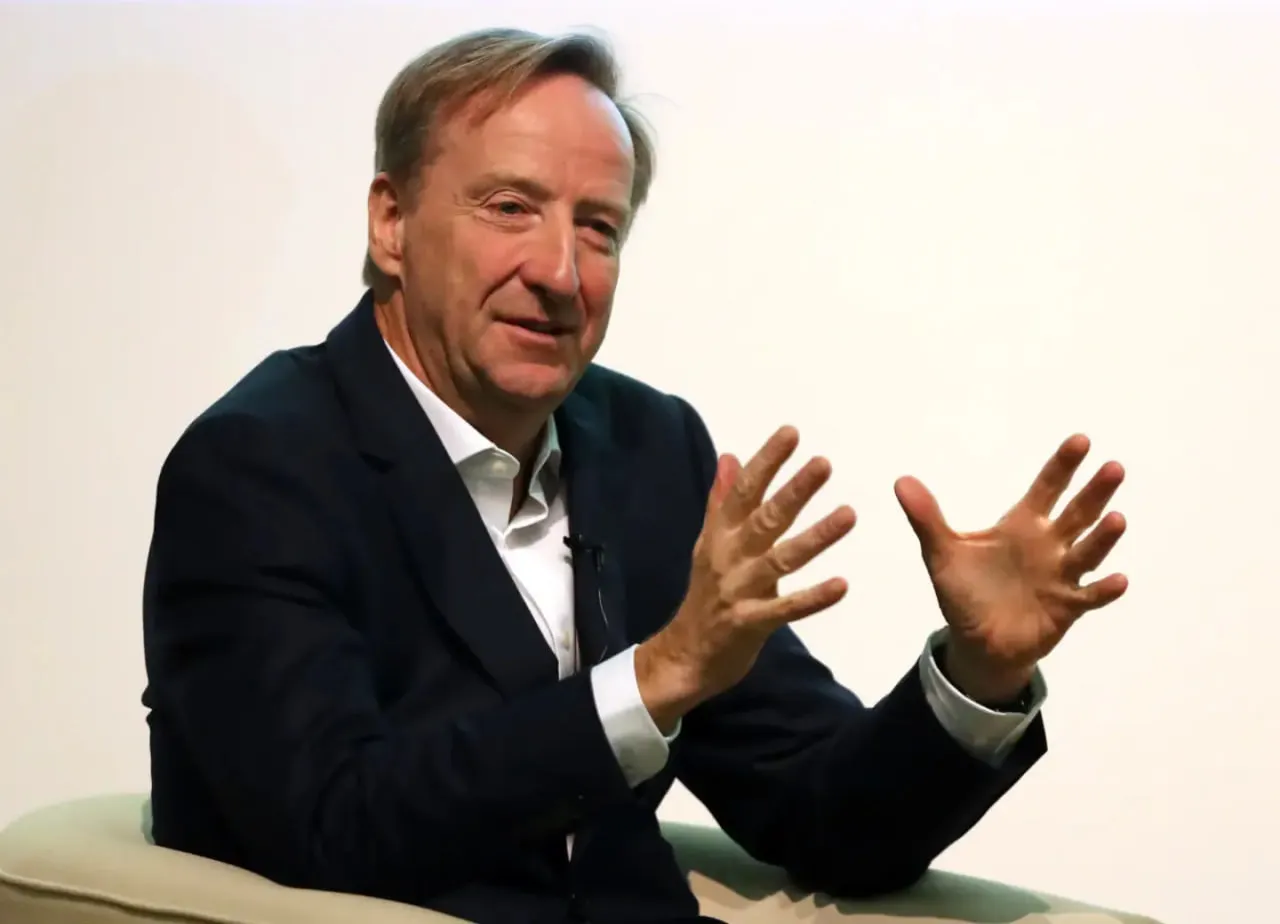
Alex Younger, the former head of the British foreign intelligence service MI6, has died at the age of 62 after a battle with cancer. According to his loved ones, he jokingly referred to his tumor as “Putin.” Prince William and British Prime Minister Keir Starmer paid tribute to the renowned intelligence officer, noting his contribution to national security and his long service in intelligence.
Younger headed the British foreign intelligence agency, also known as the Secret Intelligence Service, from 2014 to 2020 and was one of the first people in that position—codenamed “C”—whose name was publicly announced. The British government said he had been diagnosed with cancer and died on Tuesday.
BBC commentator Nick Robinson, a friend of the former intelligence chief, said that after his diagnosis, Younger named his tumor “Putin” in honor of the Russian president.
Prince William undertook a placement with British intelligence and security services in 2019 to help the future king understand their work. On Thursday, he said that Younger “embodied the very best of what the Secret Intelligence Service stands for—honesty, courage, and unwavering dedication to protecting this country and its people.”
Starmer said that Yanger “will be remembered by many ministers, colleagues, friends, and family for his boundless dedication to British public life and the defense of our nation.”
Blaise Metreveli, the current head of MI6, said that Yanger “embodied the values of my service: integrity, courage, creativity, and respect.”
"He made a long and distinguished contribution to our country and, indeed, to global security," she said.
Additional Information
Yanger was educated at the University of St. Andrews in Scotland and served as an officer in the British Army before joining MI6 in 1991. He worked in the intelligence service for three decades, including in the Western Balkans in the 1990s, where, in his words, “he spent many nights drinking obscure homemade alcohol while gauging the intentions of the parties to that conflict.”
“I took pleasure in knowing that my work, along with the work of many others, helped pave the way for the eventual arrest and prosecution of war criminals implicated in the killing or displacement of hundreds of thousands of people,” he said in a 2018 speech at his alma mater.
He also worked for MI6 in Afghanistan in the years following 9/11 and served as head of the counterterrorism unit, overseeing security during the 2012 London Olympics.
Last year, he told the BBC that the secret life of a spy had its ups and downs. He admitted that it was “nice” to be “in this show that nobody even knows about.”
“But at the same time, it’s incredibly isolating,” he said.
He acknowledged that the incredible adventures of the fictional super-spy James Bond were a mixed blessing for MI6.
“He has created a powerful brand for MI6,” Yanger said in a 2016 speech.
But, he noted, “if Bond were to apply for a job at MI6 today, he’d have to change his ways.”
Surgeons in Lviv and Kyiv saved a man from a deadly parasite in his liver.
A surgeon who left a napkin inside a woman’s body will face trial in Dnipro
The first heart transplant was performed in Odesa