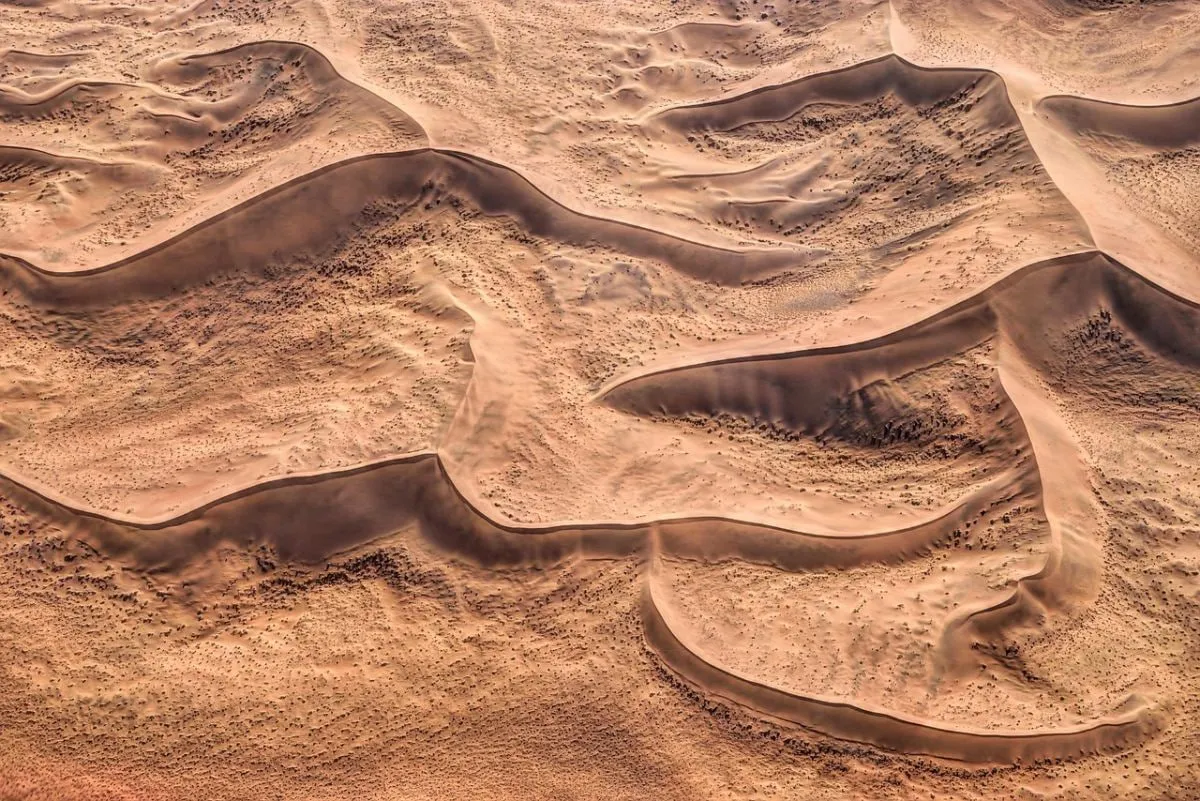
In the Namib Desert, considered the oldest desert on Earth, you can see hundreds of so-called ghost ships stranded in the sand far from the ocean. Despite their unusual appearance, these vessels once suffered shipwrecks off the coast of the Atlantic Ocean. Due to thick fog, strong currents, and difficult navigational conditions, the ships ran aground and were eventually cut off from the water by shifting sands and changes in the coastline. Today, their remains have become one of the most famous mysteries and tourist attractions of the Namib Desert.
The Namib Desert stretches more than 2,000 kilometers along Africa’s Atlantic coast. Scientists estimate its age to be 55–80 million years, which is why it is often called the oldest desert on the planet.
The Namib spans the territories of Namibia, Angola, and South Africa. At the same time, its width is relatively small—ranging from 50 to 160 kilometers.
One of the most famous parts of the desert is the so-called Skeleton Coast. Here, the cold Benguela Current meets the hot desert air, creating thick fogs that shroud the coast for over 200 days a year.
It is precisely because of the fog, shoals, and strong winds that this area has become a trap for sailors. According to researchers’ estimates, about 300 documented shipwrecks have been found here, and approximately 200 more ships may have crashed in these waters.
The most surprising thing is that some of the ships today are not near the water but in the middle of sandy expanses. Due to the constant shifting of the dunes and changes in the coastline, some vessels have ended up hundreds of meters from the ocean.
The most famous example is the German cargo steamer Eduard Bohlen. The ship ran aground in 1909 and is now located more than 300 meters from the water.
Once, waves lapped against its hull, but now only sand stretches around the ship. Inside the rusted structures, jackals often find shelter, escaping the heat.
Another famous site is the fishing trawler Zeila. It was wrecked in 2008 and remains a popular spot for photographers thanks to its easy access from the shore.
Namib is known for more than just ghost ships. It is home to the Sossusvlei dunes, which reach approximately 300 meters in height and are among the tallest in the world.
Despite the harsh climate, the desert surprises with its diversity of life. The unique Welwitschia mirabilis plant grows here, which produces only two leaves in its entire lifetime and obtains moisture mainly from the mists.
The Namib is also home to desert elephants, capable of going without water for several days. No other elephant populations possess this ability.
A significant portion of the desert is protected by the Dorob, Skeleton Coast, and Namib-Naukluft National Parks. The best time to visit is considered to be from April to October.
The Atacama Desert in Chile is becoming a hub for energy storage for solar power plants.
Ecologists have explained the appearance of feral cows in Chernobyl.
As a reminder, the previous owners—Odar and Hrytsyk—returned on April 5–6 to the nest in the Pyriatyn National Nature Park, where a new pair of storks—Kvitka and Lel—had formed on April 2.
Intelligence: Russia is losing fertile land; a desert is forming in Kalmykia.