
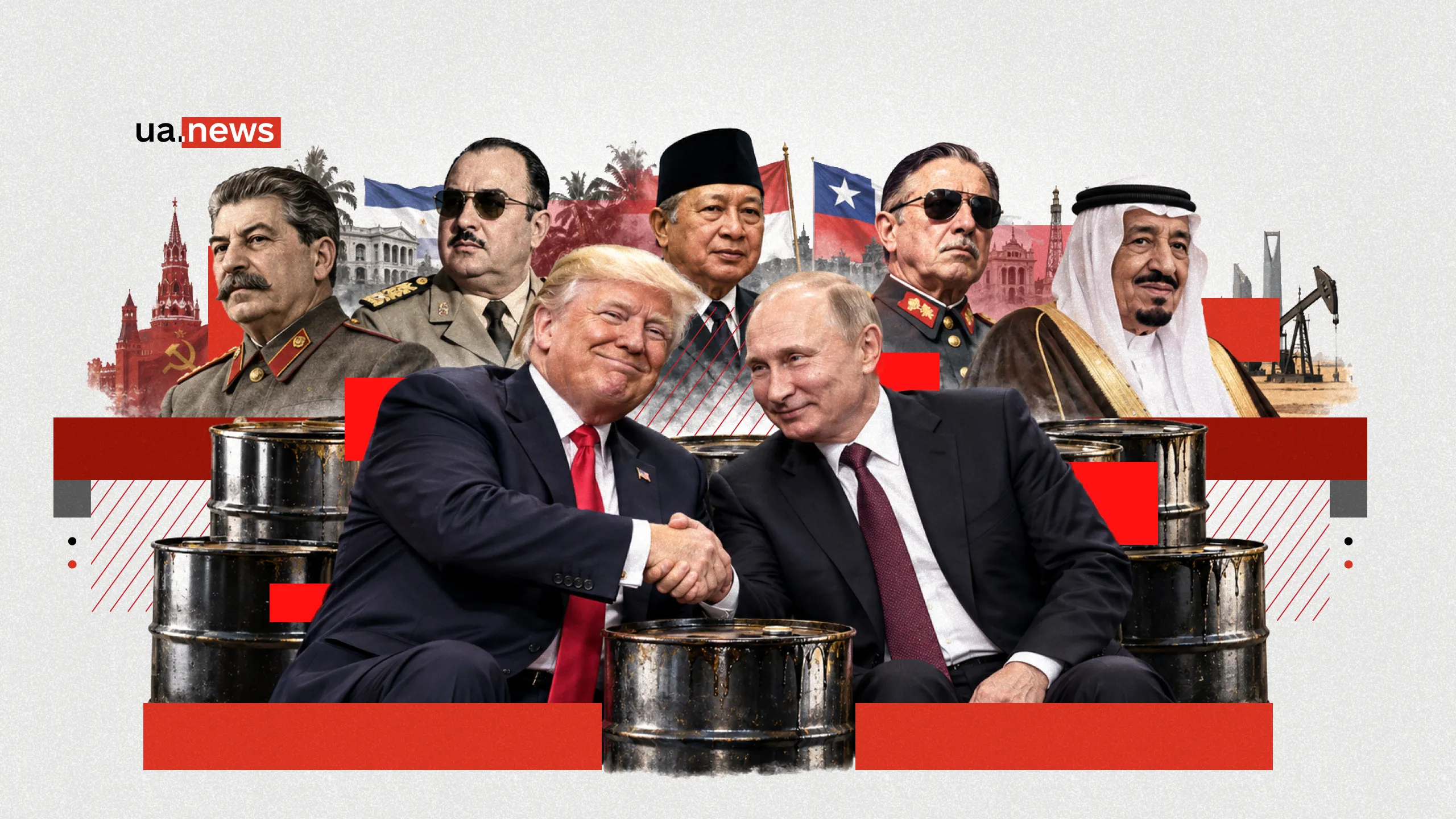
When Donald Trump announced a “diesel deal” with Vladimir Putin on Saturday, October 10, many people in Ukraine were shocked. People asked, “How is this possible? The leader of the democratic world has agreed with a dictator to lift sanctions on his exports—and didn’t even ask for anything in return.” The issue here was not so much the practical aspect as the moral and ethical one. But if we set aside our emotions and look at the entire history of the United States—especially since the 20th century—it becomes clear: this is not an anomaly. It is, in fact, the norm.
For decades (!), the U.S. has supported corrupt autocrats, dictators, and sometimes outright tyrants around the world—whenever it was in its interest to do so. This happened not because American presidents of various eras were particularly evil people. It’s simply that U.S. foreign policy has never really been about values. It has always been about pragmatism, realpolitik, and confronting whoever the White House considered an enemy.
The history of these alliances is a history of compromises that often turned into disasters. But Washington continued to make them if it served its interests at a given moment. So which dictators enjoyed U.S. support and/or patronage at various points in history? Find out more in this roundup from UA.News.
“Father of the Nations” Joseph Stalin
President Franklin Roosevelt’s alliance with Stalin during World War II is the most striking example of how the U.S. was willing to turn a blind eye to anything in the name of strategic victory. Roosevelt and Stalin exchanged hundreds of letters and met in person at international conferences in Tehran and Yalta, among other places. The U.S. president persistently sought the Soviet leader’s support as a key ally in the fight against Hitler, promising that the leader of the USSR would receive everything necessary for postwar security.
The price of this alliance was enormous. Stalin secured an agreement that all of Eastern and Central Europe would remain under Soviet influence. He received Lend-Lease: comprehensive American aid amounting to the equivalent of $150–160 billion today. He secured a seat in the UN—not only for the USSR as a whole, but also for the Ukrainian and Belarusian SSRs in particular. And he ultimately received America’s tacit consent that the West would not interfere in how Moscow “organized” its bloc. And all this—after the bloody Civil War and the “Red Terror,” after all the anti-Soviet sanctions, after the famine of 1932–33, after the “Great Terror” of 1937–38, and so on.

Anastasio “Our Son of a Bitch” Somoza
The history of American friendship with the Somoza clan began long before World War II. In 1927, the U.S. began training Nicaraguan military forces. American troops withdrew from the country in 1933. Three years later, Somoza seized power and established a dynasty that ruled Nicaragua for 42 years.
The U.S. flooded the Somoza regime with weapons and military aid. Starting in 1950, Washington provided the regime with over $30 million (more than $415 million in today’s dollars) in military aid—a substantial sum for a country with a population of just over 2 million people. It was about Somoza that Franklin Roosevelt is said to have uttered the famous phrase, “He’s a son of a bitch, but he’s our son of a bitch”—and these words capture the very essence of American realpolitik.
It wasn’t until 1978, following the high-profile murder of opposition journalist Pedro Joaquín Chamorro, that the U.S. suspended military aid. Somoza was finally overthrown in 1979. He left behind a country in ruins, facing nearly a decade of civil war.

General Suharto
In 1965, a coup took place in Indonesia that brought General Suharto to power. In just a few months (!), between 500,000 and one million (!!) people were killed: communists, leftists, ethnic Chinese, and others. It was one of the largest massacres of the second half of the 20th century. And the U.S.… fully supported it.
U.S. Ambassador to Indonesia Marshall Green wrote to Washington that “all 13 senior members of Suharto’s general staff had been trained in the U.S. under the military aid program.” U.S. Secretary of Defense Robert McNamara explicitly stated in a memo to President Johnson that the U.S. Military Assistance Program for Indonesia “significantly contributed to the anti-communist, pro-American orientation of the army and encouraged it to oppose the PII (Indonesian Communist Party—ed.).” The U.S. also spent millions on training the Indonesian military.
General Haji Mohammed Suharto ruled the country for 32 years. His regime was thoroughly corrupt and very, very brutal. But he was a consistent anti-communist—and that was enough.

Augusto Pinochet
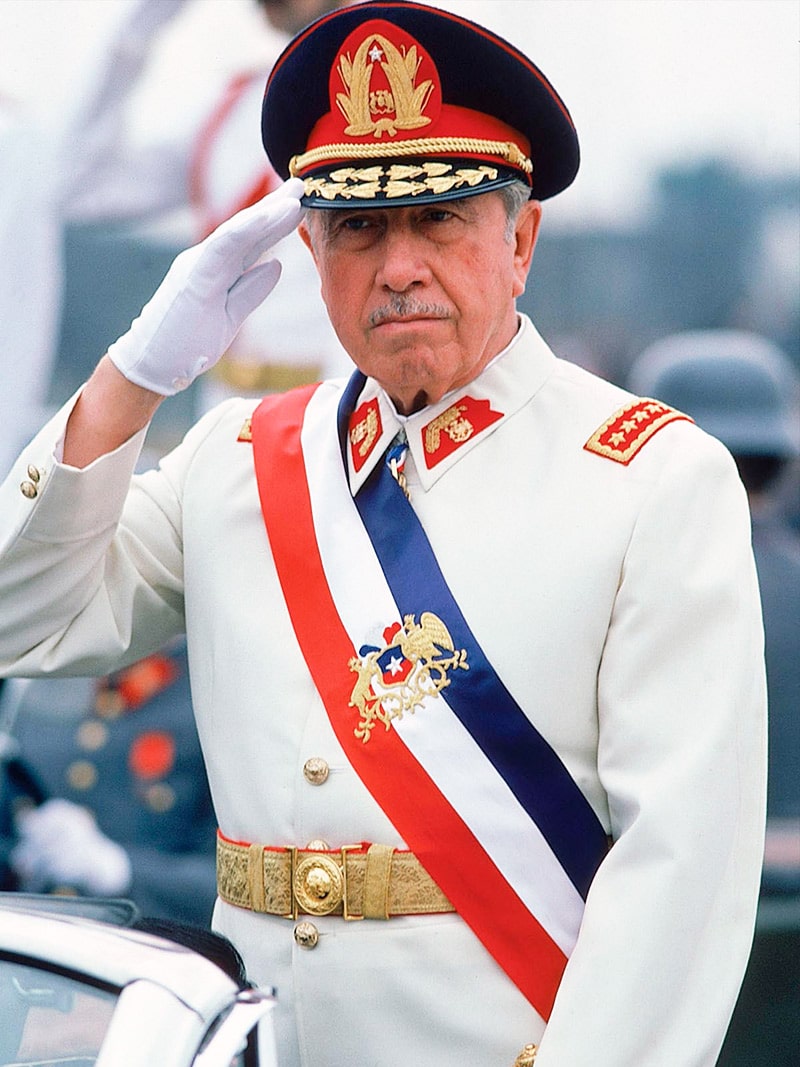
In 1970, the socialist Salvador Allende was democratically elected in Chile. U.S. intelligence agencies spent enormous resources destabilizing the situation in the country. On September 11, 1973, General Augusto Pinochet staged a coup. Allende shot himself to avoid falling into the hands of the junta. This marked the beginning of Pinochet’s 17-year dictatorship.
Declassified documents confirm that the CIA carried out large-scale covert operations to undermine Allende’s democratically elected socialist government and help bring pro-American right-wing military leaders to power. The U.S. continued to support the regime even after it became clear that the junta was torturing and killing thousands of political opponents. It was not until the late 1980s that President Ronald Reagan began to exert strong pressure on Pinochet to step down.
“The Golden Dictator” Ferdinand Marcos
Ferdinand Marcos ruled the Philippines from 1965 to 1986—first as an elected president, and from 1972 as a dictator after martial law was declared. The U.S. was his main ally throughout this period. The Philippines served as a key base for the American presence in Asia. To preserve these strategic bases, Washington turned a blind eye to virtually everything that “Apo Lakay” (Filipino for “wise leader”) Marcos did.
For example, the dictator suspended the constitution, imprisoned the opposition, imposed a curfew, and so on. According to various estimates, during his rule, approximately 3,200 people were killed, 70,000 were arrested, and 34,000 were tortured. But the administrations of Johnson, Nixon, Ford, Carter, and Reagan continued to support Marcos without fail—with weapons, money, and political cover.
The politician was also known for his lust for wealth. According to various estimates, the amount stolen in one way or another by Marcos and his associates from the Philippine state amounts to the equivalent of $22 billion today. For this, the media dubbed him the “golden dictator.”
It was not until 1986, following mass protests, that the United States abandoned him. Marcos fled to Hawaii, where he died.

Reza Pahlavi
The Shah of Iran, Mohammad Reza Pahlavi, seized absolute power in 1953 through a coup organized by the CIA. He ruled for 26 years as an absolute monarch, and during that time, Iran became a thoroughly corrupt country. His secret police, SAVAK, kidnapped, tortured, and killed opponents throughout those years. But he was pro-Western, and that was enough.
The U.S. sold billions of dollars’ worth of weapons to the Shah—all of which eventually fell into the hands of Islamists led by Ayatollah Khomeini. By the 1970s, the U.S. accounted for 60% of all arms shipments to Iran. The Shah’s regime, notorious for its rampant corruption and the immense power wielded by its intelligence services and secret police, came to an end in 1979 with the Islamic Revolution.

“The Stalin of the Middle East,
” Saddam Hussein
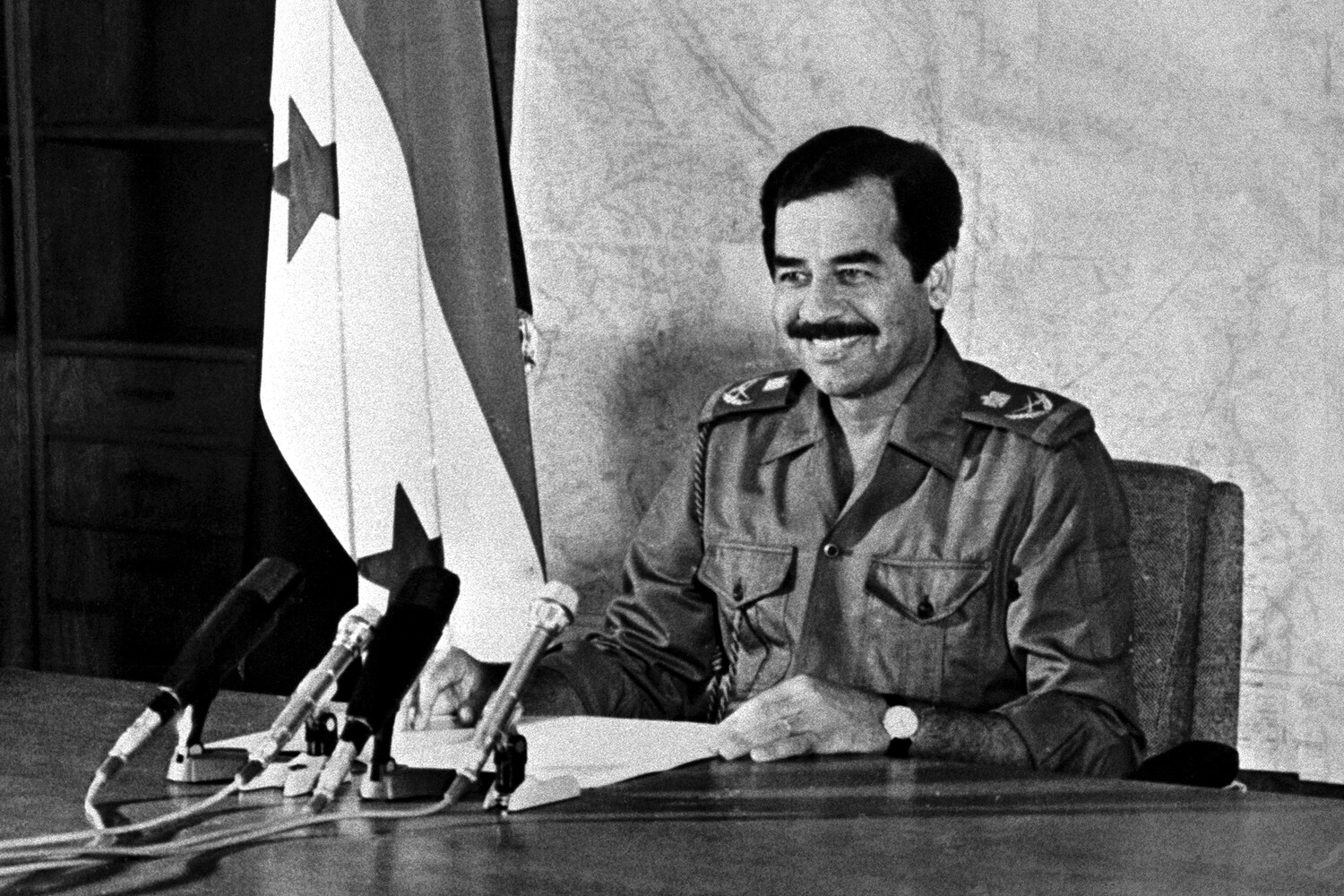
The story of Saddam Hussein is one of the most cynical and revealing in our entire list. In the 1980s, the U.S. supported Iraq in its war against Iran. Saddam used chemical weapons, among other things, against Iranian troops and against his own people (the Kurds). The U.S. was well aware of this but continued to aid Saddam as a countermeasure against the Islamist regime in Iran.
It was only after the war with Iran ended and Iraq invaded Kuwait in 1990 that the U.S. remembered that Saddam Hussein was, in fact, a bloodthirsty dictator and aggressor, one of such magnitude that he was even called the “Stalin of the Middle East.” Washington’s policy did a complete 180, and eventually, in 2003, the Americans invaded Iraq, overthrew Hussein, and in 2006, a court ordered his execution by hanging.
“The
Leopard” Mobutu Sese Seko
Mobutu Sese Seko ruled Zaire (now known as the Democratic Republic of the Congo) from 1965 to 1997. He is considered one of the most corrupt dictators in history, and because of his passion for amassing wealth, Western media even called him the “African Marcos.” His personal fortune was estimated at a minimum of $5 billion. He smuggled tons of money out of the country while his own people were begging and starving; he ruled like a king, regularly repressing political opponents, and so on.
And all the while, Seko remained the United States’ main ally in Central Africa. “Leopard” Mobutu, so named for his extravagant appearance, was a regular visitor to the White House during the presidencies of every president from Johnson to Bush Sr. In 1986, President Reagan called him “a voice of common sense and goodwill.” When Mobutu was overthrown in 1997, the country lay in ruins.
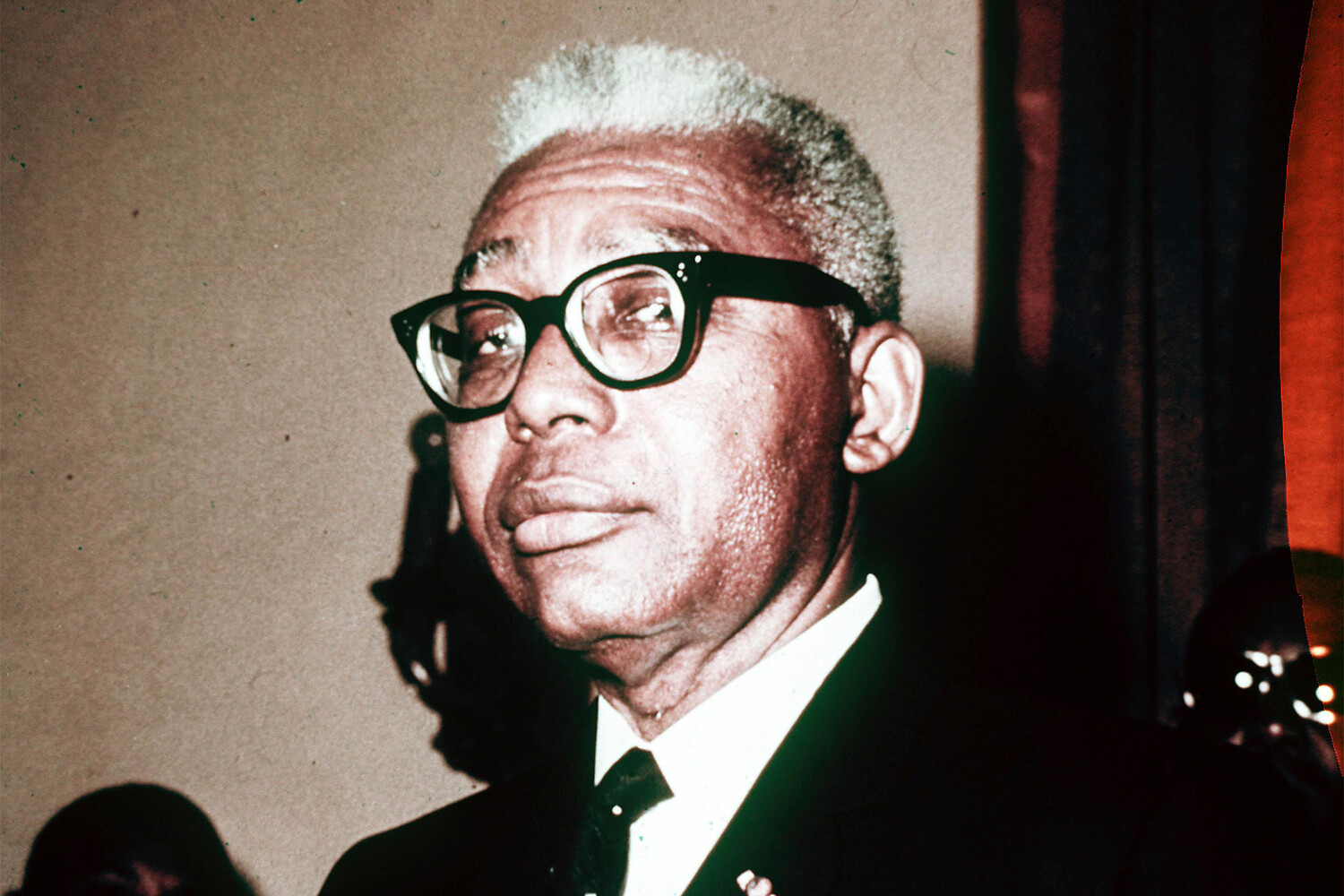
François “Papa Doc” Duvalier
François Duvalier, also known as “Papa Doc,” ruled Haiti from 1957 to 1971. He is the quintessential Caribbean dictator. “Papa Doc” created a secret police force that tortured and killed political opponents; he plundered the economy of what was already the poorest country in the Western Hemisphere, he killed tens of thousands of Haitians and forced hundreds of thousands to flee the country. His death squads, bearing a skull emblem—the “tonton macoutes”—became a symbol of terror known throughout the world. But at the same time, he was an anti-communist, and that was enough for the United States.
In 1958, Duvalier requested an American naval training mission. The U.S. ambassador was opposed: he wrote to Washington that the prisons were overflowing with political prisoners, opposition publications had been shut down, and the regime was thoroughly corrupt. But the mission was approved anyway. From 1958 to 1960, the U.S. tried to balance its support for Duvalier with demands that he, so to speak, improve his behavior. None of this, however, came to fruition.
President Kennedy tried to put pressure on Haiti by cutting off aid. But at the same time, the U.S. financed the construction of a massive airport, which became a propaganda triumph for Duvalier. What remained of the Haitian opposition rightly pointed out at the time that Washington itself was handing “Papa Doc” his trump cards.
Duvalier remained in power until his death, and his son, Duvalier Jr., known as “Baby Doc,” kept the regime going for another 15 long years. “The funniest thing” is that the Haitian dictator was never particularly grateful to the U.S. and publicly complained about the “meagerness” of American aid, claiming that it was American stinginess—not his rampant corruption—that was the real cause of Haiti’s poverty.
The Al-Saud
Dynasty in Saudi Arabia
The most recent example is a modern one, but it merely continues a long-standing tradition. For decades, the U.S. has supported Saudi Arabia and its royal Al-Saud dynasty (it is, in fact, named after their surname that Arabia is called “Saudi”)—which, according to various estimates, has ruled the country for about 280 years. This support continues despite the fact that it is an absolute theocratic monarchy where there are no elections, where women until recently were not even allowed to drive, where the very concept of a “democratic opposition” does not exist, where there are no political parties, and so on.
The reasons are simple, and there are only two: oil and security. Back in 1945, President Franklin Roosevelt struck a deal with King Abdulaziz Al Saud based on a simple formula: American protection in exchange for Saudi oil. This formula still holds true today.

That is
precisely why, when journalist Jamal Khashoggi entered the Saudi Arabian consulate in Istanbul in 2018, where he was brutally murdered and his body dismembered, Washington’s reaction was very muted. Trump called it “horrible,” but did nothing. Moreover, in 2025, he welcomed Crown Prince Mohammed bin Salman to the White House, called him a “friend,” and signed a new arms sale agreement.

To sum up, the history of American friendship with dictators is not a story of some “betrayal of values.” It is a story about how values have simply never been the top priority of foreign policy. The U.S. has always chosen pragmatism, stability, and self-interest; it has always chosen “its own sons of bitches” over “those of others.” That is precisely why they have become what they are: still the most powerful nation on the planet—and therein lies a lesson for Ukraine as well.




