
The Czech Prime Minister stated that his country is prepared to respond to a Russian attack
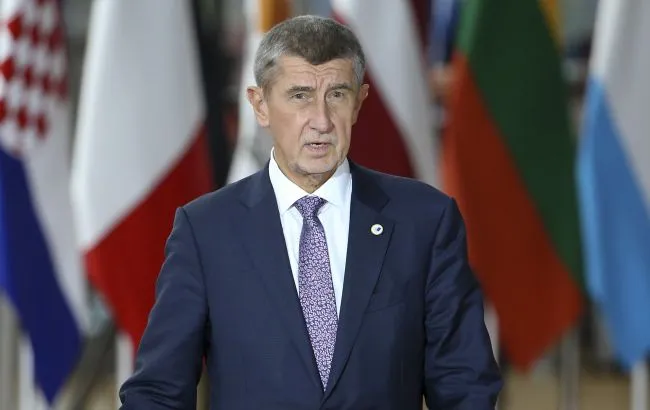
Czech Prime Minister Andrej Babiš stated that his country is ready to fulfill its NATO obligations if Russia attacks one of the Baltic states. According to him, in such a case, the Czech Republic must be ready to deploy two mechanized brigades, and Prague is already working out relevant scenarios together with President Petr Pavel.
Czech Prime Minister Andrej Babiš declared the country’s readiness to assist its NATO allies in the event of a possible Russian attack on one of the Baltic states. According to him, the Czech Republic must fulfill its obligations to the Alliance. In Prague, officials are already discussing possible scenarios and preparing for them. “The fact that we aren’t talking about this and journalists aren’t getting material for their articles doesn’t mean we aren’t addressing this issue. Of course, we are preparing,” Babiš said in a comment to a Czech publication, as quoted by Reuters.
The prime minister added that in the event of a Russian attack on one of the Baltic states, the Czech Republic, in his opinion, would have to act in accordance with Article 5 of the North Atlantic Treaty. “If, God forbid, Russia attacks one of the Baltic states, then under Article 5 we must send two of our mechanized brigades,” Babiš stated.
He also noted that Czech officials are in constant dialogue with President Petr Pavel on security matters. According to Babiš, some of these discussions are not made public, but this does not mean that the government is not preparing for potential threats.
What NATO’s Article 5 Provides
NATO’s Article 5 establishes the principle of collective defense. If an armed attack is launched against one Alliance country, it is considered an attack on all NATO members. However, there is an important nuance. Article 5 does not stipulate that every country must automatically deploy a specific number of troops. Each ally determines for itself what actions it deems necessary to assist the country under attack. This may include the use of armed forces, but is not necessarily limited to that.
Therefore, two mechanized brigades represent a specific course of action proposed by Babiš himself, rather than a requirement explicitly stipulated in Article 5. NATO also notes that decisions regarding a joint response are made by the allies after assessing the situation. It is the Alliance that coordinates the further actions of member states.
Why Babiš’s statement drew attention
This latest statement stands out particularly against the backdrop of Babiš’s position during the 2023 presidential campaign. At that time, he was a candidate for the Czech presidency and, during a televised debate, stated that he would not send Czech troops to defend Poland or the Baltic states in the event of a Russian attack on them. Babiš explained his position as a desire to prevent war and emphasized the need to talk about peace. “I want peace; I don’t want war. And under no circumstances would I send our children and the children of our women to war,” he said at the time.
These remarks sparked a sharp reaction in the Czech Republic and other NATO countries. Babiš was criticized for making a statement that called into question the Czech Republic’s readiness to uphold the Alliance’s principle of collective defense. Later, the politician explained that his words had been misrepresented and stated that he did not question NATO’s Article 5.
Now, as prime minister, Babiš speaks openly about the Czech Republic’s readiness to respond to a possible attack on its allies. Reuters also notes that his current government has halted Czech contributions to military aid for Ukraine and has refused to make certain contributions to EU and NATO programs supporting Kyiv. At the same time, the government affirms the need to fulfill the Czech Republic’s obligations to NATO.
Babiš himself has publicly emphasized in recent months that the Czech Republic remains a member of NATO and must fulfill its alliance obligations. In late September, he also stated that the country’s defense capabilities and fulfillment of its obligations to the Alliance are government priorities. Thus, Babiš’s current statement differs markedly from his rhetoric during the 2023 presidential campaign. Now he is speaking not only about diplomacy and the need to avoid war, but also about a specific military response by the Czech Republic in the event of a Russian attack on its allies in the Baltics.
However, this refers specifically to a hypothetical scenario. Russia has not attacked the Baltic states, and the Czech Republic is not currently sending its troops to war against Russia. Babiš is speaking of a readiness to act should such an attack occur. This is reported by Reuters.




