
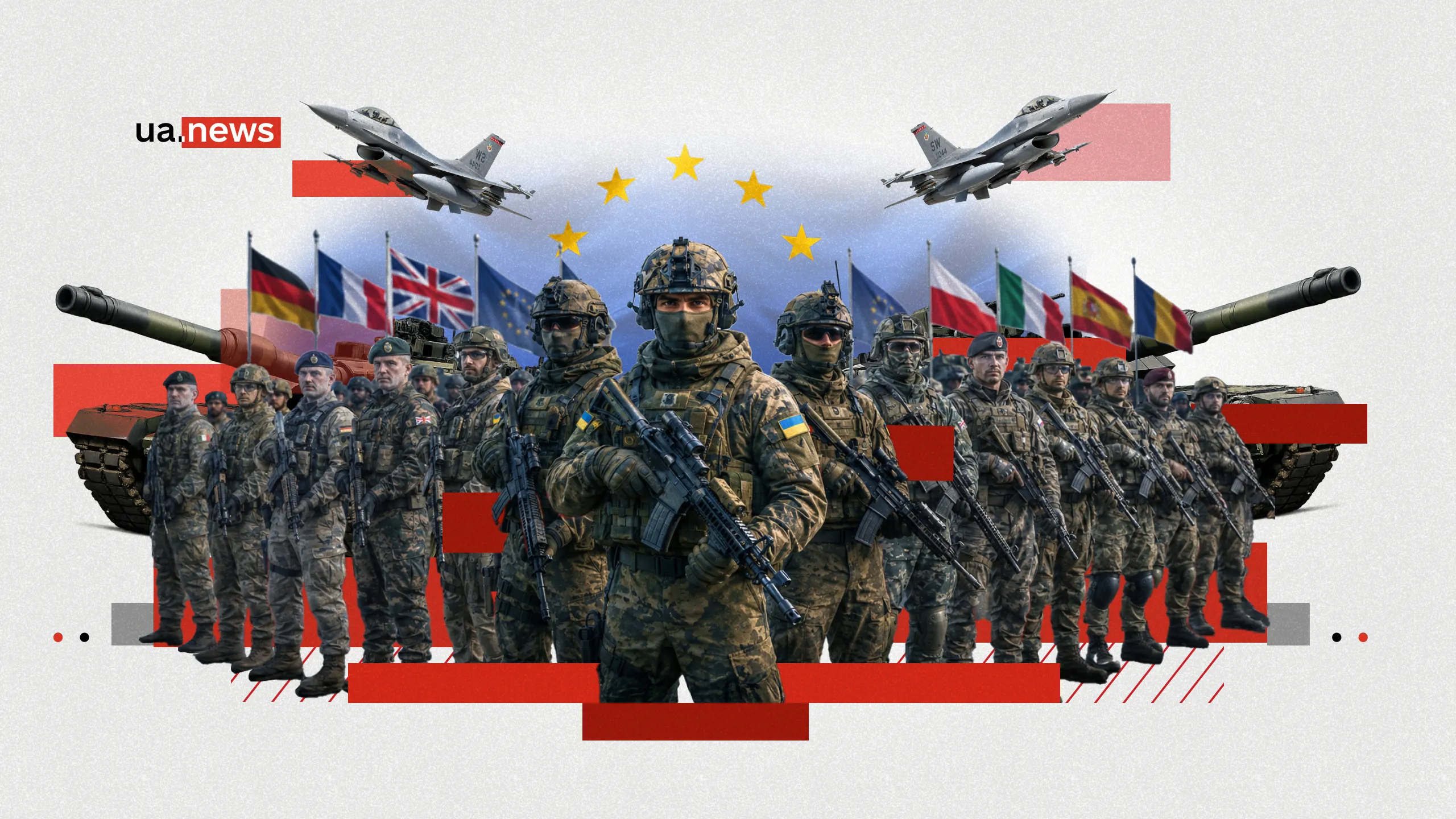
The idea of a unified European army, once viewed as the dream of a few Western federalist intellectuals or a grim reminder of the failure of the 1950s, is now firmly entrenched in public discourse. As of June 2026, discussions about a unified European Armed Forces have moved from the backrooms of think tanks to official statements by top leaders. The discussion gained fresh momentum following statements in May from the Spanish Ministry of Foreign Affairs, which once again called for the creation of a unified EU army.
However, behind the high-profile political slogans lies an extremely complex and fragmented reality, where the pursuit of strategic defense autonomy is hampered by competing national interests, legal conflicts, and a lack of funding. Ukraine could play a key role in this potential new security architecture—not merely as a recipient of aid, but as a full-fledged part of the new security network.
Where did the idea of a unified European army come from in the first place, why hasn’t it been implemented before, and what is the current situation? UA.News political analyst Mykyta Trachuk, together with experts, examined the issue.
From the Failure of the European Defense Community to Macron’s “Strategic Autonomy”
The history of a unified European army did not begin today, nor in 2022, nor even in 2014—a year many mistakenly consider the starting point. The roots of these ideas go back to the early 1950s, immediately after World War II. Back then, in 1952, the Treaty establishing the European Defense Community (EDC) was signed, which provided for the formation of a joint army under the leadership of supranational bodies. It was an ambitious plan that was far ahead of its time: it called for the unification of the armed forces of France, West Germany, Italy, and the Benelux countries, with the creation of a joint budget and a single military command. But in 1954, the French National Assembly rejected the ratification of this agreement. The paradox was that it was precisely the French politicians, who had promoted the idea of a unified army as a way to control potential new German militarization, who were afraid of… losing their own sovereignty. Thus, the first attempt to create a European army failed spectacularly.
The idea was revived in the late 1990s, when numerous bloody wars in the Balkans revealed Europe’s complete helplessness without the American military machine. In 1998, a historic meeting took place in the French city of Saint-Malo between French President Jacques Chirac and British Prime Minister Tony Blair. The declaration they signed recognized that the European Union must have the capacity for autonomous military action, backed by appropriate military force. This marked a tectonic shift in London’s position, as the UK had traditionally blocked any defense initiatives that might compete with NATO.
But it was Putin’s aggression that sparked a true renaissance of the idea. Active discussions about a European Armed Forces resumed after the annexation of Crimea and the start of the war in Donbas in 2014. Brexit in 2016 played an unexpectedly constructive role by removing the main domestic opponent of a unified army—Britain, which had consistently vetoed any attempts to duplicate NATO’s functions. And in 2018, French President Macron spoke out loudly about the need for Europe’s “strategic autonomy” and the creation of a unified EU army. He was supported by then-German Chancellor Angela Merkel, who acknowledged that the days when Europe could unconditionally rely on others were over.
Following Russia’s full-scale invasion of Ukraine in 2022, the creation of a European Defense Union began to be promoted at the European Commission level. The current head of European diplomacy, Kaja Kallas, regularly emphasizes the need for accelerated militarization of the EU, and her rhetoric is gaining more and more supporters.
Catalysts for Change: Why Is the EU Army Being Discussed Right Now?
So why is the idea of a unified European army moving from theory to the agenda right now? There are three key catalysts.
The first and most obvious is Russian aggression. In principle, this point requires no further explanation. The Russian Federation’s military, numbering nearly 2.4 million people—1.5 million of whom are active-duty service members, and more than 700,000 of whom are fighting in Ukraine, gaining frontline combat experience—poses a direct threat to Europe.
The second factor is the U.S.’s policy of isolationism and unpredictability. Under the Trump presidency, transatlantic relations are undergoing an unprecedented stress test. It’s not just that, for some reason, he viewed NATO as his own army for intervening in Iran and became very angry when the allies did not support this adventure. The issue lies in a systemic approach: the American leader is generally very skeptical of the Alliance, and especially of the EU. After all, we can recall the direct threats of a U.S. withdrawal from NATO. So Europeans have realized: they can no longer wake up every morning wondering what’s on the mind of the occupant of the White House this time.
And the third, often underestimated factor is a legal loophole in Article 5 of the North Atlantic Treaty, which does not actually guarantee automatic military intervention in the event of an attack. For some reason, many people mistakenly believe that Article 5 obligates allies to go to war on behalf of the country that has been attacked. In reality, one need only open the document and read it: the wording there is quite cautious, and assistance is provided as the country “deems necessary, including the use of armed force”—but the latter is by no means mandatory.
Fragmentation Instead of Unity: The Paradox of the New Militarization
Observing current developments, it is easy to make the mistake of calling what is happening the birth of a unified European army. In reality, however, we are witnessing an entirely different phenomenon—a parallel, at times chaotic, military fragmentation that only remotely resembles a centralized union. Europe is rapidly rearming, but it is doing so primarily at the national level.
The most striking example is Poland, which is currently building the largest land army on the continent. The Baltic states, Finland, and Sweden are also increasing their defense spending at record rates, building new barracks, and restoring training grounds. However, all these efforts have not yet resulted in a unified army. Rather, they amount to competition among national defense-industrial complexes, debates over who will secure the “lucrative” contracts, and attempts to protect their own borders without paying much heed to Brussels. The European Commission is trying to coordinate these processes by encouraging joint arms procurement and investing in the development of the European defense industry, but resistance from national governments remains significant. Every country wants its own tank, its own fighter jet, and its own ammunition factory. This is the paradox of the moment: the desire for autonomy from the U.S. is not leading to European integration, but rather to the increasing autonomy of individual states. And this is perhaps the biggest stumbling block on the path to a unified EU armed forces.
Against this backdrop, Ukraine occupies a special place. It has become an integral part of this fragmented security system, but in a unique way. Realizing that full NATO membership constantly dangles like an unattainable carrot, Kyiv can and must bet on a unified European army, as well as direct defense agreements with individual EU member states.
Pitfalls and Realities of 2026
Despite the relevance of the idea of a unified EU army, there are fundamental obstacles standing in the way—obstacles that will not disappear today, tomorrow, or even a year from now.
The first and most important is the issue of sovereignty. Placing command of national armed forces under Brussels’ jurisdiction is a decision no government is ready to make. Even in the most pro-European countries, the idea of supranational control over the military is met with skepticism. This is especially true of France, which has traditionally jealously guarded its military independence and nuclear arsenal, or of Eastern European countries, which have only just built their own combat-ready armies and are in no hurry to share this instrument of influence.
The second obstacle is money and production capacity. A joint army requires a joint budget, standardized weaponry, and compatible communications and logistics systems. Currently, however, European armies use dozens of different types of battle tanks, several incompatible communications systems, weapons of various calibers, and so on. Finally, despite significant growth, the European defense industry still lags far behind the American one in terms of production volume, and there is no way to change this quickly.
And the third stumbling block is the difference in threat assessments. For Ukraine, Poland, and the Baltic states, the main potential enemy is Russia; this is a perfectly clear issue, and all resources are directed toward deterrence on the eastern flank. However, for countries such as Spain, Italy, or Portugal, the threat from Russia is perceived differently. They are more concerned about instability in the Mediterranean and North Africa, migrant flows, terrorism, and so on. This difference in security perceptions makes agreeing on a unified defense doctrine an extremely difficult task.
Expert Opinions
Military expert and retired U.S. Navy Captain Harry Tabach commented on the situation as follows:
“In the foreseeable future, there is no realistic prospect of creating a unified European army. They don’t have a unified plan or budget. And how can that be done in a ‘collective farm’? Only by order from the center. The center is the U.S., and the budget is also in the U.S. Well, and Europe won’t be fighting an external enemy, but an internal one that has already occupied them—Islamists. Well, good luck! And the idea itself is wonderful. Like communism, like equality and brotherhood. However, it’s not realistic.”
Military expert Oleg Zhdanov is convinced that a unified European army is not a fantasy, but an attempt to bring to life what is laid out in the very foundation of the EU.
“Former German Chancellor Schröder was involved in laying the legal groundwork for the creation of the EU, and right there in the very first points, the creation of a United European Security Force was stipulated. But when he announced this, he was ousted from the chancellorship in the next election. And Bill Clinton launched the bombing of Yugoslavia precisely to bring Europe back under the dollar’s influence and to prove that, apart from NATO, no one else would protect you, so you don’t need any united forces. Now, however, we are seeing efforts to strengthen Europe’s sovereignty and implement the provisions set forth in the EU Charter. This is a political power struggle between the U.S. and Europe that has been going on for decades.
In general, there have been several attempts to create a European army. Incidentally, France and Italy have gone further than anyone else; they even have a joint brigade. They are following our path of the Lublin Triangle. We first created a Polish-Lithuanian-Ukrainian battalion, then a brigade, and then a headquarters, which began standardizing the combat regulations of all three countries. If Europe creates its own security forces, the question of NATO will arise. NATO will simply become unnecessary for Europe. Because there’s no point in maintaining two armies at the same time. We could conclude separate alliance treaties with the U.S. and the U.K., and that would be it,” says Oleg Zhdanov.
In summary, as of mid-2026, it is still very, very early to speak of the emergence of a fully-fledged unified European army, but it is impossible to deny the tectonic shifts in the mindset of European leaders. Europe is not creating an EU army as a single entity, but it is rapidly moving toward greater autonomy from the United States. What is happening can be called “Plan B for defense”: while politicians argue over institutional forms, national armies are being strengthened in parallel, defense budgets are growing, small military coalitions based on shared interests are forming, the European defense industry is developing, and so on. This process is fragmented and contradictory, but its overall result is a gradual reduction in dependence on the U.S.
It was Donald Trump—who tried to force Europe to pay for its own security and threatened to dismantle NATO—who did more to strengthen the EU’s military capabilities and autonomy than all European leaders combined over the past half-century. He (along with Putin, of course) became the catalyst that more or less roused the inert system. And now that this process is underway, it no longer depends on who is in the White House or the Kremlin.
In this new reality, Ukraine plays the role of both a catalyst and a structural element. It was the war in Ukraine that revealed the fragility of European security, which depends on American aid and the political mood in the White House. It was the Ukrainian experience that forced European capitals to reflect on their own arsenals, mobilization reserves, and ability to wage war without the United States.
And although Ukraine’s full membership in a unified EU armed forces remains a distant prospect for now, Kyiv still has every chance of becoming a full-fledged participant in the new security system. A unified European army, if it is ever to come into being, will do so by drawing on Ukraine’s combat experience and its technological solutions in the fields of drones and modern warfare. Europe cannot afford to leave Ukraine out of this process. Too high a price has already been paid for this new security architecture, and it is all too clear that without Ukraine, European defense will be incomplete.


