
King Charles III’s Resounding Speech to the U.S. Congress – Full Text
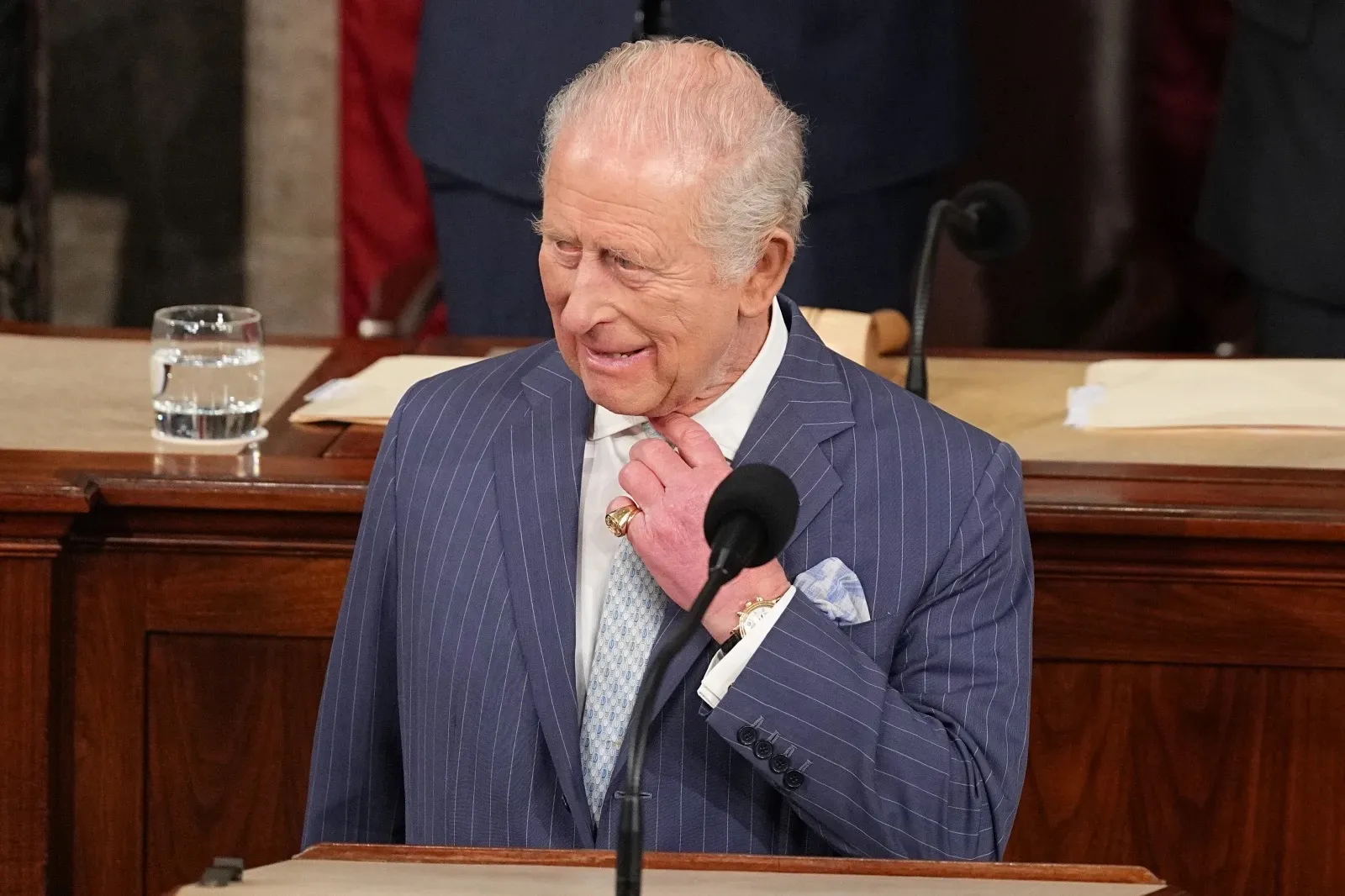
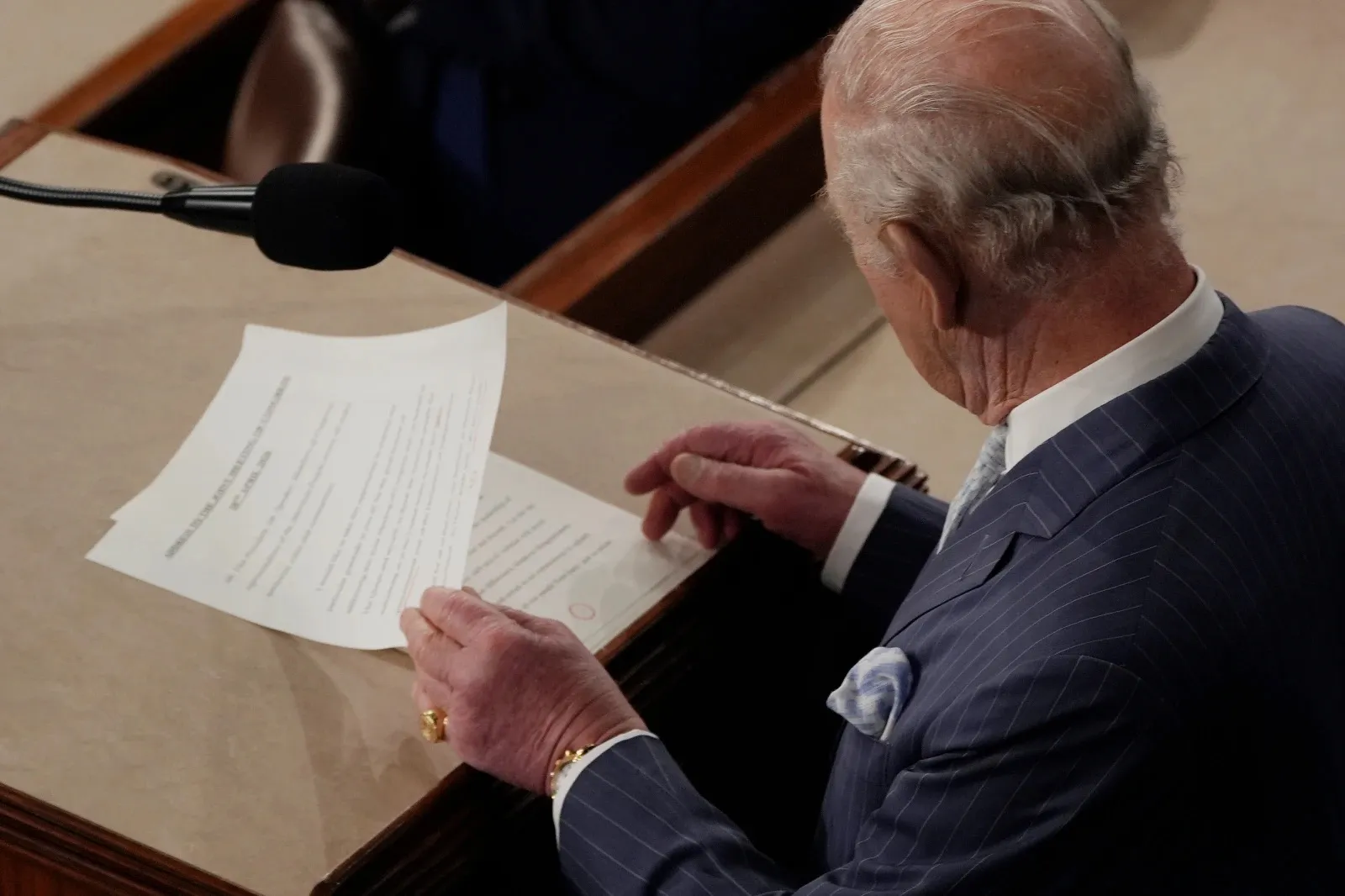
During his first state visit to the United States, King Charles III of the United Kingdom delivered a 28-minute speech to Congress that generated significant attention. His remarks blended humor with important political messages.
Here is the text of the King’s speech:
Times of great uncertainty
“Mr. Vice President, Mr. Speaker, Members of Congress, representatives of the American people from every state, territory, city, and community.
I would like to take this opportunity to express my special gratitude to all of you for the great honor of addressing this joint session of Congress, and also, on behalf of the Queen and myself, to thank the American people for welcoming us to the United States on the occasion of the 250th anniversary of the Declaration of Independence.
And throughout this time, the destinies of our nations have been closely intertwined. As Oscar Wilde said: “Today we have everything in common with America, except, of course, the language.”
Ladies and gentlemen, we meet at a time of great uncertainty; at a time of conflicts from Europe to the Middle East that pose enormous challenges to the international community and whose impact is felt in communities across our countries.
We also gather here in the wake of an incident that took place near this magnificent building, intended to harm your country’s leadership and sow fear and discord among the people. Let me say with unwavering resolve: such acts of violence will never succeed. Whatever our differences, whatever our disagreements, we stand united in our commitment to defend democracy, to protect all our people from danger, and to honor the courage of those who risk their lives every day in service to our countries.
Standing here today, it is hard not to feel the weight of history on my shoulders—for the modern relationship between our two countries and our peoples spans not just 250 years, but more than four centuries. It is truly remarkable to think that I am the 19th in the line of our monarchs to devote daily attention to the affairs of America.
Respect and Friendship with the United States
So, today I have come here with the deepest respect for the United States Congress—this citadel of democracy, created to represent the voice of the entire American people and to defend their sacred rights and freedoms. Speaking in this hallowed chamber of debate and deliberation, I cannot help but recall my late mother, Queen Elizabeth, who was also granted this great honor in 1991 and who also spoke under the watchful gaze of the Statue of Liberty towering above us. Today I stand here, at this great moment in the lives of our nations, to express the highest respect and friendship of the British people to the people of the United States.
As you may know, when I address our Parliament at Westminster, we still follow an old tradition of taking one of the Members of Parliament “hostage,” holding him or her at Buckingham Palace until I return safe and sound. These days, we take such good care of our “guest” that he or she often doesn’t want to leave. I wonder, Mr. Speaker, if there are any volunteers here today for this role?
When I look back over the past centuries, Mr. Speaker, certain patterns emerge, certain self-evident truths from which we can learn and draw shared strength. Recalling the spirit of 1776, we can probably agree that we do not always reach agreement—at least not at first. Indeed, the very principle upon which your Congress was founded—“no taxation without representation”—was both the primary cause of our disagreements and a shared democratic value that you inherited from us.
Our partnership was born out of a dispute, but that did not make it any less strong, so perhaps this example shows that our peoples actually instinctively share common views—a result of the shared democratic, legal, and social traditions upon which our governance is still based today. Building on these values and traditions, our two countries have time and again always found ways to reach an understanding. And, my goodness, Mr. Speaker, when we found that path to agreement, what great changes it brought—not only for the benefit of our peoples, but for all peoples.
This, in my view, is a special ingredient in our relationship. As President Trump himself noted during his state visit to the United Kingdom last fall: “The bond of kinship and identity between America and the United Kingdom is priceless and eternal. It is irreplaceable and unbreakable.”
This is by no means my first visit to Washington—the capital of this great republic. In fact, this is already my 20th trip to the United States and my first as King and Head of the Commonwealth. This is a city that embodies a particular period of our shared history, or what Charles Dickens might have called “The Tale of Two Georges”: the first president, George Washington, and my great-great-great-great-great-grandfather, King George III. King George never set foot on American soil, and rest assured, I am not here as part of some clever rear-guard operation.
The Founding Fathers were bold and creative rebels fighting for a just cause. Two hundred and fifty years ago—or, as we say in Britain, “just the other day”—they declared independence. By balancing opposing forces and drawing strength from diversity, they united 13 scattered colonies to create a nation based on the revolutionary idea of “life, liberty, and the pursuit of happiness.” They carried with them and carried forward the great legacy of the British Enlightenment, as well as ideals that had an even deeper history in English common law and the Magna Carta.
These roots run deep, and they remain vital to this day. Our 1689 Declaration of Rights was not only the foundation of our constitutional monarchy but also the source of many principles repeated, often verbatim, in the 1791 American Bill of Rights. And these roots go even further back in our history: The Historical Society of the U.S. Supreme Court has calculated that the Magna Carta has been cited in at least 160 Supreme Court cases since 1789, notably as the basis for the principle that the executive branch is subject to a system of checks and balances.
That is why a stone stands by the River Thames in Runnymede, where the Magna Carta was signed in 1215. This stone commemorates the fact that one acre of this ancient and historic land was gifted to the United States of America by the people of the United Kingdom as a symbol of our shared commitment to freedom and in memory of President John F. Kennedy.
The Triumph of Light Over Darkness
Distinguished members of the 119th Congress, right here in these halls, the spirit of freedom and the promise of America’s founders are present at every session and during every vote. Not by the will of one, but as the result of deliberation by many, representing the living mosaic of the United States. In both our countries, it is precisely the fact that our societies are dynamic, diverse, and free that gives us collective strength, particularly to support the victims of certain ills that, unfortunately, tragically exist in our societies today.
And, Mr. Speaker, for many here—and for me personally—the Christian faith is a strong anchor and a daily source of inspiration that guides us not only on a personal level but also together, as members of our community. Having devoted a significant part of my life to interfaith relations and deepening mutual understanding, I have been convinced countless times of the victory of light over darkness.
Thanks to this, I am inspired by the deep respect that arises when people of different faiths better understand one another. That is why I hope—and pray—that in these turbulent times, by working together and with our international partners, we will be able to stop the transformation of oral blades into swords.
I realize that we are still in the Easter season, which strengthens my hope the most. That is why I believe with all my heart that the essence of our two nations lies in generosity of spirit and a duty to foster compassion, promote peace, deepen mutual understanding, and value all people, regardless of their faith or lack thereof.
The alliance that our two nations have built over the centuries—and for which we are deeply grateful to the American people—is truly unique. And this alliance is part of what Henry Kissinger called Kennedy’s “grand vision” of an Atlantic partnership founded on two pillars: Europe and America. This partnership, Mr. Speaker, in my view, is more important today than ever before.
The first reigning monarch of Great Britain to set foot on American soil was my grandfather, King George VI. He visited America in 1939, accompanied by my beloved grandmother, Queen Elizabeth, the Queen Mother. The forces of fascism were advancing in Europe, and shortly before that, the United States had joined us in the defense of freedom. Our shared values prevailed. Today we find ourselves in a new era, but those values remain unchanged. It is an era that, in many ways, is more unstable and dangerous than the world my late mother spoke of in this hall in 1991.
Great Challenges and Partnerships
The challenges before us are too great for any country to face alone. But in these unpredictable times, our alliance cannot rest on past achievements or assume that fundamental principles will remain unchanged. As my Prime Minister said last month: “Our partnership is indispensable. We must not ignore everything that has sustained us over the past eighty years. On the contrary, we must build on it.”
Today, renewal begins with security. The United Kingdom recognizes that the threats we face require a transformation of British defense. That is why, to be ready for the future, our country has committed to the largest sustained increase in defense spending since the Cold War—during which, over 50 years ago, I served with immense pride in the Royal Navy, following in the footsteps of my father, Prince Philip, Duke of Edinburgh; my grandfather, King George VI; my cousin, Lord Mountbatten; and my great-grandfather, King George V.
This year, of course, marks the 25th anniversary of the tragic events of September 11. That horrific tragedy was a defining moment for America, and your pain and shock were felt around the world. During my visit to New York, my wife and I will once again pay tribute to the victims, their families, and the courage shown in the face of such a terrible loss. We were with you then. And we are with you now, solemnly commemorating a day that will never be forgotten.
Immediately after September 11, when NATO invoked Article 5 for the first time, and the UN Security Council united in the face of terror, we answered that call together—just as our nations have done for over a century, side by side, during two world wars, the Cold War, in Afghanistan, and at other moments that defined our shared security.
Today, Mr. Speaker, that same unwavering resolve is needed to defend Ukraine and its bravest people. It is needed to ensure a truly just and lasting peace. From the depths of the Atlantic to the catastrophically melting ice caps of the Arctic, the dedication and expertise of the United States Armed Forces and their allies form the foundation of NATO, which is committed to defending one another, protecting our citizens and interests, and ensuring the safety of the people of North America and Europe from our common adversaries.
Our ties in defense, intelligence, and security are firmly intertwined through relationships measured not in years, but in decades. Today, thousands of American service members, defense personnel, and their families are stationed in the United Kingdom, just as British service members serve with no less pride in 30 U.S. states. We are building F-35 fighter jets together. Furthermore, we have agreed to implement the most ambitious submarine-building program in history—AUKUS—in partnership with Australia, a country whose sovereign head I also have the immense honor of being.
We are not embarking on these extraordinary joint endeavors out of sentimentality. We are doing so because they strengthen our shared resilience for the future, ensuring the safety of our citizens for generations to come.
Our shared ideals have not only been decisive for freedom and equality, but have also become the foundation of our shared prosperity. The rule of law: confidence in stable and clear rules, an independent judicial system that resolves disputes and ensures impartial justice. It is these very traits that have created the conditions for centuries of unprecedented economic growth in our two countries. That is why our governments are forging new economic and technological agreements—to write the next chapter of our shared prosperity and ensure that British and American ingenuity continues to lead the world.
Our nations are pooling talent and resources in the technologies of the future: our new partnerships in nuclear fusion and quantum computing, as well as in artificial intelligence and drug development, promise to save countless lives. More broadly, we celebrate an annual trade volume of $430 billion, which continues to grow, $1.7 trillion in mutual investment that drives innovation, and millions of jobs on both sides of the Atlantic supported by both economies. This is a solid foundation upon which we can continue to build a future for generations yet to be born.
Our ties in education, science, and cultural exchange foster the development of citizens and future leaders in both countries. The Marshall Scholarship, named after the distinguished General George Marshall, and the Association, of which I have the honor of being an honorary patron, are symbols of the bond between our two countries. Since its inception, over 2,300 scholarships have been awarded, opening opportunities for Americans from all walks of life to study at leading universities in the United Kingdom.
So, as we look ahead to the next 250 years, we must also reflect on our shared responsibility to preserve nature—our most precious and irreplaceable heritage. Millennia before our nations came into being, before any borders were drawn, the mountains of Scotland and the Appalachians were a single, continuous range formed by the ancient collision of continents.
The natural wonders of the United States of America are truly a unique heritage, and generations of Americans have risen to this challenge: Indigenous leaders, political and civic leaders, residents of both rural communities and cities—all have helped to protect and nurture what President Theodore Roosevelt called the “glorious heritage” of this land’s extraordinary natural grandeur, upon which its prosperity has always depended to a great extent.
Yet even as we celebrate the beauty that surrounds us, our generation must decide how to respond to the destruction of critical natural systems, which threatens far more than the harmony and essential diversity of nature. We ignore at our own peril the fact that these natural systems—in other words, nature’s own economy—are the foundation of our prosperity and national security.
The history of the United Kingdom and the United States is, in essence, a story of reconciliation, renewal, and extraordinary partnership. From the bitter strife of 250 years ago, we forged a friendship that has grown into one of the most important alliances in human history. I sincerely pray that our alliance will continue to defend our shared values alongside our partners in Europe, the Commonwealth, and around the world, and that we will not heed calls for even greater isolation.
Mr. Speaker, Mr. Vice President, ladies and gentlemen, America’s words carry weight and meaning, just as they have since the time of independence. The actions of this great nation carry even greater weight.
President Lincoln understood this perfectly, expressing in his remarkable Gettysburg Address the idea that the world may pay little attention to what we say, but it will never forget what we do. So, United States of America, on the day of your 250th anniversary, may our two countries once again dedicate themselves to one another in selfless service to our peoples and to all the peoples of the world. May God bless the United States, and may God bless the United Kingdom.”
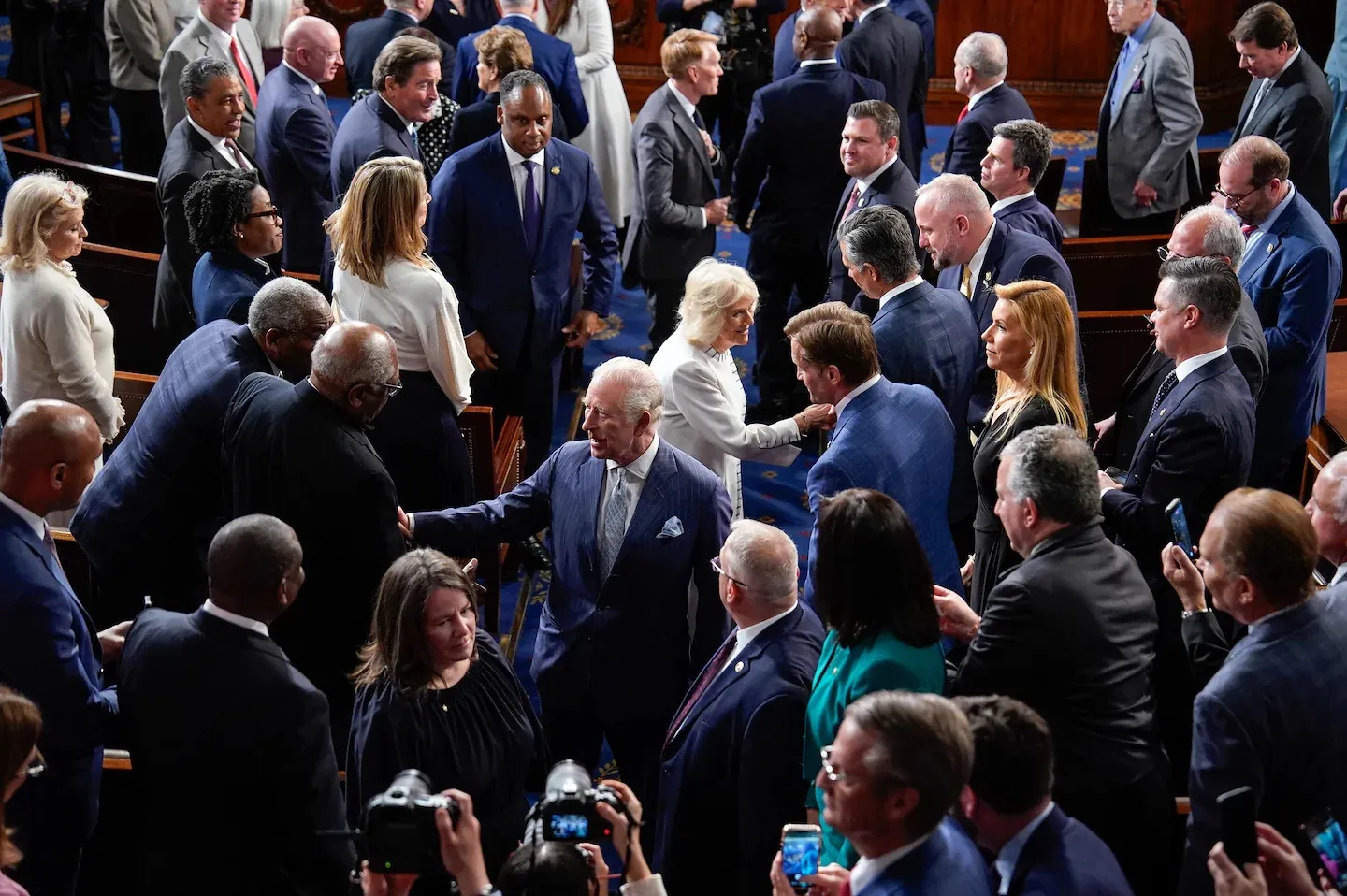
As a reminder, during an official event organized by the United Kingdom’s ambassador to the U.S., a meeting took place with the British royal couple—King Charles III and Queen Camilla. Among the guests of honor, the monarch separately greeted the Ukrainian ambassador and expressed his support for the Ukrainian people.
King Charles III of Great Britain and Queen Camilla arrived in the United States on April 27 for a state visit. The White House released a detailed schedule for the second day of the monarchs’ visit.
King Charles III of Great Britain and Queen Camilla arrived in the U.S. for a four-day state visit.


