
Russian businesses will be required to pay fees for the construction of new icebreakers
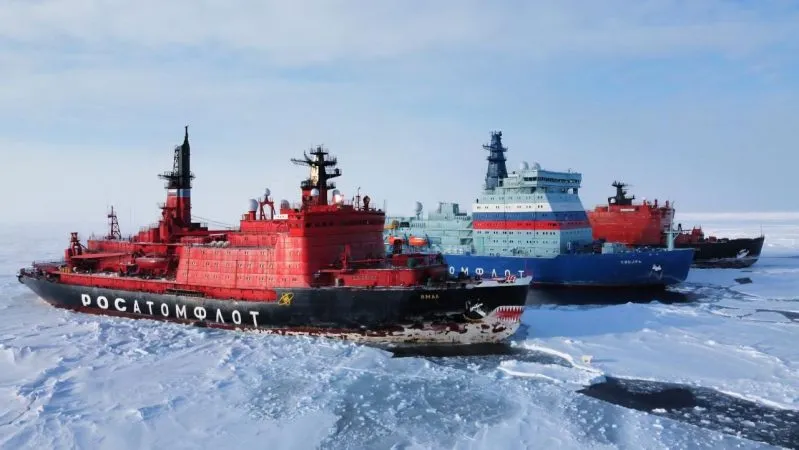
The Russian Ministry of Transport plans to introduce an additional port investment fee to finance the construction of the nuclear-powered icebreakers “Leningrad” and “Stalingrad.” The corresponding draft government resolution calls for a fee of 20.07 rubles per metric ton of export cargo.
The new fee is proposed to be collected for 10 years—until December 31, 2036. During this period, according to the Ministry of Transport’s calculations, the budget is expected to receive 207.6 billion rubles.
It is expected that the funds raised will make it possible to reduce the icebreaking escort fee from 52 to 16 million rubles per day.
According to the draft resolution, the 27 companies that operate Russian-flagged vessels for the transport of export cargo will be required to pay the fee.
The Ministry of Transport attributes the need for additional funding to the rising cost of building icebreakers and the vessels required to service them.
In particular, the cost of building the SUAL and MSATO has risen from 143 billion rubles in 2022 to 225.6 billion rubles in 2026.
The Ministry of Transport expects that the commissioning of the “Leningrad” and “Stalingrad” will increase shipping traffic along the Northern Sea Route (NSR).
As a result, the ministry believes there will be a need to increase the number of vessels and resources in the emergency rescue fleet.
Therefore, it is proposed that part of the proceeds from the new fee be allocated to the construction of two 7-MW emergency rescue vessels.
At the same time, the Ministry of Transport states that the new fee should not lead to a sharp increase in costs for shipowners.
According to the Association of Sea Trade Ports, 696.6 million metric tons of cargo were shipped for export through Russian seaports in 2025.
If export volumes remain at the same level, the new levy of 20.07 rubles per metric ton could generate approximately 14.4 billion rubles per year.
Thus, the Russian government plans to use the additional payments from exporters to finance the completion of two nuclear-powered icebreakers—the “Leningrad” and the “Stalingrad”— as well as the development of emergency rescue infrastructure along the Northern Sea Route.
The investment climate in Russia is deteriorating, and major business owners are increasingly concerned about property rights and the potential expropriation of their businesses.
As a reminder, in one of the municipal districts of Russia’s Kirov Region, local businesses are being required to sign agreements to carry out tasks as part of mobilization efforts. If they refuse, companies may be restricted in their ability to exempt employees from conscription.
In Russia, an aggressor state, people are trying to leave the country due to fears of a new mobilization and possible restrictions on travel. According to the anti-war project “Kovcheg,” the number of requests for urgent assistance with emigration has increased nearly eightfold since the beginning of summer.
A former CIA director stated that Vladimir Putin is unlikely to achieve his stated military objectives even after a new mobilization. In his view, Russia’s advantage in human resources and the economy does not guarantee the achievement of these objectives.




