
Russian dictator Putin fears an assassination attempt and a coup
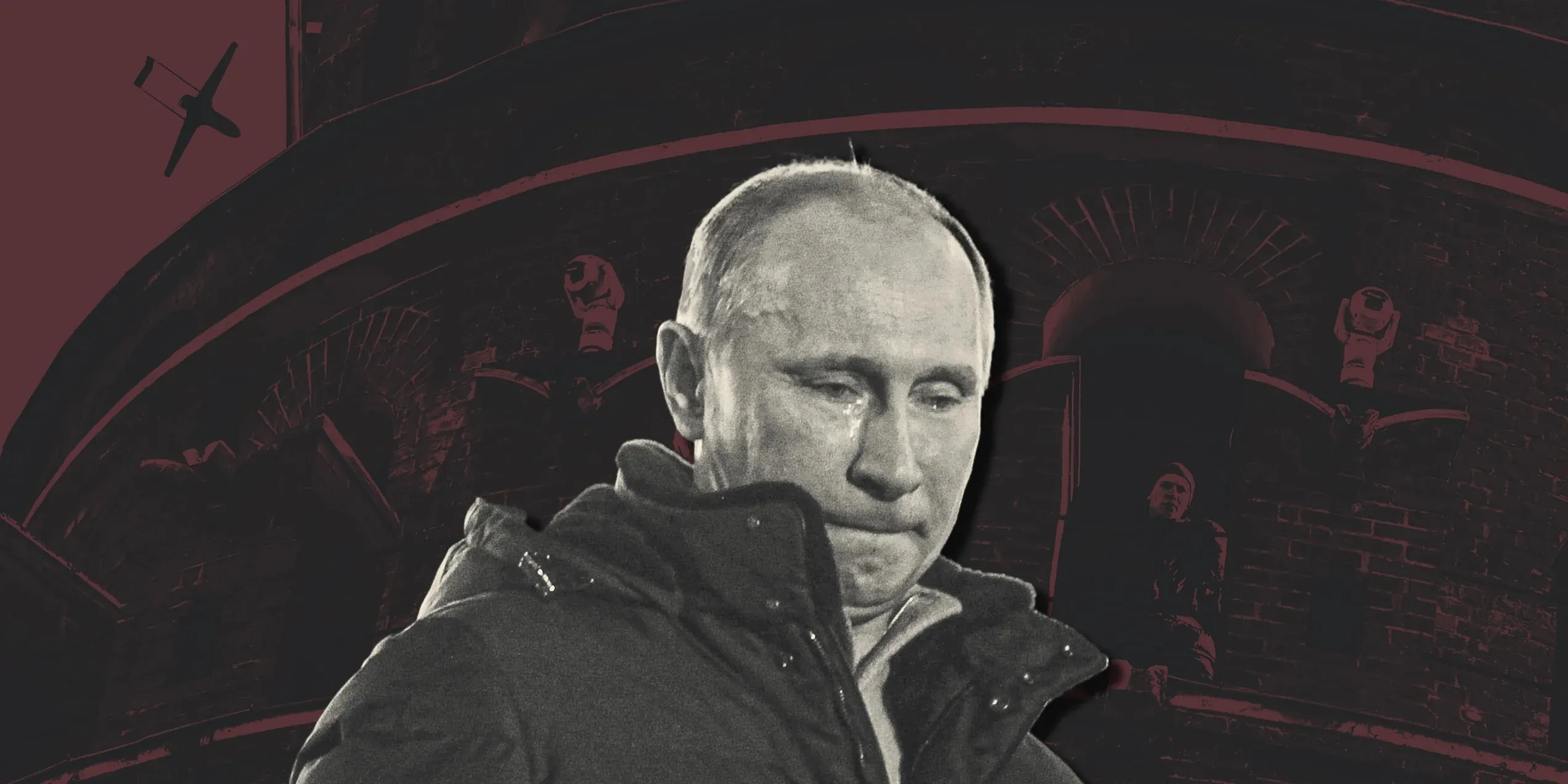
The intelligence service of one of the European Union countries has compiled a report on the actual state of affairs in the Kremlin and the condition of Russian dictator Vladimir Putin. This document has come into the possession of journalists. It states that the dictator is in a state of panic, fearing an assassination attempt and a coup.
This is reported by the “Important Stories” project.
The Kremlin is on high alert. Since early March 2026, the Kremlin and Putin have been concerned about leaks of sensitive information, as well as the risk of a conspiracy or coup attempt against the Russian president. In particular, he fears the use of drones for a possible assassination attempt by members of the Russian political elite.
In this regard, the Federal Security Service (FSO), whose primary task is to ensure the physical protection of senior Russian officials, has significantly tightened security measures around Putin:
- visitors to the presidential administration undergo two levels of screening, including a full search by FSO personnel;
- the FSO has significantly reduced the list of places the president regularly visits; neither he nor his family visit their usual residences in the Moscow region and in Valdai anymore;
- since the start of the war in Ukraine, Putin has frequently taken refuge in modernized bunkers, particularly in the Krasnodar region, where he can work for weeks at a time, while Russian media continue to use pre-recorded video footage;
- No trips to military infrastructure have been organized this year, in contrast to the frequent visits in 2025;
- Communication networks are periodically shut down in certain areas of Moscow;
- FSB officers are conducting large-scale inspections with the assistance of canine units and are stationed along the Moskva River, ready to respond to potential drone attacks;
- The FSO now controls and approves any informational or media publications involving the president, based on a secret presidential decree;
- staff working in close proximity to Putin are now prohibited from using mobile phones; they must use devices without internet access;
- These staff members are also prohibited from using public transportation—they travel exclusively via FSO vehicles;
- Surveillance systems have been installed in the homes of cooks, photographers, and security guards.
Sergei Shoigu, former Minister of Defense and, since May 2024, Secretary of the Security Council of the Russian Federation, who retains significant influence within the military command, is associated with the risk of an attempted coup. The arrest of his former first deputy, Ruslan Tsalikov, on March 5, 2026, is viewed as a breach of informal security guarantees for the elite, which weakens Shoigu’s position and increases the likelihood that he himself could become the target of criminal prosecution.
The issue of the physical security of Russian Armed Forces commanders (officers) has caused growing tension among representatives of Russian security agencies. Following the assassination of Lieutenant General Fanil Sarvarov in Moscow on December 22, 2025, Chief of the General Staff Valery Gerasimov proposed to Vladimir Putin that he convene a meeting of the Security Council’s permanent members to discuss the situation. However, Putin opted for a more limited meeting, which took place on December 25, 2025, the day after another attack on Russian security forces occurred at the same location as Sarvarov’s murder.
After the meeting, Putin met with Dmitry Kochnev, Director of the Federal Security Service (FSO), whose primary task is to ensure the physical security of the state’s top leaders. It was decided to amend the FSO’s internal regulations by expanding the list of individuals under the agency’s enhanced protection.
Previously, such protection applied only to Valery Gerasimov himself. Now, however, ten high-ranking generals have been added to the list of those under enhanced protection, including three deputy chiefs of the General Staff.
Some details of this report are confirmed by independent sources. For example, the fact that the FST, not the FSB as reported by the media, is behind the large-scale internet outages in Moscow. They also confirm Putin’s heightened fear of a conspiracy or coup attempt. This is evidenced not only by the heightened security measures around the Kremlin and other locations visited by the Russian president, but also by certain indirect signs.
As a reminder, internet restrictions were imposed in the Moscow region ahead of May 9.
In St. Petersburg, mobile internet service was disrupted following a drone attack.
In the Belgorod region of Russia, mobile internet was completely shut down.


