
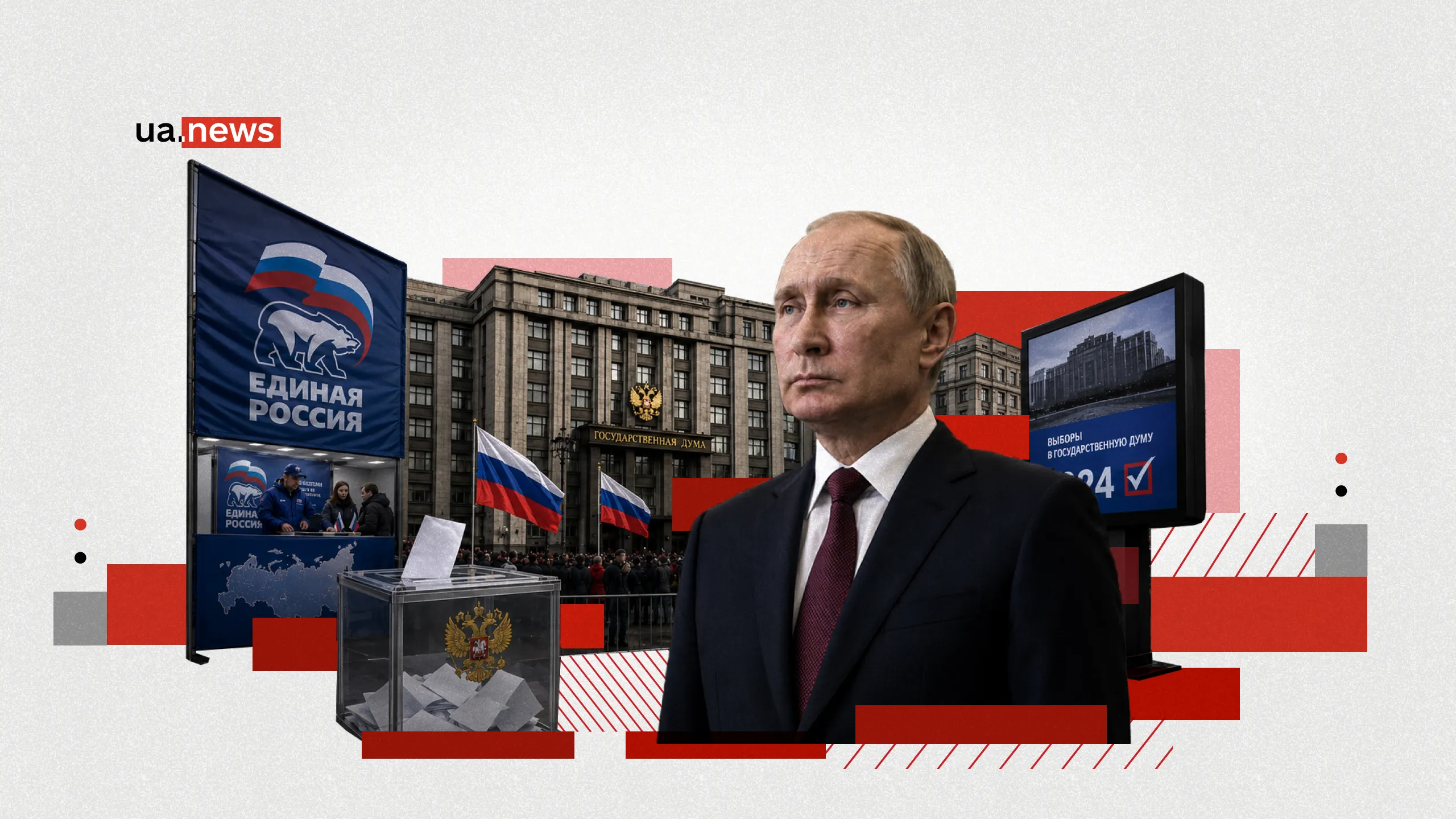
A few days ago, Vladimir Putin signed a decree officially launching the countdown to what Russian opposition political scientist Katerina Shulman called “an electoral event identical to the real thing”—the elections to the State Duma of the Russian Federation, which will take place on September 17–20, 2026. Almost simultaneously, President Zelenskyy released data on what is claimed to be the actual level of support for the Russian government. According to Kyiv, the approval rating for the ruling party “United Russia” hovers around 27%, with a downward trend toward 22% immediately before election day, while Putin’s personal approval rating, though higher than the party’s, is also declining and will stand at only 55% by election day.
Among Ukrainian experts, it is customary to view Russian elections with skepticism and sarcasm. After all, why analyze something that isn’t an election by definition? Why study sociology in a context where the outcome is determined not by the will of the people, but by directives from the Kremlin?
There is some truth to this, and quite a significant amount. But such an approach is dangerous in its intellectual arrogance.
Yes, elections in modern Russia are not a classic political process, but rather an administrative and bureaucratic ritual. However, even the most meticulously staged ritual has a tendency to break down. And today we are facing a unique situation: never in recent years under Putin’s rule has the fraud machine encountered such a high level of public revulsion toward the ruling party. The risk of a “black swan” event is quite high, which is precisely why Ukraine, the Russian liberal opposition scattered across the globe, and the West are all openly betting on destabilizing the situation today.
Why are the upcoming parliamentary elections in Russia not just another bureaucratic bore, but a real stress test for the regime? UA.News political analyst Mykyta Trachuk examined the issue.
Acclamation Instead of Elections, or Why the Count Matters More Than the Votes
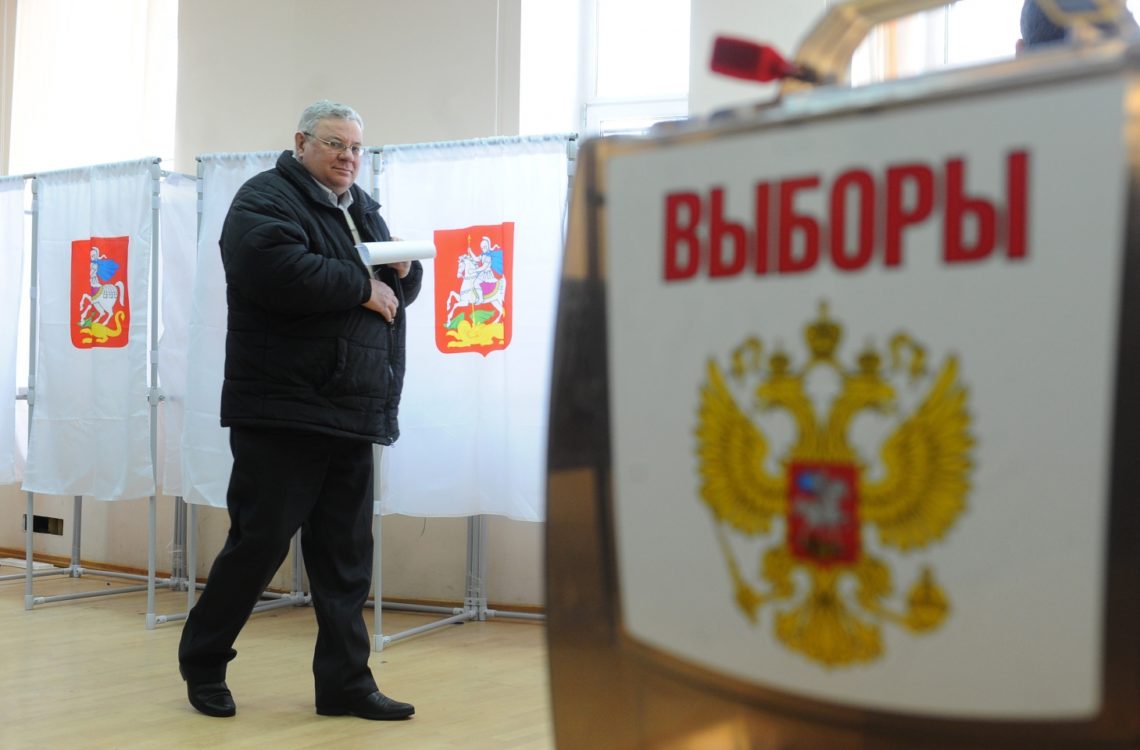
For Putin’s system, elections have never been a tool for changing power. By and large, they are a plebiscite—a kind of referendum on confidence—where citizens are asked to pledge their loyalty to the Kremlin’s course for another five years. The purpose of this spectacle is purely bureaucratic: what matters is not how people vote, but how the votes are counted by the territorial election commissions. Legitimacy in this framework is replaced by a ritual “acclamation”—the approving roar of the crowd, orchestrated by administrative resources.
In this context, the Kremlin’s main headache—which, as in a poem by the eminent Russian poet Osip Mandelstam, “lives beneath itself, unaware of the country”—lies not in the presence of opposition candidates (they are simply barred from running or used as controlled spoilers), but in the ever-widening gap between the “fabricated” image and what real people actually experience.
Until recently, this mechanism worked like a Swiss watch. When United Russia’s actual approval rating stood at 40–50%, “padding” it up to a constitutional majority of 60–70% was technically a simple matter. It was not so much outright fraud as a “correction” of reality, one that did not particularly irritate even the most opposition-minded ordinary citizen.
However, a situation where the ruling party’s actual support base has plummeted to a dismal 15–20%, and this must be passed off as nationwide love—that is an entirely different level of complexity. This is not about a cosmetic facelift, but about building an entire set from scratch. And the wider the gap between the image and reality, the more people realize it, and the more toxic the result itself becomes.
Incidentally, it was precisely this glaring discrepancy that sparked the mass protests on Bolotnaya Square in 2011. And although those were relatively “mild” times compared to the current gloom, and the Kremlin authorities did not engage in truly large-scale political repression, the system’s historical memory remains. They remember all too well that society can awaken even after the deepest state of suspended animation.
An Explosive Backdrop: Airstrikes on Moscow and the War’s Dead End
The difficulty of the September campaign for the Kremlin lies not only in the disastrous approval ratings of “United Russia,” which the public frankly cannot stand. The elections will take place against a generally very complex and unpleasant backdrop.
First, the war—which television still refers to as a “special operation”—has reached a clear impasse. There are no victories; instead, there is a protracted, bloody war of attrition.
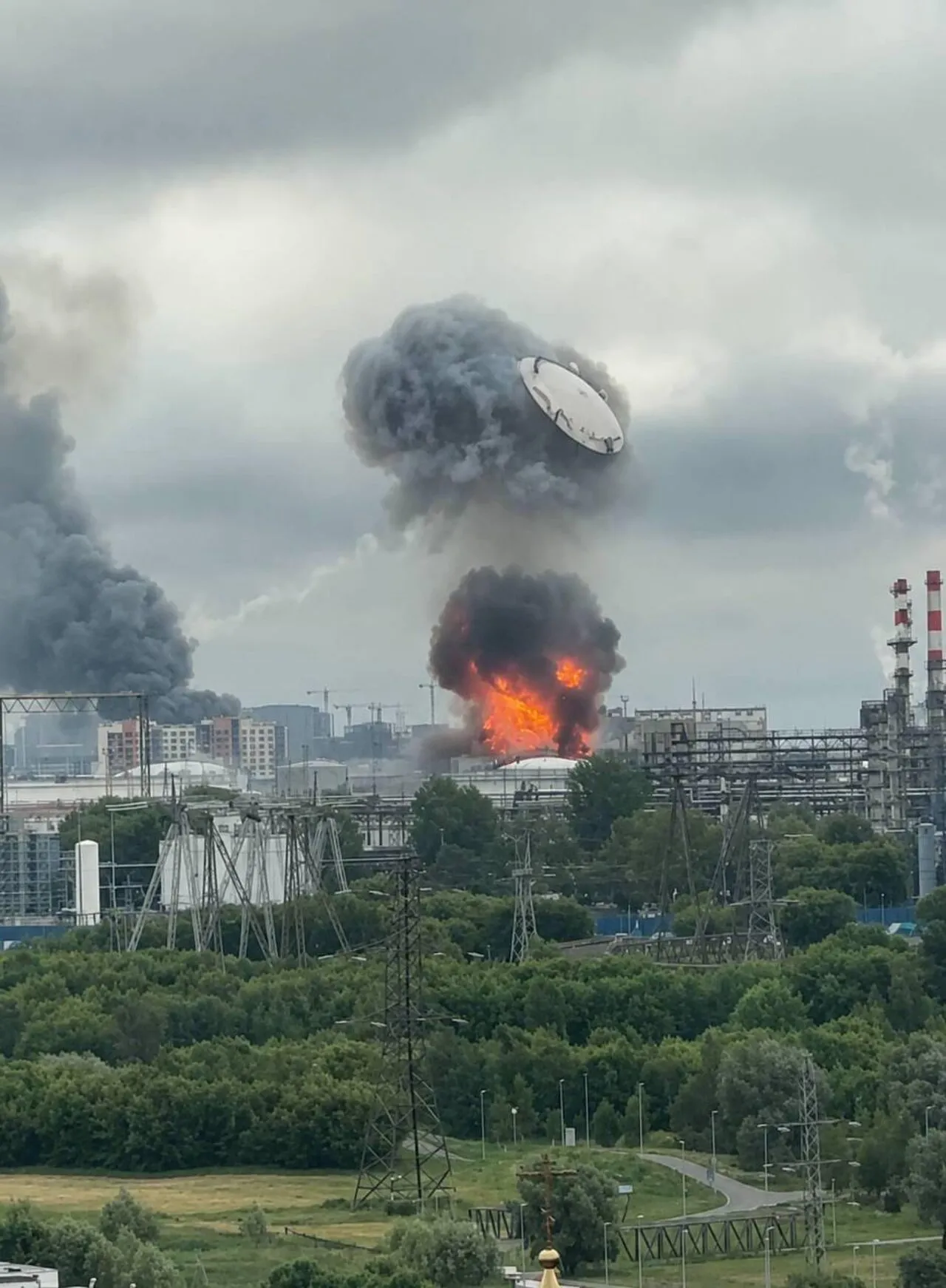
Second, Ukrainian drones and missiles are no longer something that happens exclusively on TV or somewhere in Belgorod, a place whose fate concerns no one but the local residents. Strikes on Moscow and deep within the rear have become routine, shattering the main myth of the Putin era—that of “security” and “stability.”
Third, the economic situation is also rapidly deteriorating. The decline in living standards is being felt in the wallets of ordinary citizens.
The constant blocking of popular internet services like YouTube and Instagram, along with regular internet outages—all of this is irritating even the apolitical majority. These are no longer the elections of the prosperous 2000s or even the relatively prosperous 2010s, when loyalty could be exchanged for increased prosperity. Today, the Kremlin simply has nothing to offer Russians—except, perhaps, death benefits for those killed on the front lines. But what use is money to a dead person?
Under such conditions, even the most compliant election commission becomes a potential hostage to the streets. The system fears not so much opposition rallies (which are harshly suppressed) as the general imbalance and popular hatred that are eroding the regime’s foundations. When people no longer believe in an 80% voter turnout or 70% support for the ruling party, sooner or later they stop fearing it—“the emperor has no clothes.” And when fear disappears, irreversible changes begin.
Disruption as a Strategy: Information Warfare Before and After the Vote
That is precisely why the information strategy of destabilizing the elections is entirely rational and to be expected. What Kyiv is doing by publishing Putin’s and “United Russia’s” approval ratings (and it doesn’t really matter how accurate they are) is not just a media stunt, but a targeted strike at the Kremlin system’s main nerve center: the fear of losing control.
The Russian liberal opposition in exile is playing a similar game. Unable to be physically present at the polling stations, it is trying to paint the right media picture: that is, the government’s real support amounts to a pitiful percentage, and everything else is a lie.
“Russia is entering the election campaign amid a series of crises: the war has reached a stalemate, the budget deficit is growing, the fuel crisis continues, prices are rising, and internet restrictions are tightening… The head of the Central Election Commission has warned of possible large-scale internet blackouts during the election, and the security services plan to further tighten digital censorship. The FSB may block almost any online service, fearing a repeat of campaigns like “Smart Voting.” The authorities are increasingly putting the country into “special operation” mode: events are being canceled, and there are disruptions to transportation, communications, and fuel supplies. According to polls, Russians want the war to end, are concerned about the economy, and oppose censorship, but the ruling party cannot offer a change of course. “Therefore, the September 20 election could become the most dangerous moment for the Russian authorities in recent years and create a ‘window of opportunity’ for change,” says popular Russian opposition blogger Maxim Kats.
Western media and think tanks are also active in this arena, stripping any future “victories” by Putin’s party of any semblance of legitimacy even before they are declared. This is an attempt to create a situation in which any result will appear to be a blatant fraud. And although the administrative apparatus undoubtedly has enough resources to physically ensure the turnout of state employees and stuff the necessary number of ballots into the boxes, doing so flawlessly from a media perspective is becoming increasingly difficult. Every overly blatant instance of “ballot stuffing,” every video of an empty polling station where a full house was reported, could go viral and damage the authorities’ reputation more than anything else.
A Pyrrhic victory: the threat to the system posed by a fabricated majority
The scenario in which the election results are ultimately rigged is the baseline, and everyone understands this perfectly well. Most likely, we’ll see the usual picture: “United Russia” secures a constitutional majority, loyal satellite parties clear the 5% threshold, and voter turnout barely exceeds the psychological threshold. It’s worth noting that low voter turnout usually benefits autocracies, as it ensures victory for pro-government candidates without the need for large-scale fraud. Due to the lack of real competition, most citizens simply ignore the elections. This allows the authorities to mobilize their “core” electorate—public sector employees and those dependent on the state—whose votes guarantee victory.
But this will be a Pyrrhic victory. At one time, it was important for the system that the fraud be at least partially plausible. Now, however, it is forced to resort to an unprecedented level of manipulation. This will inevitably provoke further disillusionment and apathy among the public. Russians, who have already been driven into a state of constant stress by the war, the threat of mobilization, communication restrictions, and repression, will receive yet another confirmation: their opinion is worth nothing. This deepens the alienation between the state and the individual, turning the latter into an internal exile who hates the government quietly but deeply. This is atomized hatred that does not spill over into protests solely out of fear—but it will never again be mobilized in support of the regime.
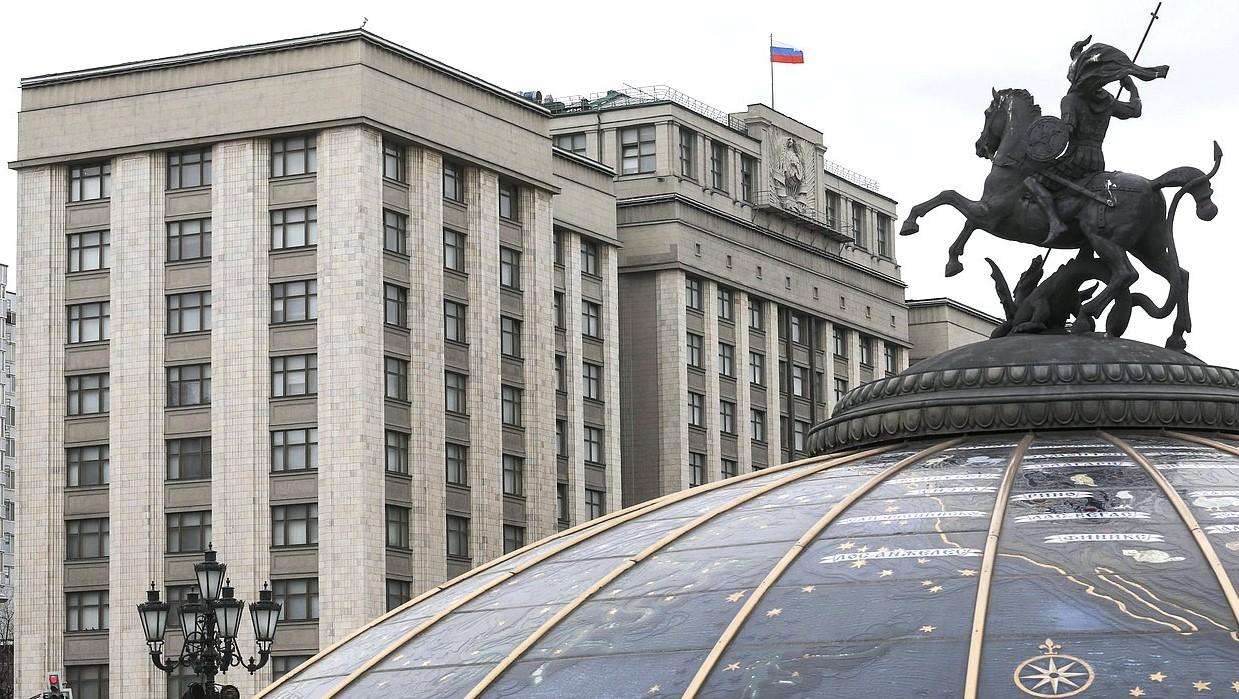
The paradox of the situation is that there are no longer any “easy” solutions for the Kremlin. Announcing an honest result would mean admitting to a complete loss of popularity and shattering the myth of nationwide support for Putin’s course. To blatantly fabricate a victory would mean turning the election process into a farce that everyone can see through.
This is the stress the system is forced to endure. And although Russia’s resilience may last for a very long time, we must not forget: empires do not collapse when they are conquered from the outside, but when the fictions and myths upon which their “power” rests become too obvious to everyone.
In this sense, the September elections to the State Duma are not just a vote for deputies whom no one knows and who make no decisions. It is a moment of truth that will reveal just how deep the chasm is between the Kremlin’s facade and Russian reality. And it seems that this chasm is now at its deepest since the 2011 protests.




