
US sets no timeline for implementing US-China Trade Council decisions — South China Morning Post
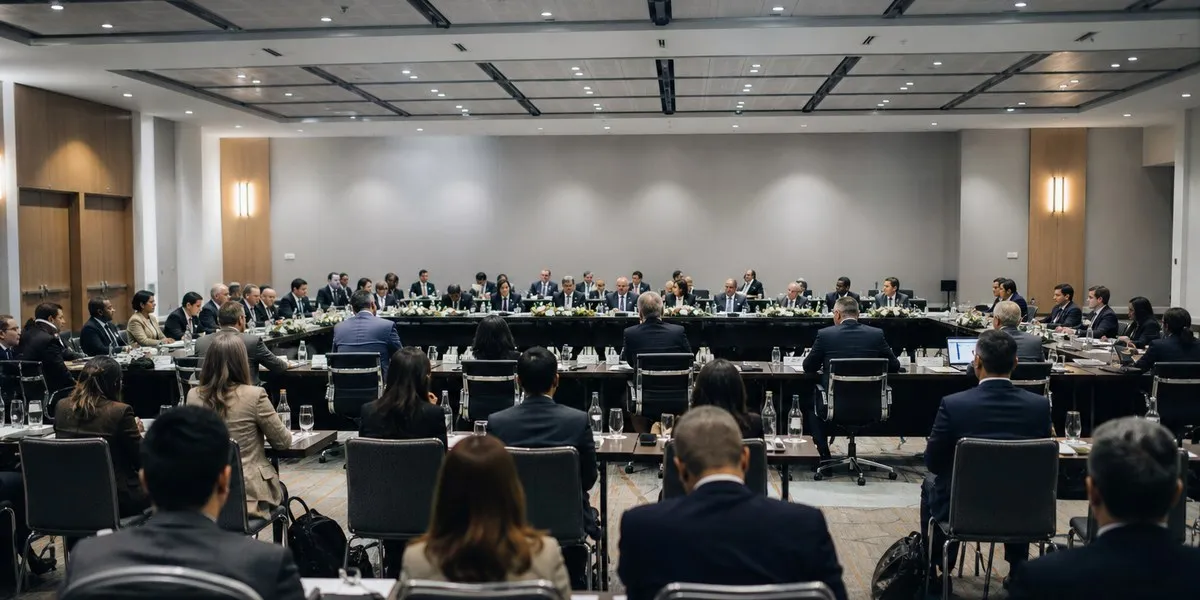
The United States has not yet set specific deadlines for introducing tariff decisions under the new US-China Trade Council mechanism. US Trade Representative Jamieson Greer said this on the sidelines of the G20 trade ministers’ meeting in Milwaukee, Wisconsin, South China Morning Post reports.
According to Greer, tariff reductions under the mechanism are the result of policy, while the council’s recommendations must undergo legal procedures before implementation. He said the US government may publish the recommendations for the public and then conduct a consultation process before making a legal decision on the possible application of tariffs.
Lists of goods for tariff reductions
Last week, Beijing and Washington launched the Trade Council mechanism, and on Sunday released lists of goods identified by the parties as non-sensitive, worth up to $30 billion for each side. These goods may be subject to tariff reductions.
The White House published a list of 77 categories of Chinese imports to the United States and 1,619 American goods intended for China. The US list included microwave ovens, irons, Christmas decorations and toys. China’s list mainly covers agricultural products, including beef and vegetables, as well as coal, timber, hearing aids and pacemakers.
More current news is available on the UA.News Telegram channel Telegram.
China’s Ministry of Commerce said that more than 90% of the goods covered by the agreement will receive most-favoured-nation rates, while reciprocal tariffs on them will be completely abolished. The agreement reached in South Korea in October 2025 provided for lower US duties on some Chinese goods, the suspension of additional US restrictions on companies linked to China, and a pause in certain Chinese export-control measures on rare earth metals.
Disagreements at the G20 meeting
The two-day G20 trade ministers’ meeting in Milwaukee ended without a consensus on forced labour and excess production capacity, two priorities of the US G20 presidency in 2026. Greer expressed regret over the absence of a joint statement on banning imports of goods produced using forced labour.
The United States also failed to agree on a statement on structural excess capacity. Without naming China, Greer said the problem concerns steel, automobile manufacturing, battery production and solar panels. At the same time, according to Greer, G20 trade ministers reached a consensus on condemning the use of food as a tool of coercion in trade.




