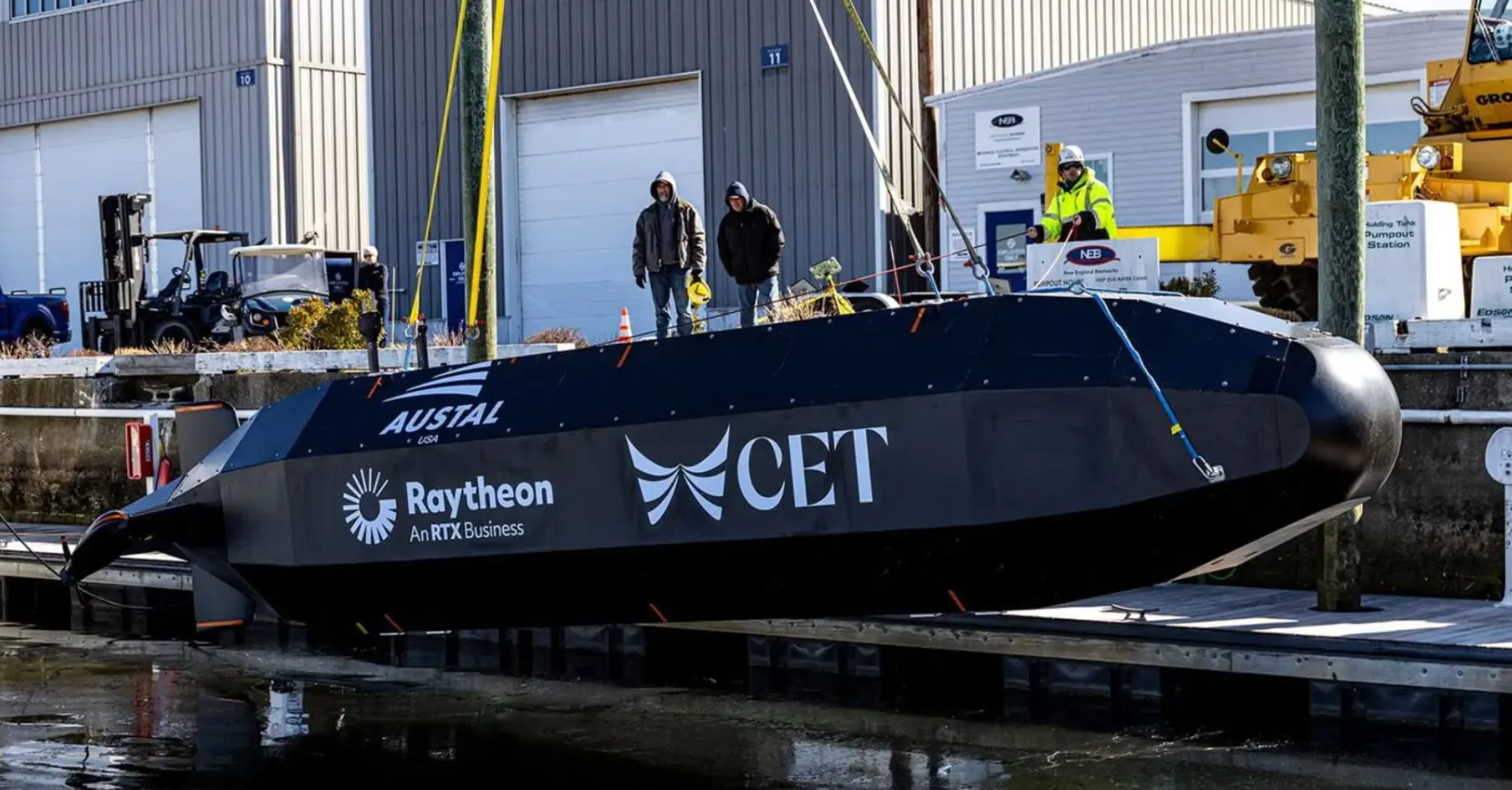
The U.S. Navy tested the HADALUS unmanned underwater vehicle, which can launch weapons or drop payloads directly from underwater without surfacing.
During the tests, U.S. Navy representatives observed the vehicle’s performance at an underwater test site. HADALUS demonstrated its ability to operate reliably underwater while simultaneously using sonar, onboard electronics, and its payload launch system.
The vehicle is approximately 10 meters long and is built around an open carbon-fiber frame that can be filled with water. This design reduces the load on the hull during deep-dive operations and frees up more space for equipment.
According to the developers, HADALUS is capable of traveling over 2,000 nautical miles without requiring constant operator intervention.
Another key feature is its cost. Raytheon and CET claim that manufacturing the vehicle can cost 3–5 times less than building similar underwater systems.
The developers also state that less than 18 months passed from the start of the project to the first launch in water. Raytheon handled the electronics and sonar systems, while CET handled the design and assembly of the vehicle.
However, HADALUS is currently still in the testing phase and is not yet ready for full-scale combat deployment. Additional tests and evaluations of its capabilities under various conditions are still ahead.
The U.S. is stepping back from leading the aid groupfor Ukraine.
U.S. President Donald Trumpstatedthatthe agreement signed in 2025 between Ukraine and the United States on cooperation in the field of mineral resources is “very beneficial” for Washington. According to him, thanks to these agreements, the U.S. could reap significant profits from access to Ukrainian