
Pakistan court gives Sindh authorities 45 days to decide on land along M-9 — Dawn
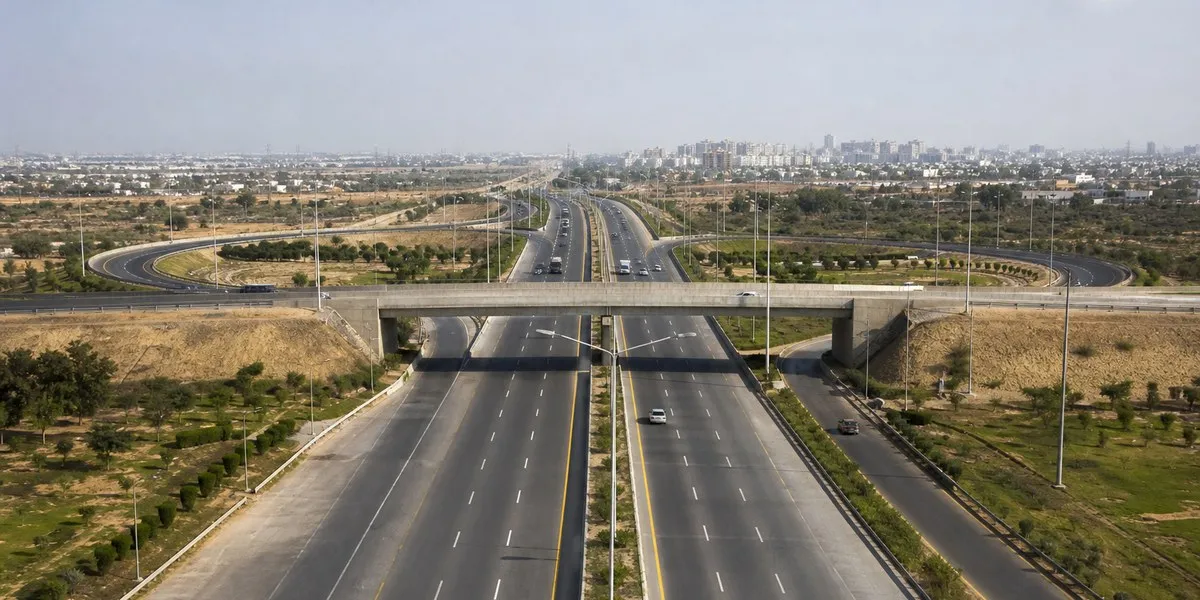
The High Court of Sindh in Karachi, Pakistan, has ordered the provincial government to reconsider within 45 days a land dispute concerning the right-of-way along the M-9 motorway. The authorities must give all interested parties an opportunity to be heard and issue a reasoned decision.
As Dawn reports, the court also instructed the competent Sindh government authority to examine the Pakistan National Highway Authority's (NHA) claims regarding statutory control over the right-of-way. It must also consider the provisions of the NHA's concession agreement with a private company, the challenged legislative amendment, the cancellation of land registration entries, and the positions of other interested persons and bodies.
Applicants' positions
The NHA went to court in 2017, challenging the Sindh government's cancellation of land registration entries, the reduction of the right-of-way boundaries, and the annulment of the relevant entries. According to the publication, the private company SCORE, which took over the motorway project in 2015 under a build-operate-transfer model, also challenged a June 2017 letter from Sindh's land department.
More current news is available on the UA.News Telegram channel Telegram.
Representatives of the applicants argued that the West Pakistan Highways Act, as amended by Sindh in 2018, and the challenged letter exceeded the province's authority. In their view, the M-9 and its right-of-way fall within the federal sphere of regulation. They also referred to the concession agreement, which, they said, granted the private company exclusive rights to develop, operate, and commercially use the M-9 concession area for 25 years.
Sindh government's arguments
The additional advocate general of Sindh said that the disputed land belongs to the province and that the NHA could not acquire rights to it without lawful acquisition or transfer. He also argued that the authority had neither acquired nor paid for the land, and that a registration entry in itself does not establish ownership rights, making its cancellation lawful.
The court did not express an opinion on the merits of the parties' claims. Until Sindh authorities make a decision, the existing interim arrangement and status quo established by the court will remain in force.




