
November 6 Holiday: Saxophone Day—Who Created This Instrument with Its Unique Sound?
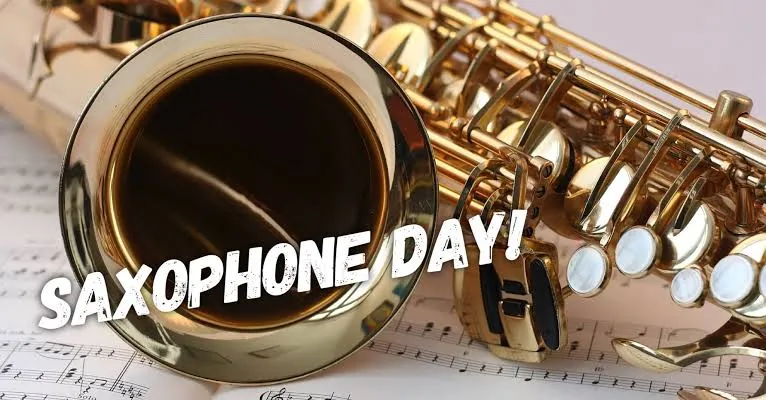
Every year on November 6, Saxophone Day is celebrated—an unofficial holiday honoring the musical instrument without which it is hard to imagine jazz, blues, and many other musical genres today. The date was not chosen at random: it was on this day in 1814 that the Belgian craftsman Adolphe Sax was born; he invented the saxophone and forever changed the history of wind music.
Saxophone Day falls on November 6. In 2026, the holiday will be celebrated on a Friday. It does not have official status as a national or international holiday, but it is marked every year in music calendars and among fans of the instrument.

The main purpose of the date is to draw attention to the saxophone, its history, and its role in music. It is also an opportunity to honor the musicians who made the instrument recognizable around the world and to discover new compositions. For some, the saxophone is associated primarily with jazz improvisations; for others, with romantic melodies, military bands, or classical concerts. Its sound is truly unmistakable: it can be soft and almost velvety, or loud, sharp, and energetic. The date of the celebration is linked to the birthday of the saxophone’s inventor, Adolphe Sax. That is why November 6 is not just an occasion to listen to your favorite music, but also an opportunity to remember the man who brought this instrument into the world.
Who Invented the Saxophone
The saxophone was invented by the Belgian Antoine-Joseph Saxe, known as Adolphe Saxe. He was born on November 6, 1814, in Dinant, Belgium. His father, Charles-Joseph Sax, made wind instruments and had his own workshop in Brussels. So from an early age, Adolphe watched how musical instruments were made and became interested in their construction.

As a teenager, he was already experimenting with flutes and clarinets, and later studied music in Brussels. Sax did not want to simply replicate what already existed. He was interested in improving instruments, modifying their design, and exploring new sonic possibilities. One of his early significant innovations was an improved design for the bass clarinet.

In the 1840s, Sax worked on a new wind instrument designed to combine the best qualities of woodwinds and brass instruments. He sought to achieve a powerful, expressive sound that could also be flexible and melodic. In 1841, Sax presented his invention to the public for the first time at an industrial exhibition in Brussels. And on March 21, 1846, he officially patented the saxophone’s design in France. This was an important step not only for the inventor himself but also for musical culture as a whole. Sax created an entire family of instruments of various sizes and ranges, not just a single saxophone. His vision was for the instruments to be able to perform different musical parts and, when played together, sound like a full-fledged orchestra.
Why Is the Saxophone Called That?
The instrument’s name comes from its inventor’s surname. Sax combined his name with the suffix “-phone,” which is used in words related to sound. That’s how the word “saxophone” came to be—literally, an instrument named after Sax.

Interestingly, the saxophone is made primarily of brass, that is, a metal alloy of copper and zinc. Because of this, it is often considered a brass wind instrument. But from the perspective of musical classification, it belongs to the woodwind family. The reason lies in how sound is produced: the musician blows air through the mouthpiece, where a thin wooden reed vibrates. This is exactly how the clarinet and oboe work, for example, even though they look nothing like a saxophone. So the material of the body does not determine its musical family. The principle of sound production is more important. This is one of the most interesting features of the saxophone, one that not everyone is aware of—even among people who frequently listen to music featuring it.
Types of Saxophones
The saxophone is not a single instrument with a uniform sound. There are several main varieties, which differ in size, pitch, and purpose. The most well-known are the soprano, alto, tenor, and baritone. The soprano saxophone is one of the smallest in this group. It has a high, ringing tone, and its body is often straight, which makes the instrument resemble a clarinet. The alto saxophone is slightly larger, has a soft and expressive tone, and is often used in jazz, classical music, and education. It is often the alto saxophone that beginners choose to start with when learning to play this instrument.

The tenor saxophone has a lower and richer sound. It is often heard in jazz ensembles and solo performances. The baritone saxophone is significantly larger than the other popular varieties and has a low, powerful sound. It helps create a musical foundation in ensembles and adds depth to compositions. There are also bass saxophones and other, rarer varieties. Each has its own character, so composers and musicians can choose an instrument based on the sound a composition requires.
How the Saxophone Became a Symbol of Jazz
When Adolphe Sax created his invention, he could not have foreseen how closely the saxophone would eventually be associated with jazz. Initially, the instrument was designed for use in military bands and classical music. It had to be loud enough to be heard clearly outdoors, yet capable of performing complex melodies and solo parts.
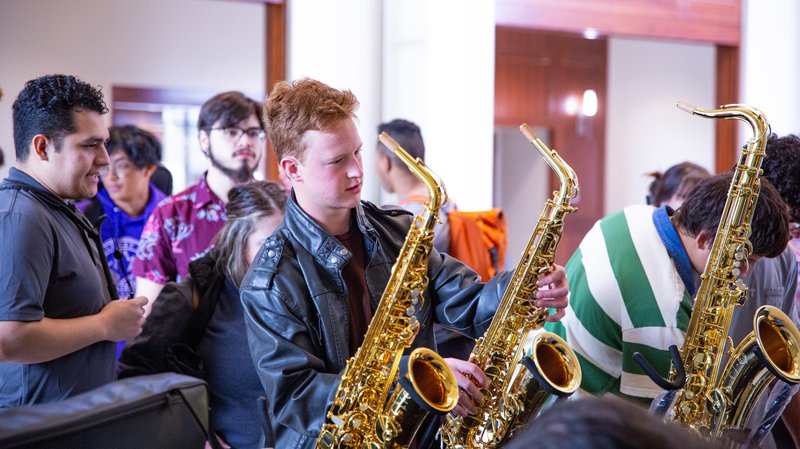
Gradually, the saxophone began to be used in various musical ensembles. It appeared in military and brass bands, chamber music, and opera productions. Composers played an important role in popularizing the instrument, particularly Hector Berlioz, who highly valued its capabilities. At the same time, the saxophone did not immediately become familiar to all musicians: the new instrument faced both criticism and competition from manufacturers of traditional wind instruments.
The saxophone achieved true worldwide popularity alongside the development of jazz in the United States. Its flexible sound was well-suited for improvisation—musicians could change the timbre, volume, and intonation right in the middle of a performance. Thanks to this, the saxophone became one of the leading voices of jazz music. Over time, it also established itself in blues, funk, rock ’n’ roll, pop music, and many other genres. The saxophone can be heard in contemporary music, in movies, and in advertising jingles. Its sound is often used to create an atmosphere of romance, tension, or gentle nostalgia. It is precisely this versatility that has helped the instrument extend far beyond concert halls and become part of everyday musical culture.
Interesting Facts About the Saxophone
The saxophone has several unique features that make it a truly extraordinary instrument. Here are a few of them:
- Its inventor didn’t just create the saxophone. Adolphe Sax worked on many musical instruments and refined their designs. Among his inventions is a family of brass wind instruments known as saxhorns.
- The saxophone has a wooden reed. Although the body is usually made of metal, the sound is produced by the vibration of a thin reed in the mouthpiece. That is why the instrument is classified as a woodwind.
- It can produce a wide variety of sounds. A single musician can play a delicate melody with a soft timbre and, in an instant, transition to a loud, sharp, and energetic sound. The character of the sound is influenced by playing technique, the mouthpiece, the reed, and the instrument itself.
- At first, the saxophone wasn’t the primary instrument of jazz. It was created for military bands and broader use in wind music. Its jazz fame came later.
- There are several sizes of saxophones. Listeners most often recognize the alto and tenor, but the family of instruments is much broader—ranging from the high soprano to the low baritone and bass.
- The saxophone has its own place in museum history. In Brussels, for example, instruments made by Adolphe Sax himself are preserved. One of the oldest known saxophones is a E-flat baritone saxophone dating from 1846.
How Saxophone Day Is Celebrated
There are no strict rules or mandatory traditions for this day. Since the holiday is unofficial, everyone can celebrate it in whatever way feels right to them. The simplest way is to play your favorite saxophone pieces or discover music you haven’t heard before.

Musicians can dedicate performances, small concerts, or jam sessions to this day. In music schools and clubs, this is a great opportunity to tell students about the history of the instrument, show them its different varieties, and let them try playing a few notes. And for those who already know how to play, you can organize a small musical performance or record your own composition.

Another way to join in the celebration is to attend a jazz concert. The live sound of the saxophone conveys what you don’t always get from a recording: the musician’s breathing, changes in timbre, improvisation, and interaction with other performers. You can also watch a documentary about the history of jazz or listen to recordings by famous saxophonists.
For those who don’t play musical instruments, Saxophone Day is simply an excuse to take a musical break from the daily grind. You can discover a new genre, create your own playlist, or share your favorite song with friends. After all, the main idea behind the holiday isn’t a formal observance of traditions, but an appreciation for music and an instrument that has remained recognizable in various corners of the world for nearly two centuries.




