
Russia is developing a satellite network consisting of 374 satellites as an alternative to Starlink
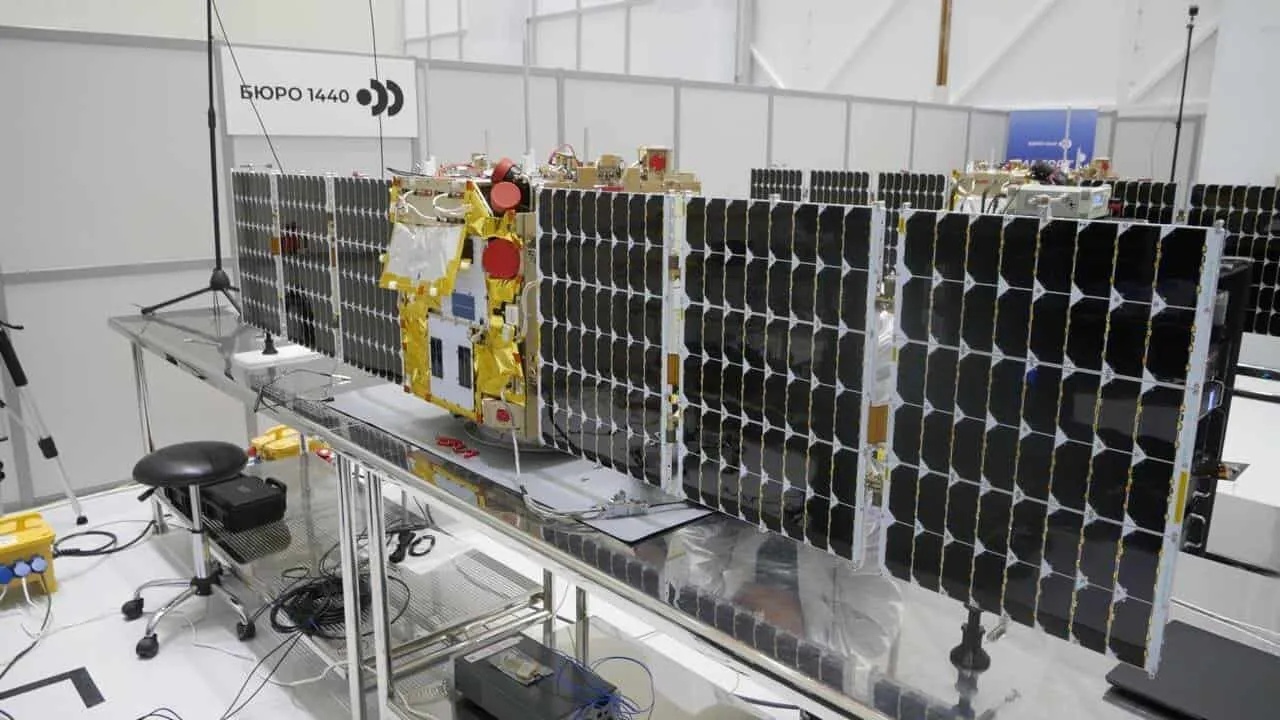
Russia plans to deploy a new satellite network, “Rassvet-4,” which is to consist of 374 satellites. The corresponding applications have already appeared in the registry of the International Telecommunication Union. The new system is viewed as an alternative to Starlink; however, the previous generation of Russian satellites has not yet been able to reach their stated operational orbit.
Applications for the registration of the “Rassvet-4” satellite network have appeared in the documents of the International Telecommunication Union (ITU). Russia plans to use it to create a large constellation of communications satellites. According to the published data, the documents were entered into the international registry on October 29, 2026. The Russian side submitted two applications. The first contains preliminary information about the future satellite network (Advance Publication Information). The second concerns radio frequency coordination with other satellite systems (Coordination Request). These are necessary steps in the international procedure that precedes the use of the declared frequencies.
According to the plan, the “Rassvet-4” constellation is to consist of 374 satellites. They are to be placed at an altitude of approximately 800 kilometers above Earth. To achieve this, 17 orbital planes have been planned, each of which will hold 22 satellites. This configuration is intended to ensure the operation of a large satellite network and the transmission of data through space. The documents also reveal some of the satellites’ technical specifications. Each satellite will have 12 antenna beams: seven will be used for transmitting signals, and another five for receiving them. In addition, the applications specify the operating frequencies and antenna parameters.
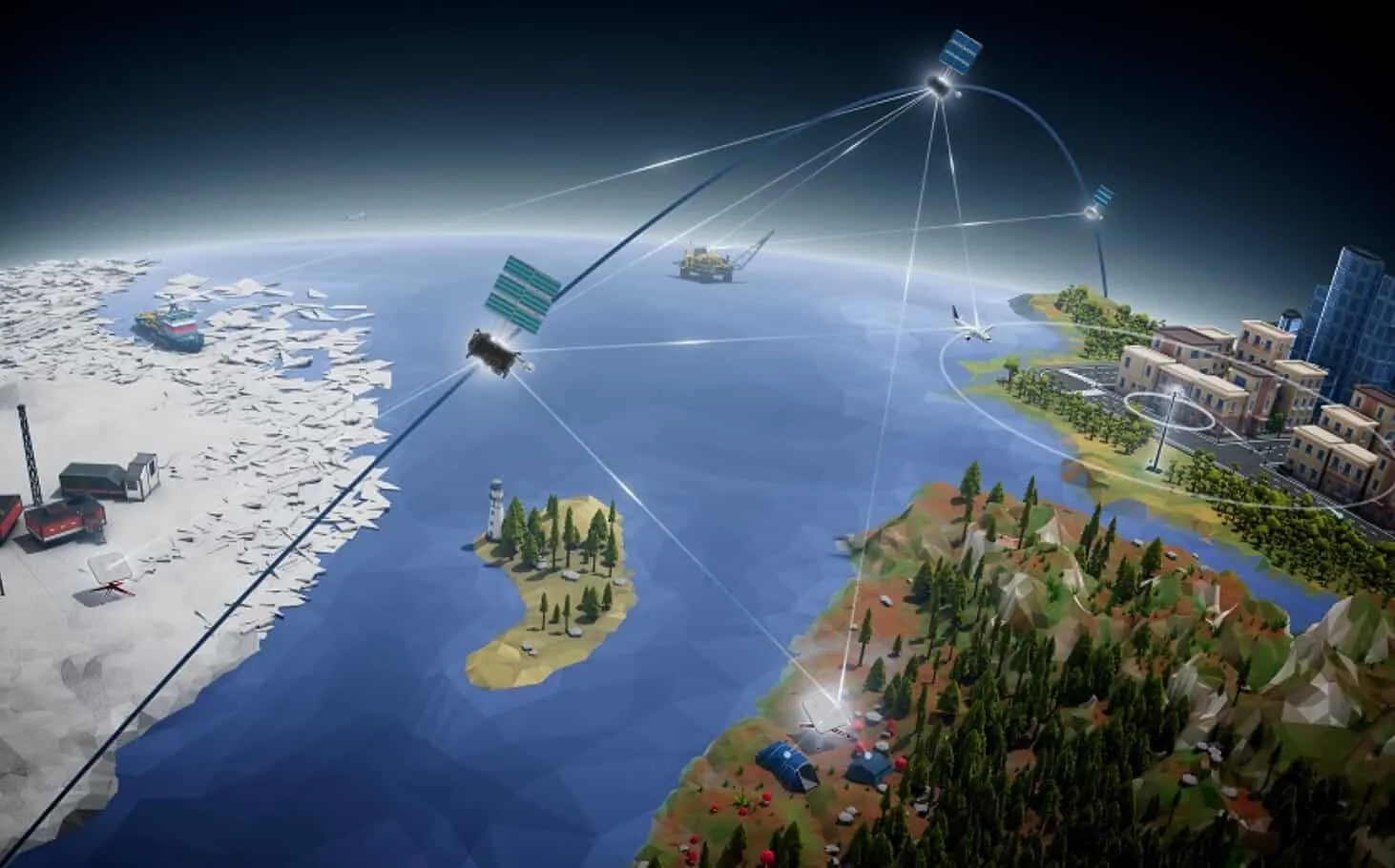
The system will operate in two main bands—Ku and Ka. Frequencies of 10.7–12.725 GHz and 19.075–20.2 GHz are designated for transmitting signals from the satellites to ground terminals. For downlink communication—from ground stations to satellites—the bands 14–14.495 GHz and 29.5–30 GHz are planned for use. Separate frequencies have also been allocated for feeder and intersatellite communications. The former is needed for data transmission between the satellite system and ground infrastructure. The latter allows satellites to exchange information directly with one another. These frequency parameters are not new to the Russian project. They were previously established by a decision of the Russian State Commission on Radio Frequencies dated November 29, 2021.
The previous generation of satellites failed to reach the intended orbit
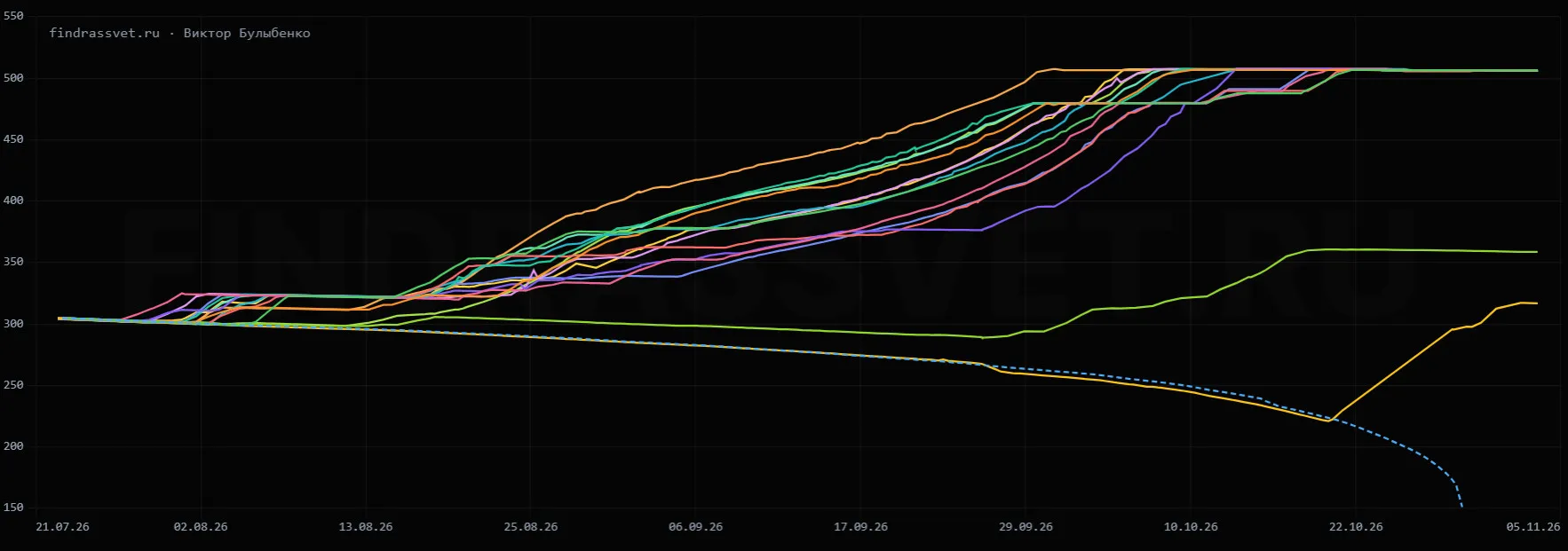
Plans for “Rassvet-4” emerged amid problems with the system’s previous generation. In March and July 2026, Russia launched two batches of “Rassvet-3” satellites into orbit. Each batch consisted of 16 satellites. However, difficulties arose upon reaching the planned altitude. As of early November, two satellites had already fallen out of orbit, and the remaining 30 had not reached the initially stated altitude of approximately 800 kilometers.
Specifically, 13 satellites from the second batch stabilized at an altitude of approximately 508 kilometers. This is significantly lower than the orbit previously specified in the project documentation by “Bureau 1440”—the company developing the Russian satellite system. At the same time, the mere fact that the satellites have stabilized in orbit does not mean they have reached their planned parameters. The difference between 508 and 800 kilometers is significant for the operation of the entire network, as orbital altitude affects coverage area and satellite communication characteristics.
Despite this, the Russian satellites have already demonstrated their ability to transmit data. For example, on September 19, 2026, as part of an experiment, residents of a settlement in the Nenets Autonomous Okrug gained access to a remote electronic voting system via a satellite communication channel. This test showed that the satellite channel can be used for data transmission in practice. However, a single successful experiment does not yet indicate the readiness of a fully-fledged network capable of consistently serving a large number of users.
Can “Rassvet” Become an Alternative to Starlink?
The Russian project is intended to become Moscow’s own satellite communications system, which it could use instead of foreign solutions, particularly Starlink. This requires not only launching hundreds of satellites into orbit but also creating ground infrastructure, compatible terminals, and a stable data transmission channel. The application to register “Rassvet-4” indicates Russia’s plans to expand its satellite constellation. However, the mere registration of the network with the International Telecommunication Union does not mean that the satellites have already been manufactured or that their deployment is guaranteed to occur according to the stated schedule.
So far, the previous generation, “Rassvet-3,” has not reached its planned orbital altitude. Therefore, Russia has yet to prove that it is capable not only of announcing the creation of a large-scale satellite system but also of ensuring its full-scale operation. This is evidenced by documents from the International Telecommunication Union (ITU).
Ukrainian President Volodymyr Zelenskyy enacted a decision by the National Security and Defense Council to impose new sanctions against Russia. The restrictions apply to Russian companies and individuals involved in the creation of the “Rassvet” satellite communications system, as well as 39 vessels of the Russian shadow fleet.
The Main Intelligence Directorate of the Ukrainian Ministry of Defense has released information on 49 Russian and Belarusian companies involved in the development of the “Rassvet” satellite system. Russia plans to use it not only for regular communications but also for the needs of its military—specifically, for command and control of troops, drones, and strike systems. The Main Intelligence Directorate emphasizes that 23 companies and institutions from the published list are not yet subject to sanctions by the countries of the sanctions coalition.




