
Russian spy Marsalek claimed to have been involved in the Austrian chancellor's resignation
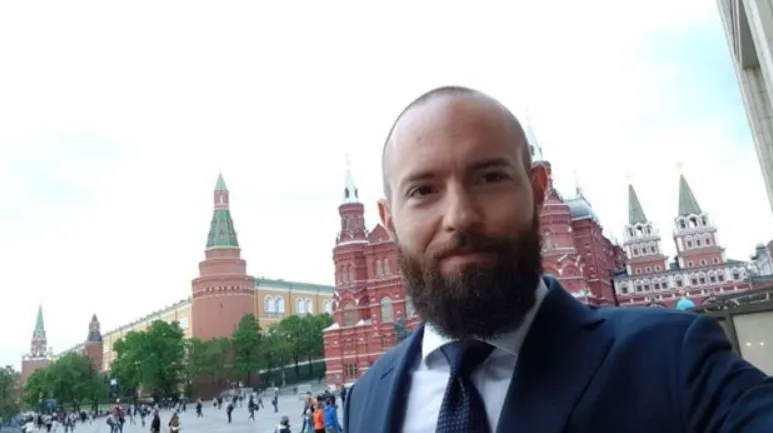
Jan Marsalek, the former head of the German company Wirecard, whom European law enforcement agencies suspect of collaborating with Russian intelligence services, claimed that he participated in an operation that led to the resignation of former Austrian Chancellor Sebastian Kurz. According to him, the seizure of the phone of one of the Austrian politician’s closest associates played a key role in this.
According to the British publication, Jan Marsalek sent these messages to Orlin Rusev—the head of a spy ring operating from the United Kingdom. The correspondence was discovered as part of a large-scale investigation into the activities of a group that was gathering information for Russia.
On October 22, 2021, approximately two weeks after Sebastian Kurz announced his resignation, Marsalek wrote to Ruseva that they had managed to “successfully remove” the Austrian chancellor.
According to him, this was achieved by seizing the cell phone of a person who was allegedly responsible for secretly financing Kurz’s election campaign.
Marsalek also sent his correspondent a link to an article about corruption allegations against the former chancellor and information about the phone of Thomas Schmid—the former secretary-general of the Austrian Ministry of Finance and one of the politician’s closest associates.
According to Marsalek, it was the information from this device that played a decisive role in Kurz’s political downfall. The Austrian investigation materials cited by The Telegraph indicate that Marsalek admitted to Rusev that he was involved in the seizure of the phone.
However, there is an important detail in this story: Thomas Schmid’s phone was seized back in November 2019—almost two years before Marsalek’s statement. The correspondence found on the device later became key evidence in several anti-corruption investigations in Austria.
Sebastian Kurz announced his resignation on October 9, 2021. He had led the Austrian government, first coming to power in 2017 at the age of 31, becoming one of the youngest heads of government in the world.
A political crisis unfolded after the Austrian public prosecutor’s office launched an investigation into Kurz and his inner circle. The allegations centered on suspected breach of trust, bribery, and the use of public funds to secure favorable media coverage of the politician’s activities.
On October 6, 2021, law enforcement officials conducted searches at the chancellor’s office, the headquarters of the Austrian People’s Party, and the Ministry of Finance. Among the materials of interest to investigators was Kurz’s correspondence with Thomas Schmid.
The former chancellor himself denied the allegations and called them baseless. When announcing his resignation, he explained his decision as a desire to avoid political chaos in the country.
According to The Telegraph, Kurz declined to comment on Marsalek’s new statements and the investigators’ assessments. Sources close to him told the publication that the former chancellor considered the allegations against him to be politically motivated. The possible Russian connection in this story, they said, came as a surprise to him.
Jan Marsalek is a former top executive at the German fintech company Wirecard. Its bankruptcy in the summer of 2020 became one of the biggest corporate scandals in Germany. After the exposure of large-scale financial fraud, Marsalek disappeared and has been on the international wanted list ever since.
British law enforcement officials determined that he was in contact with Orlin Rusev, who led a group of Bulgarian agents. According to the prosecution, Marsalek acted as an intermediary between members of the network and Russian intelligence services, while Rusev received assignments from him.
In February 2023, British police arrested members of the group and seized a significant amount of evidence. Among the items seized were more than 200,000 messages, electronic devices, surveillance equipment, hidden cameras, and forged documents.
The group carried out intelligence and surveillance operations targeting individuals of interest to the Russian state. Among the targets were investigative journalists, Kremlin opponents, and military facilities.
On May 12, 2025, a British court convicted all six members of the espionage ring. Orlin Rusev was sentenced to 10 years and eight months in prison. Jan Marsalek himself remained at large.
British prosecutors stated that at the time of his correspondence with Rusev, Marsalek was in Moscow and was carrying out assignments primarily for the Russian Federal Security Service (FSB).
At the same time, Marsalek’s claims about his role in the political downfall of the Austrian chancellor have not yet been corroborated by independent evidence.
The Austrian publication Der Standard, which also reviewed the details of The Telegraph’s investigation, points out the lack of independent evidence linking Marsalek to the seizure of Thomas Schmid’s phone.
Furthermore, it is unclear from the reports exactly whom Marsalek was referring to when he wrote about a person who had been working “for us” for some time: the company Wirecard or Russian intelligence.
There is also an important timing detail: Marsalek boasted about the success of the operation only after information about the seizure of the device and its contents had become public.
Thus, the correspondence indicates that Marsalek claimed involvement in the events leading up to Kurz’s resignation, but it does not in itself prove that the Russian intelligence services orchestrated an operation to oust the Austrian chancellor. Austrian investigators continue to examine the circumstances of this story.
This is according to an exclusive investigation by The Telegraph.
Earlier, Telegram founder Pavel Durov personally invited Jan Marsalek, a fraudster and GRU spy, to invest in the TON cryptocurrency.




