
September 8, 2026 — Feast of Our Lady of Meritxell: Andorra’s main holiday

On September 8, Andorra celebrates its main national holiday—the Feast of Our Lady of Meritxell. On this day, believers from across the country make their way to the Meritshel Shrine, where religious services, pilgrimages, concerts, and folk festivals take place. For Andorra, this is not only a religious holiday but also a day of national unity and an important part of the country’s history.
Andorra’s national holiday falls on September 8. On this day, the country celebrates the Feast of Our Lady of Meritxell—the patron saint of Andorra. In 2026, the holiday falls on Tuesday, September 8. It is one of Andorra’s four official holidays, when most stores in the country are closed. The other three such days are New Year’s Day, Constitution Day on March 14, and Christmas. However, tourist attractions, hotels, restaurants, gas stations, and some other services remain open.

For the people of Andorra, this is a special day. People gather with their families, attend church services, participate in traditional events, and make a pilgrimage to the Meritxell Sanctuary. The small village of Meritxell in the parish of Canillo becomes the center of the celebrations. It is there that the basilica-sanctuary dedicated to the country’s patron saint is located. On this day, religious traditions blend with secular ones. Therefore, alongside Masses and pilgrimages, you can see concerts, folk dances, communal lunches, and other festive events.
Who Is Our Lady of Meritxell?
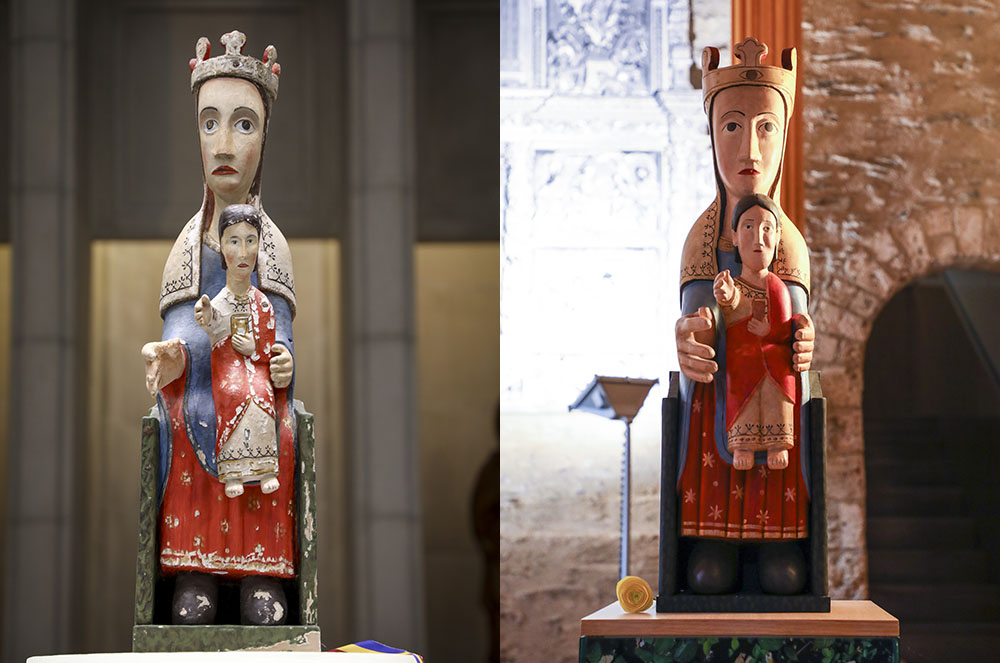
Our Lady of Meritxell, or Mare de Deu de Meritxell, is considered the patroness of Andorra. Her image has been an important part of the country’s religious life for centuries. The history of the shrine is linked to a legend. According to tradition, the residents of Meritxell once saw a rosebush in bloom in the winter. Nearby, in a cave, they found a sculpture of the Virgin Mary. The people decided to move the statue to the church in Canilló. But the next day, the statue had disappeared and reappeared in the very same spot. According to the legend, the same thing happened after it was moved to the church in Encamp.
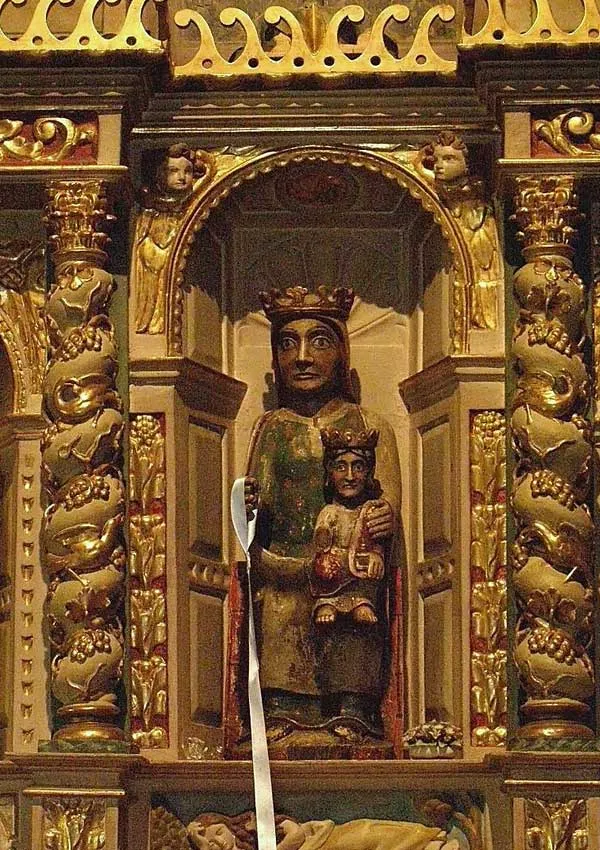
The residents took this as a sign that the Virgin Mary was meant to remain in Meritxell. A small shrine was later built on this site. Thus, Meritxell gradually became one of Andorra’s main religious centers. The history of the icon also has a tragic chapter. The old chapel and the Romanesque icon of the Virgin Mary were destroyed by fire on the night of September 8–9, 1972. The sculpture, considered one of the oldest in the Pyrenees, was also lost in the fire.
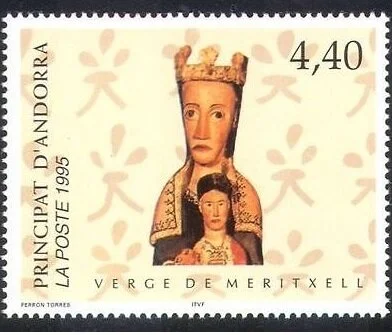
After the fire, Andorra decided to restore the shrine. The new church was designed by Catalan architect Ricardo Bofill. It was inaugurated on September 8, 1976—exactly four years after the fire.
When Our Lady of Meritxell Was Proclaimed the Patroness of Andorra
Although devotion to Our Lady of Meritxell existed long before the official decision, October 24, 1873, became an important date. It was then that the General Council of the Valleys of Andorra unanimously and officially proclaimed Our Lady of Meritxell the patroness of the valleys of Andorra. The Council’s decision noted that local residents had long considered her their patroness and special protector. In other words, the official declaration effectively formalized what had long existed in popular tradition.
However, the Church’s recognition of this patronage came later. In 1913, Bishop Joan Benlloch i Vivo of Urgel requested that the patronage of Our Lady of Meritxell over Andorra be officially recognized. In 1914, Pope Pius X approved this decision. Following this, the Andorran authorities decided to designate September 8 as a national holiday.
How the Holiday Is Linked to Andorra’s History
There is another important date in Andorra’s history: 1278. It was then that the so-called First Pariaje was concluded between the Bishop of Urgel and the Count of Foix. This agreement laid the foundation for Andorra’s unique political system. The country adopted a system of co-government, which has persisted in various forms to this day. Today, Andorra is a principality with two co-princes: the President of France and the Bishop of Urgel.
Therefore, the year 1278 is indeed extremely important for the history of Andorra. However, it would be incorrect to link it directly to the origin of the Feast of Our Lady of Meritxell. The national holiday on September 8 took shape much later. Its modern history is linked primarily to the proclamation of the Virgin Mary as the patroness of Andorra in 1873 and the official establishment of the celebration on September 8 in the early 20th century.
How Meritxell Day Is Celebrated
The main tradition of the holiday is a pilgrimage to the Meritxell Shrine. People travel here from various parts of the country. Pilgrims begin arriving as early as dawn. For many, it is a personal religious tradition—to pray before the image of the Virgin Mary, to give thanks for important events in their lives, or to ask for the health and well-being of their families.
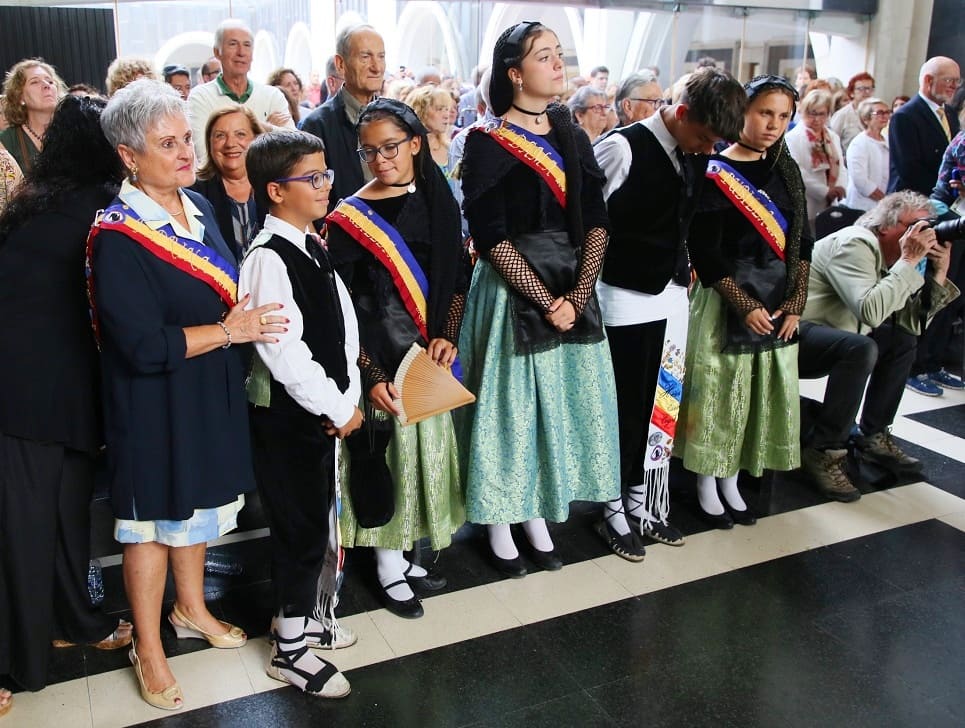
Throughout the day, various religious services are held at the shrine. Among the traditional events are morning Mass, a youth Eucharist, and the main festive Mass attended by the Archbishop of Urgel and the Co-Prince of Andorra. The main service usually draws not only ordinary believers but also government officials. That is why, on this day in Meritxell, you can see both religious leaders and the country’s leadership.
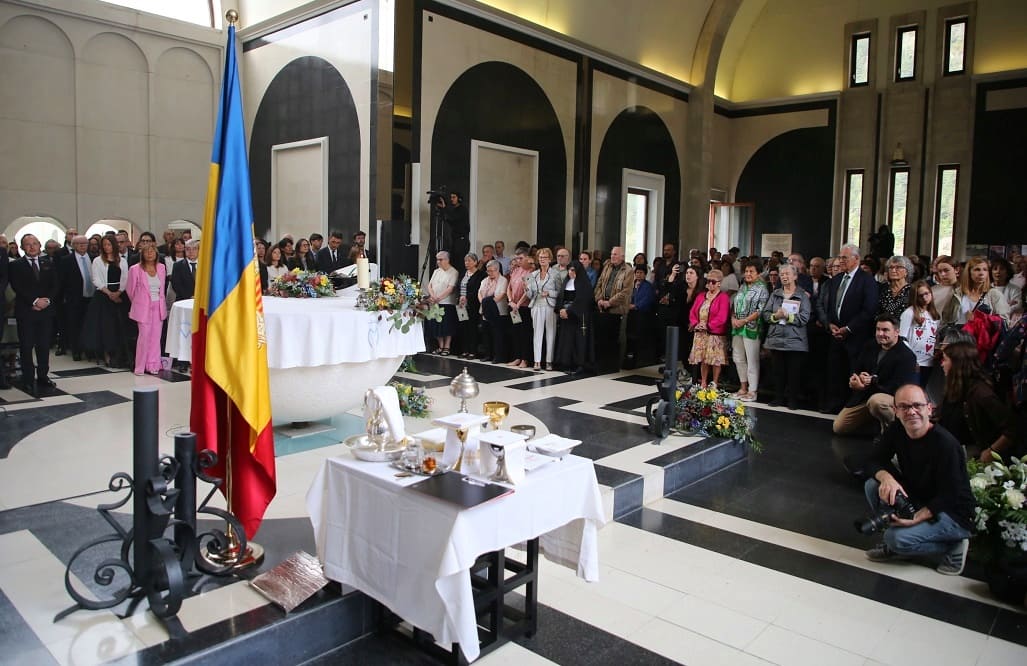
In addition to the religious portion, concerts and cultural events take place. The program may include traditional sardana dances, choir performances, and songs in honor of the Virgin Mary. Another part of the celebration involves shared meals and family gatherings. On this day, people use the holiday as an opportunity to spend time together, meet with friends, and feel a connection to the country’s traditions.
Traditional Events
The Meritxell celebration has several dimensions. The first is religious. It involves prayers, Masses, and pilgrimages. The second is cultural. Andorrans preserve traditional songs, dances, and other elements of local culture. One of the well-known dance forms is the sardana. The third level is family-oriented. Meritxell Day often serves as an occasion for several generations of the same family to gather. People spend time together, attend festive events, and share a meal.
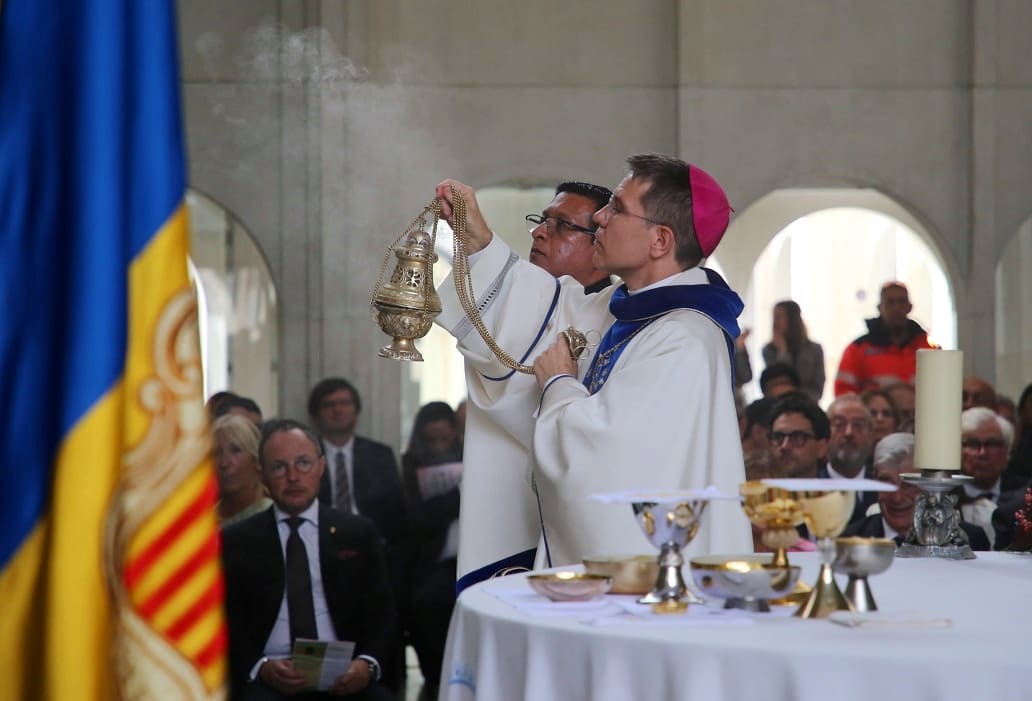
There is also a state aspect. The sanctuary becomes a meeting place for the country’s political and religious leaders. Because of this, the holiday is significant not only for believers but for the entire nation. In some years, the government even organizes additional public transportation to the sanctuary due to the large number of visitors. For example, on September 8, 2024, free buses ran from morning to evening between the main road and the sanctuary.
What Makes the Meritxell Sanctuary Special
The modern Meritshell Basilica is more than just a religious building. It has become one of the most famous symbols of modern Andorra. It was designed by Ricardo Bofill after the old church burned down. Rather than simply recreating the previous church, the architect created a modern building that also echoes the traditional architecture of the Pyrenees.
The structure combines modern geometric forms, stone, arches, and elements inspired by Romanesque architecture. The church’s connection to the surrounding mountain landscape plays a special role. Large openings in the walls and the structure of the sanctuary allow natural light to flood inside. In this way, the architect sought to emphasize the building’s connection to nature.
Today, the sanctuary is considered one of Andorra’s most important monumental complexes. It serves simultaneously as a religious center, a historical landmark, and a venue for national gatherings.
The Fire That Changed the History of the Festival
The night of September 8–9, 1972, marked one of the most tragic chapters in the history of Meritxell. The old sanctuary burned down, and with it, an ancient sculpture of the Virgin Mary was lost. The loss was a great shock to the people of Andorra. The statue was not merely a religious relic; it was part of the country’s historical memory.
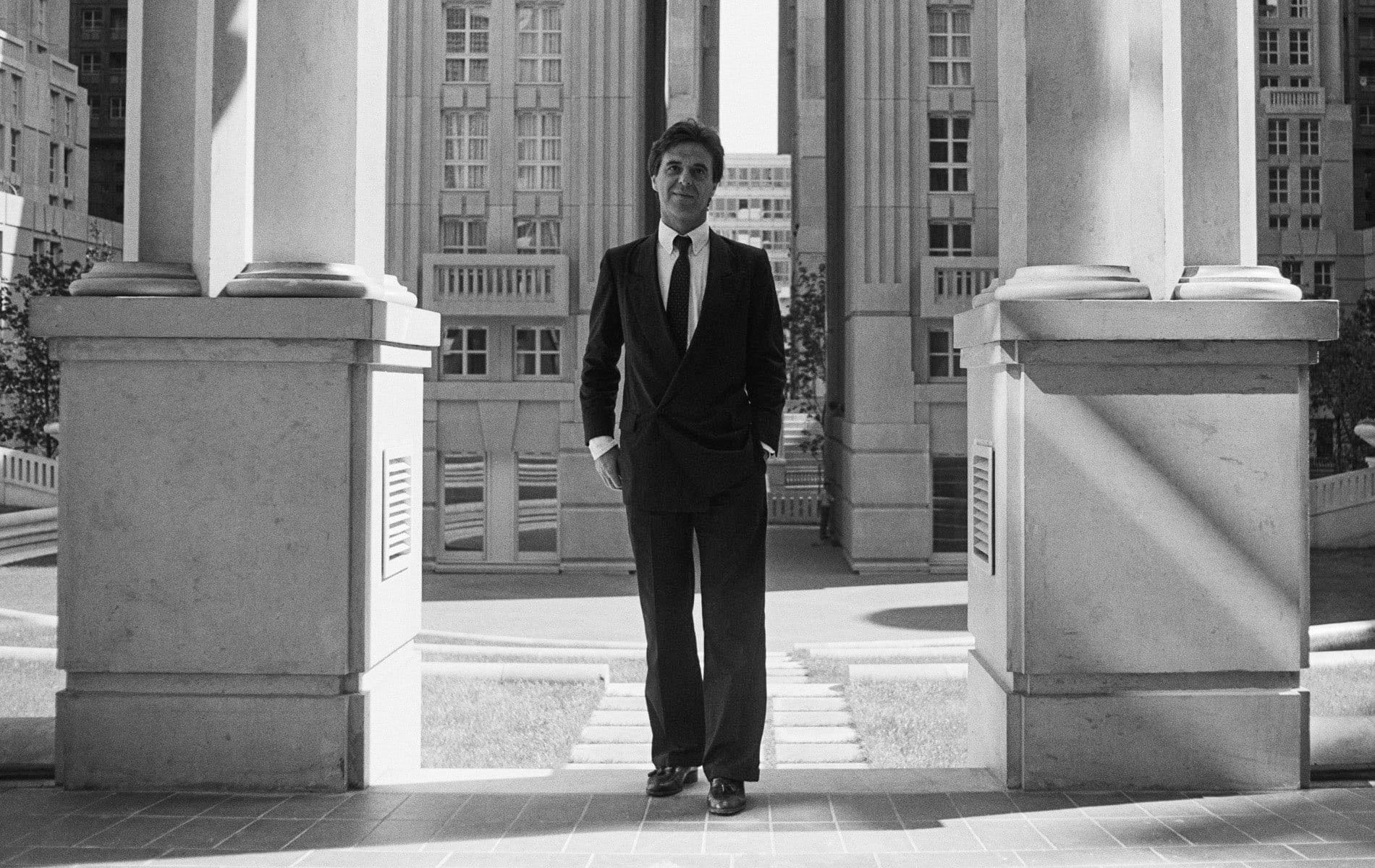
After the fire, the authorities decided to build a new church. The project was entrusted to Ricardo Bofill, and the new basilica was inaugurated in 1976. That is why the modern Meritxell Day is connected not only to an ancient tradition. For many residents of the country, it is also a reminder of how Andorra was able to restore an important symbol after a great loss.
Interesting Facts About Meritxell Day
September 8 is one of Andorra’s four official holidays. On this day, most stores are closed, although tourist services remain open.
In 1873, Our Lady of Meritxell was officially proclaimed the patron saint of Andorra. The decision by the General Council of the Valleys was unanimous.
In 1914, September 8 was established as a national holiday. This occurred after the Church recognized Our Lady of Meritxell as the patroness of Andorra.
The old sanctuary burned down in 1972. The fire also destroyed the ancient icon of Our Lady.
The new church was opened in 1976. It was designed by the renowned Catalan architect Ricardo Bofill.
The year 2023 marked the 150th anniversary of the proclamation of Our Lady of Meritxell as the patroness of Andorra. To mark the occasion, Cardinal Pietro Parolin, Secretary of State of the Holy See, traveled to the country for the celebrations and presided over Mass at the sanctuary.
Why This Holiday Is Important to Andorra
The Feast of Our Lady of Meritxell has long transcended the boundaries of a purely religious event. For Andorra, it is part of the national identity. The country is home to many people of diverse backgrounds, so traditions like this serve as a way to recall their shared history. The Meritshel Sanctuary itself is officially described as a place of spiritual and national unity, as well as a meeting place for an increasingly diverse society.

On this day, people gather not only for the church service. They reconnect with traditions, meet with family, listen to music, participate in communal activities, and simply spend time together. For Andorra, therefore, September 8 is a day of faith, history, culture, and national unity. For one day, this small mountain country serves as a particularly vivid reminder that its traditions have been shaped over centuries.
And although modern Andorra has long been a popular tourist destination with ski resorts, shops, and modern infrastructure, Meritxell Day remains one of those moments when the country returns to its roots.




