
September 9, 2026 — International Sudoku Day: The History of the Puzzle That Conquered the World
September 9 is celebrated around the world as International Sudoku Day—a day honoring one of the most famous logic puzzles. This date was officially established in 2013, but Sudoku itself has a much longer history, which began in the United States, continued in Japan, and eventually took newspapers, magazines, and smartphones around the world by storm.
On this day, puzzle enthusiasts solve Sudoku, hold competitions, and simply test how well their logic works. Here’s the story of where Sudoku came from, who invented it, why it got its name, and how a simple puzzle became an international craze.
When Did International Sudoku Day Begin?
International Sudoku Day is celebrated on September 9. The World Puzzle Federation designated September 9 as the official date in 2013. The choice of September 9 is linked to the puzzle’s name and its popularity as a distinct type of logic competition. This day is not a public holiday and does not require any mandatory official celebrations. Its purpose is much simpler—to draw attention to logic puzzles and remind people that Sudoku is an accessible pastime for people of all ages.
On September 9, Sudoku enthusiasts can organize their own small tournaments, solve puzzles against the clock, or simply pick up a newspaper or their phone and try to work through a few levels of difficulty. For some, it’s a way to test themselves, while for others, it’s just a regular way to spend their free time. Interestingly, by the time this day was established, the puzzle itself had already been known around the world for several decades. By then, Sudoku had made its way from an American magazine to Japanese publications and had since become a daily puzzle for millions of people.
Who Invented Sudoku
Despite its Japanese name, Sudoku was not invented in Japan. The American architect Howard Garns from Indiana is considered the creator of the modern version of the puzzle. In 1979, his puzzle appeared in the magazine *Dell Pencil Puzzles and Word Games* under the title *Number Place*. Horns worked as an architect but loved creating puzzles. His version already had the structure familiar to modern players—a 9-by-9 grid divided into nine 3-by-3 squares.

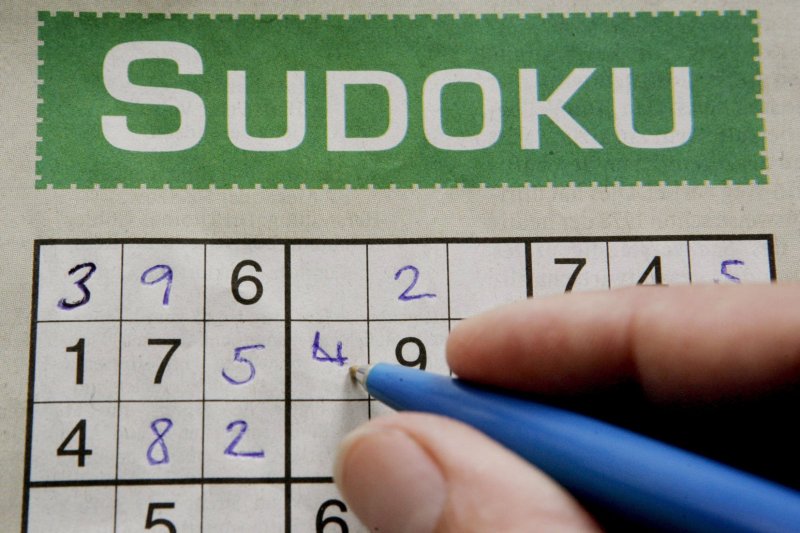
The rules were also almost the same as they are today. In each row, each column, and each 3-by-3 square, the numbers 1 through 9 must appear only once. You must fill in the empty cells so that all these conditions are met simultaneously. Interestingly, Garns’s name was not widely known at first. The magazine didn’t list his name directly next to the puzzle. Later, puzzle historians examined the lists of contributors to the magazine’s issues and determined that Garns was among the contributors to the very issues in which Number Place appeared.
Horns died in 1989. He never got to see just how popular his puzzle would become around the world, as the true international Sudoku boom began only after his death.
There were similar puzzles before Sudoku
The history of Sudoku began even before 1979. Its mathematical foundation is considered to be the so-called Latin squares, which are associated with the work of the Swiss mathematician Leonard Euler in the 18th century. In a Latin square, symbols are arranged so that each one appears only once in every row and column. It was this principle that later became one of the foundations of Sudoku.
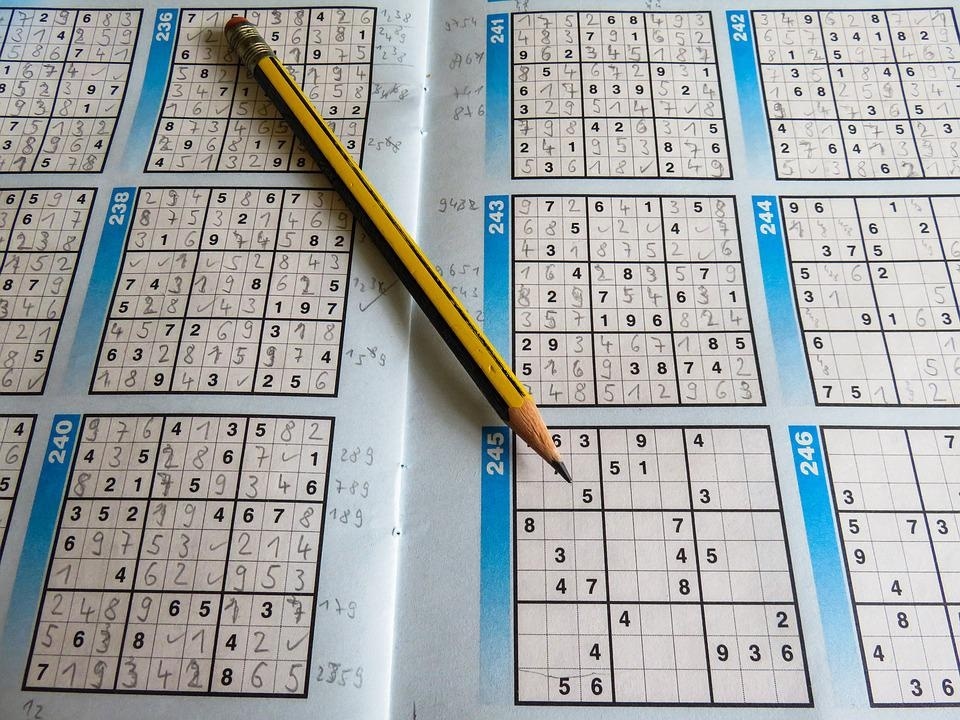
Toward the end of the 19th century, numerical puzzles resembling modern Sudoku also appeared in French newspapers. They used large grids and rules for repeating numbers, although they were not yet the Sudoku we know today. In other words, the puzzle did not emerge from scratch on a single specific day. Its rules gradually took shape under the influence of mathematical problems and newspaper puzzles. The modern form of Sudoku was finally established in the 20th century. Howard Garns’ “Number Place” is considered the first known version of modern Sudoku, featuring a 9-by-9 grid and nine 3-by-3 blocks.
Why is Sudoku called that?
The puzzle got its famous name in Japan. In 1984, the Japanese puzzle publisher Nikoli published “Number Place” in its magazine. There, the puzzle was named Sūji wa dokushin ni kagiru. This can roughly be translated as “numbers must be unique” or “each number must appear only once.” Over time, the long name was shortened to the word “Sudoku” that we are familiar with today.

The name consists of Japanese kanji characters that can be rendered as “number” and “one” or “separate.” The rule that numbers must not be repeated is the foundation of the entire game. Mati Kaji—the founder and president of Nikoli—played a major role in popularizing the puzzle in Japan. He is often called the “godfather of Sudoku,” although he did not invent the puzzle itself. His contribution lay in helping to transform Number Place into a distinct and popular puzzle format.

Nikoli also introduced its own approaches to puzzle design. In particular, they placed great emphasis on the symmetrical arrangement of the starting digits. As a result, a well-designed Sudoku puzzle often has a very recognizable and neat appearance even before the player fills in a single digit.
How Sudoku Became Popular Around the World
For a long time, Sudoku remained primarily a Japanese pastime. Far fewer people outside Japan were familiar with it. That changed in the 1990s. New Zealand judge Wayne Gould saw a Sudoku puzzle in Tokyo in 1997 and became interested in the puzzle. He spent several years developing a computer program that could generate new Sudoku puzzles. This proved to be a crucial step in the game’s international spread. Newspapers needed a steady supply of new puzzles, and the computer made it possible to create them much faster.
In 2004, Sudoku appeared in the British newspaper The Times. After that, the puzzle literally began to spread around the world. By the following year, Sudoku was appearing en masse in newspapers and magazines across various countries. In 2005, a true international boom began. Publishers released Sudoku books, newspapers printed puzzles almost daily, and people began competing against each other to see who could solve them the fastest. That’s how Sudoku transformed from a little-known Japanese puzzle into one of the most popular logic games in the world.
How to Play Sudoku
Classic Sudoku consists of 81 cells. They form a 9-by-9 square, which is further divided into nine smaller 3-by-3 squares. At the start, some of the cells are already filled with numbers. The player must fill in the remaining numbers from 1 to 9.

But there are three main rules. Each number from 1 to 9 must appear exactly once in each horizontal row. The same rule applies to each vertical column. In addition, the numbers 1 through 9 must not be repeated within each 3-by-3 square. There are no complicated mathematical formulas involved. You don’t need to be able to calculate quickly or know advanced math to solve the puzzle. Sudoku relies primarily on logic, attention to detail, and the ability to see connections between cells. This is exactly what has made the puzzle so popular. The rules can be explained in a few minutes, but a challenging Sudoku puzzle can keep a person thinking for quite a while.
Do you need to be a mathematician?
No. Sudoku is often mistakenly perceived as a math game, although in reality, the main part of it involves logically eliminating possibilities. The player doesn’t add numbers, multiply them, or solve mathematical equations. Instead, they analyze which numbers are missing from a specific row, column, or block, and then check where those numbers can be placed.

That’s exactly why Sudoku is suitable for people with very different skill levels. Beginners can choose simple puzzles, while experienced players move on to more complex ones that require extended logical reasoning. Sometimes experienced players use special techniques. These include searching for hidden single numbers, pairs, and triplets; analyzing candidate numbers; and more complex logical techniques. That’s why the same grid can be easy for one person but a real challenge for another.
How International Sudoku Day Is Celebrated
There is no single, mandatory way to celebrate this day. The simplest option is just to solve a few puzzles. Sudoku enthusiasts can organize small competitions. For example, several people are given the same puzzles, and the winner is the one who solves them correctly in the shortest amount of time.

In schools and educational institutions, Sudoku can be used as a fun logic exercise. Children are usually given simpler grids where they have fewer cells to fill in on their own. Online tournaments are also held on the internet. All you need is a smartphone or computer, since Sudoku is available on a vast number of websites and mobile apps today.
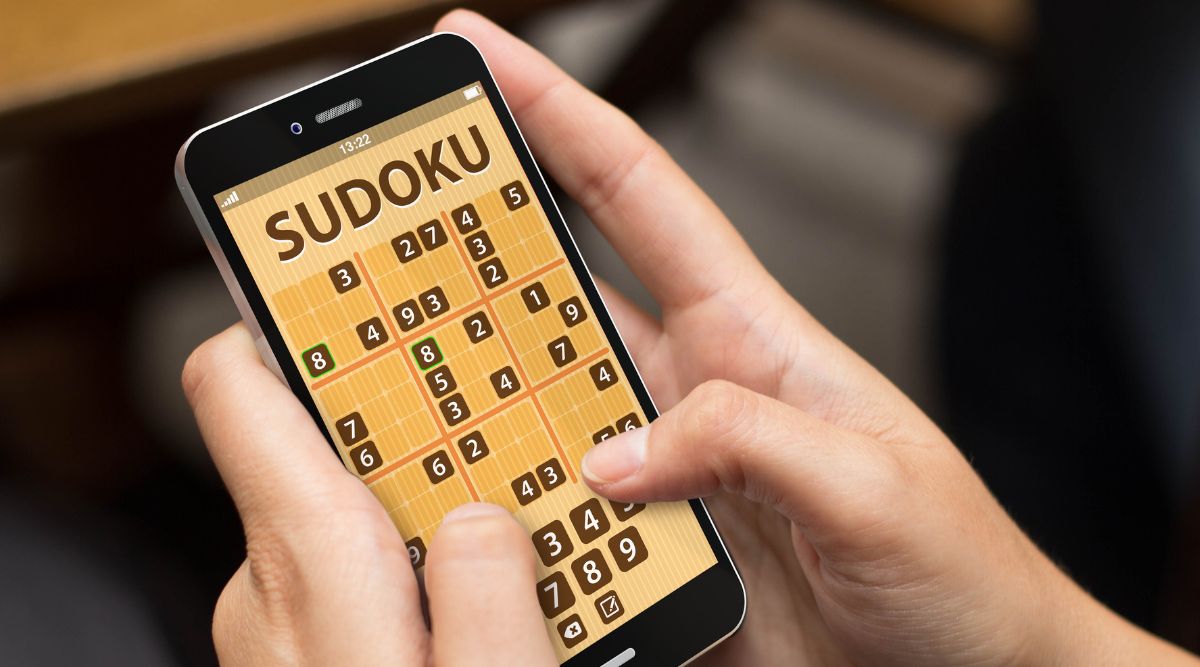
Or you can organize a very simple competition at home. Grab a newspaper, magazine, or app, set a timer, and see who can solve the same puzzle faster.
Interesting Facts About Sudoku
Sudoku isn’t of Japanese origin. The modern puzzle was created in the U.S., while the Japanese gave it its name and made it popular in their country.
Its original name was “Number Place.” It was under this name that Howard Garns’ puzzle first appeared in 1979.
The creator of Sudoku did not live to see his creation become a global phenomenon. Howard Garns died in 1989, while the global Sudoku boom didn’t begin until 2004–2005.
The name “Sudoku” was coined in Japan. It is an abbreviation of a longer Japanese phrase related to the rule of not repeating numbers.
The Times helped Sudoku become a global phenomenon. The puzzle was first published in the British newspaper in 2004, after which interest in it skyrocketed.
There are very complex variations of Sudoku. In addition to the classic 9-by-9 grid, there are puzzles with different sizes, additional rules, and multiple interconnected grids.
Sudoku has become part of competitive culture. Following its international boom, championships began to be held, where participants solve puzzles against the clock and compete for the title of best player.
Why Sudoku Remains Popular
Sudoku has one major advantage—it’s easy to get started, but difficult to master completely. No special knowledge is required for your first puzzle. All you need to do is understand a few rules and start looking for the correct numbers. At the same time, you can gradually increase the difficulty level. First, you solve simple grids, then move on to more complex ones, and eventually begin using special logical techniques.
Sudoku is also convenient to take with you. People used to solve it in newspapers and magazines, but now the puzzle literally fits on a smartphone. Another reason for its popularity is the lack of a language barrier. You don’t need to read long rules or know a foreign language to solve it. The numbers are the same for everyone. That’s why Sudoku was able to spread just as easily in Japan, Europe, the U.S., and other countries.
How to Celebrate September 9
International Sudoku Day is a great excuse to put down your phone for a few minutes and test your logic. You can choose a puzzle at your skill level and try to solve it without hints. For those who have been playing for a long time, you can set yourself a different challenge—try a more difficult level or time yourself. And if Sudoku seems too difficult, it’s worth starting with the easiest version.

Another option is to play with friends or family. Identical puzzles are perfect for a friendly competition. The main rule for such a day is very simple—don’t rush to fill in random numbers. Sudoku is all about logic: every number must have its place, and the correct solution can be found step by step.
Key Facts About International Sudoku Day
International Sudoku Day is celebrated on September 9. It was officially established in 2013. The puzzle itself, in its modern form, first appeared in the United States in 1979, and it was given the name “Sudoku” in Japan in the 1980s. It gained worldwide popularity after appearing in British newspapers in 2004.
Today, Sudoku remains one of the most famous logic puzzles. It can be found in newspapers, magazines, mobile apps, and on specialized websites. So, you can celebrate September 9 without any elaborate ceremonies—just open a new grid, grab a pencil, and see how far your logic can take you today.


