
Ratko Mladić buried in Belgrade despite EU warnings
Former Bosnian Serb commander Ratko Mladić, convicted by a UN court of genocide, war crimes and crimes against humanity, was buried in Belgrade, Serbia, on September 7. Thousands of people gathered for the ceremony, including serving Serbian ministers, although the authorities had previously said that officials would not take part. Euronews reports.
Ceremony in Belgrade
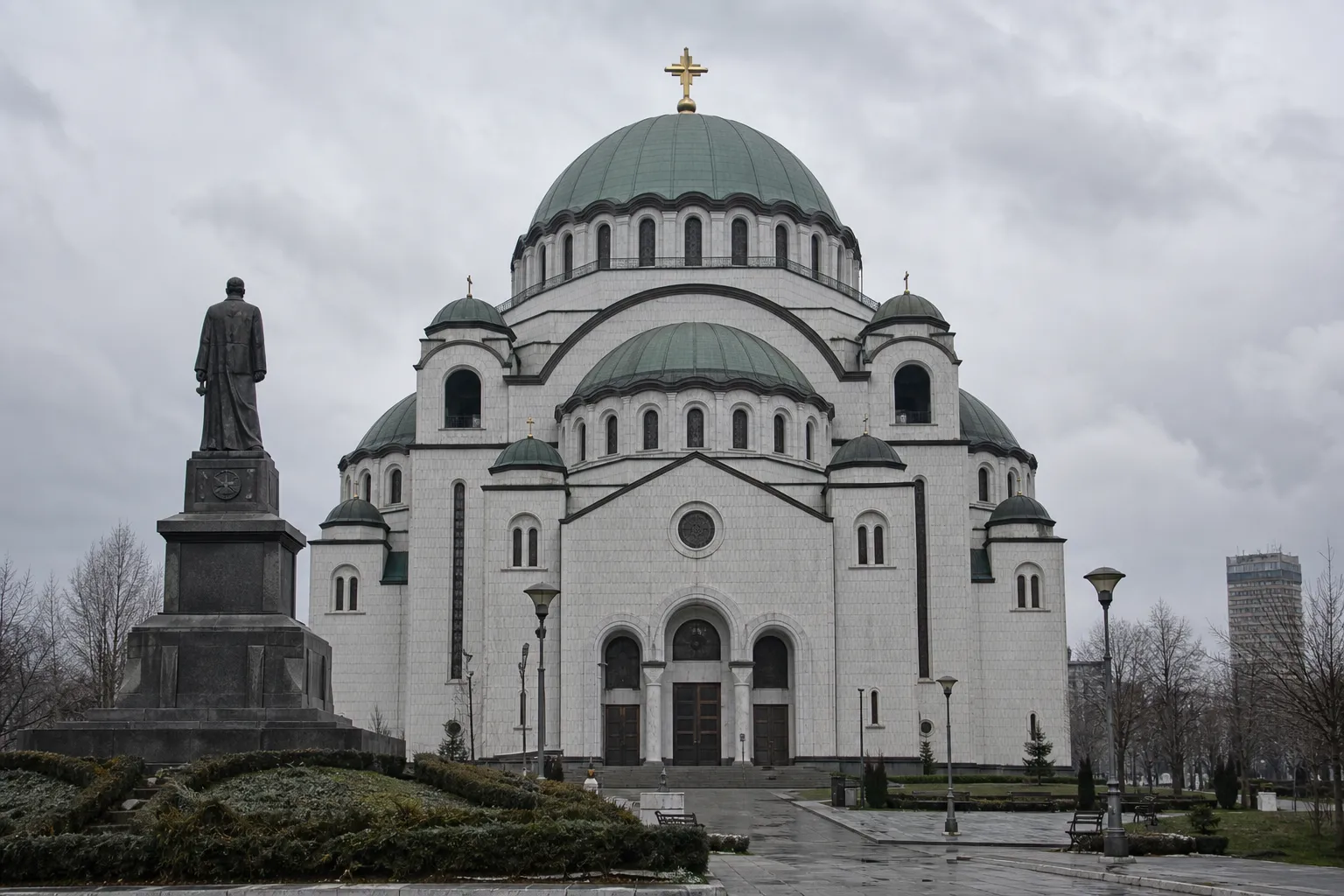
Mladić’s coffin, draped in Serbia’s national flag, was flown to Belgrade on an aircraft the country’s government sent to retrieve his remains. His military cap and a sabre were placed on the coffin, and his awards were also displayed. Before the burial, the body was kept at the Church of St. Luke of the Serbian Orthodox Church.
Former military personnel in uniform, young people carrying portraits of Mladić and football fans took part in the procession to Košutnjak Cemetery. A salute was fired during the burial, and a military orchestra performed music. According to the outlet, the service was led by Porfirije, patriarch of the Serbian Orthodox Church.
Serbia’s ministers of justice, culture, defence and state investments, Alexander Botsan-Kharchenko, the ambassador of aggressor state Russia to Serbia, Danilo, the son of Serbian President Aleksandar Vučić, and political representatives of Bosnian Serbs attended the ceremony. Vučić himself was not present at the burial.
More current news is available on the UA.News Telegram channel Telegram.
European Union reaction
The European Commission stated that the glorification of convicted war criminals, genocide denial and revisionism run counter to fundamental European values and have no place either in the EU or among candidate countries. European Commissioner for Enlargement Marta Kos cancelled a planned visit to Serbia, calling the glorification of Mladić incompatible with the values of the European path.
Marko Milosavljević, a representative of the Youth Initiative for Human Rights, said that the involvement of state institutions and government representatives effectively amounted to state honours. According to him, after his conviction, Mladić lost his military rank and the right to state or military honours.
Mladić was convicted, among other things, of organising the genocide of more than 8,000 Bosniaks — men and boys — in Srebrenica in July 1995 and the years-long siege of Sarajevo. The war in Bosnia and Herzegovina in 1992–1995 claimed more than 100,000 lives, while about 2 million more people were displaced or sought refuge.


