
The Hague celebrated the 80th anniversary of the International Court of Justice
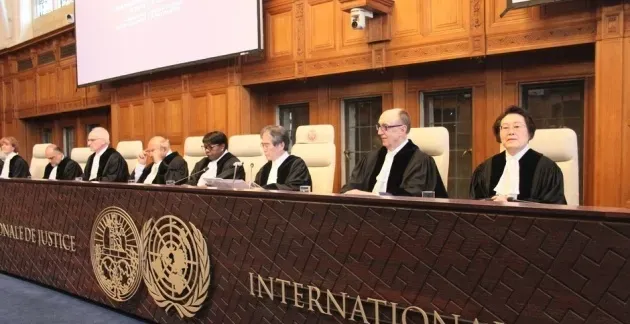
A ceremonial session of the International Court of Justice was held in The Hague to mark its 80th anniversary. Against the backdrop of global conflicts and rising tensions, international leaders spoke not of celebration but of a crisis in the global order. At the heart of their remarks was the choice between the rule of law and the use of force.
A ceremonial session of the International Court of Justice was held at the Peace Palace in The Hague to mark the 80th anniversary of its founding, bringing together representatives of leading international institutions and states, including King Willem-Alexander of the Netherlands, UN Secretary-General António Guterres, and UN General Assembly President Annalena Baerbock, as well as diplomats, including Ukraine’s Ambassador to the Netherlands Andriy Kostin.
Despite the anniversary, the tone of the meeting was more somber than celebratory, as participants discussed the deepening crisis of international law and the rising number of conflicts worldwide.
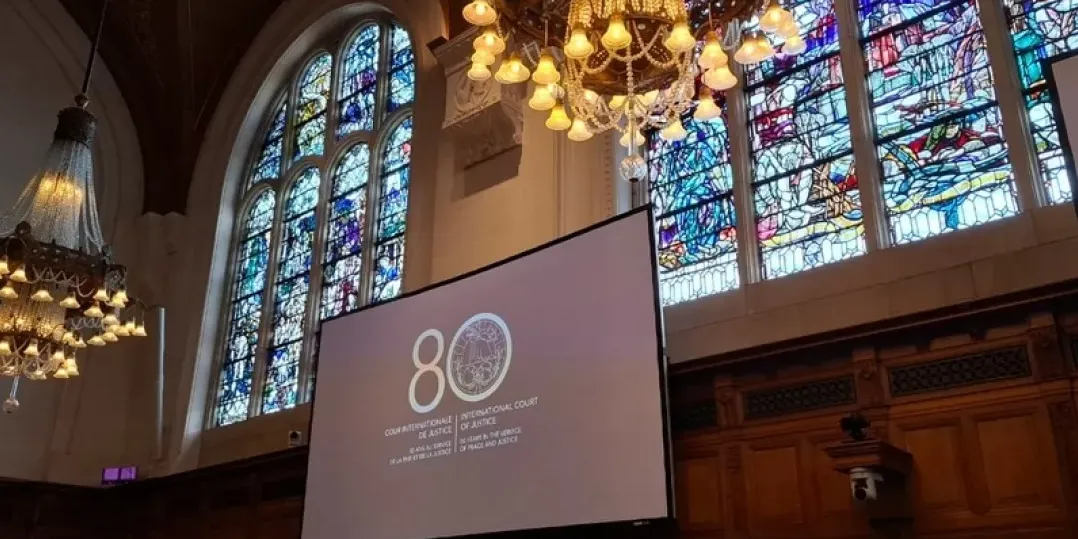
In his speech, UN Secretary-General António Guterres recalled the historical reasons for the creation of the international legal system, linking them to the ruins of World War II, and emphasized that today the world once again faces a dangerous choice. “Today we face our own moment of crisis and our own moment of choice: a choice between a future governed by the rule of law and a future determined by brute force. The choice is clear,” he noted, adding that the erosion of international law only exacerbates chaos and instability in the world.
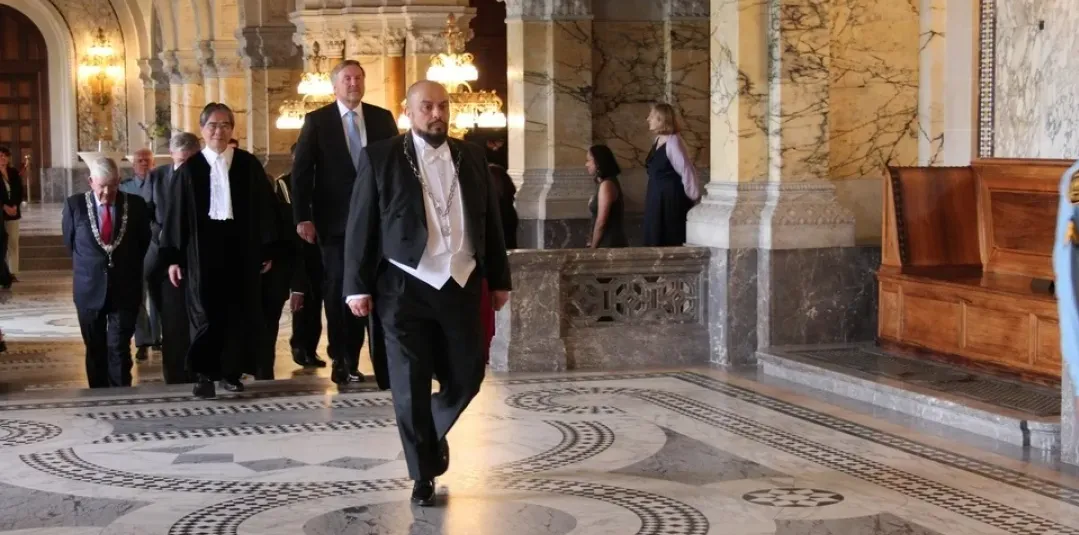
UN General Assembly President Annalena Baerbock emphasized that the current period offers no cause for celebration, as the international system is under constant pressure due to a series of crises and wars. “Every week brings a new crisis: Ukraine, Sudan, Gaza, Venezuela, Iran, Lebanon,” she said, stressing that the world needs not formal statements but real confirmation of commitment to international law.
Dutch Foreign Minister Tom Berendsen, in turn, stated that the presence of international judicial institutions in The Hague imposes a special responsibility on the host state and serves as a reminder of the need to defend the legal system even in difficult times. He emphasized that international law does not automatically guarantee peace, but remains the foundation without which the global system risks descending into chaos.
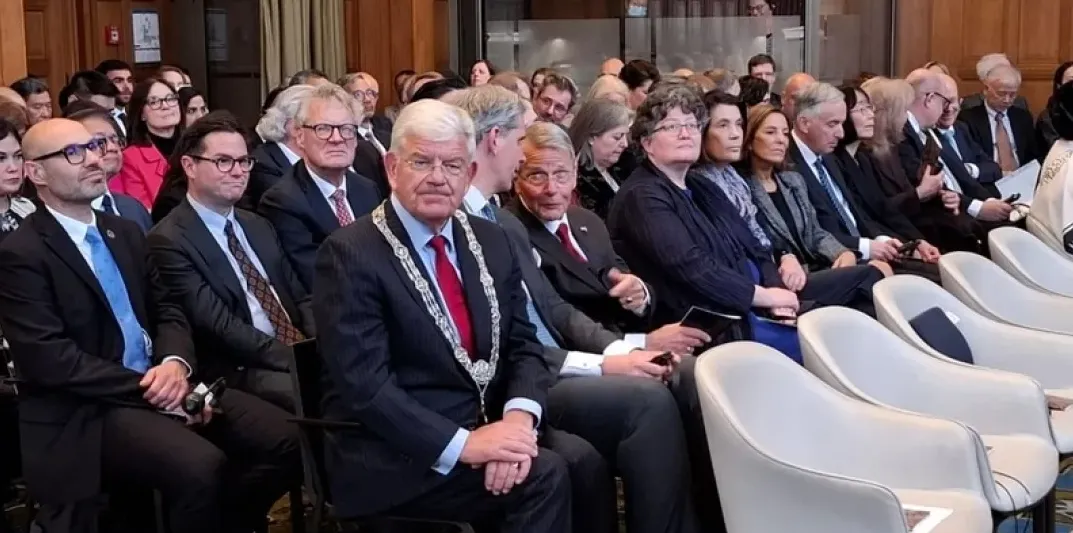
He also drew attention to the symbolism of the Peace Palace, where artistic depictions of peace and war serve as a reminder of the fragility of the balance between conflict and stability. “International law continues to function in many areas… and an increasing number of states are turning to this Court, relying on it to resolve conflicts through legal means,” noted Berendsen, emphasizing its relevance despite all challenges.
The meeting participants agreed that the Court’s 80th anniversary is not only an occasion to reflect on history but also a moment to rethink the role of international law in the context of contemporary global crises.
The German Chancellor also stated that the U.S. should join the international mission in the Strait of Hormuz. This involves protecting shipping and clearing mines in the region. Berlin is ready to help, but the final decision rests with the government and parliament.
In addition, more than ten countries have expressed their readiness to join the international mission in the Strait of Hormuz. This refers to an operation aimed at protecting shipping following tensions in the region.
The United Kingdom and France plan to lead a multinational defense mission to protect shipping in the Strait of Hormuz, which is set to begin once conditions in the region stabilize. The initiative involves mine clearance and ensuring the safety of civilian vessels on one of the world’s key maritime routes.
The U.S. and Iran are negotiating a potential deal that would involve exchanging enriched uranium for the unfreezing of approximately $20 billion in Iranian assets.


