
Ghana launches trust-building program between communities and security forces — MyJoyOnline
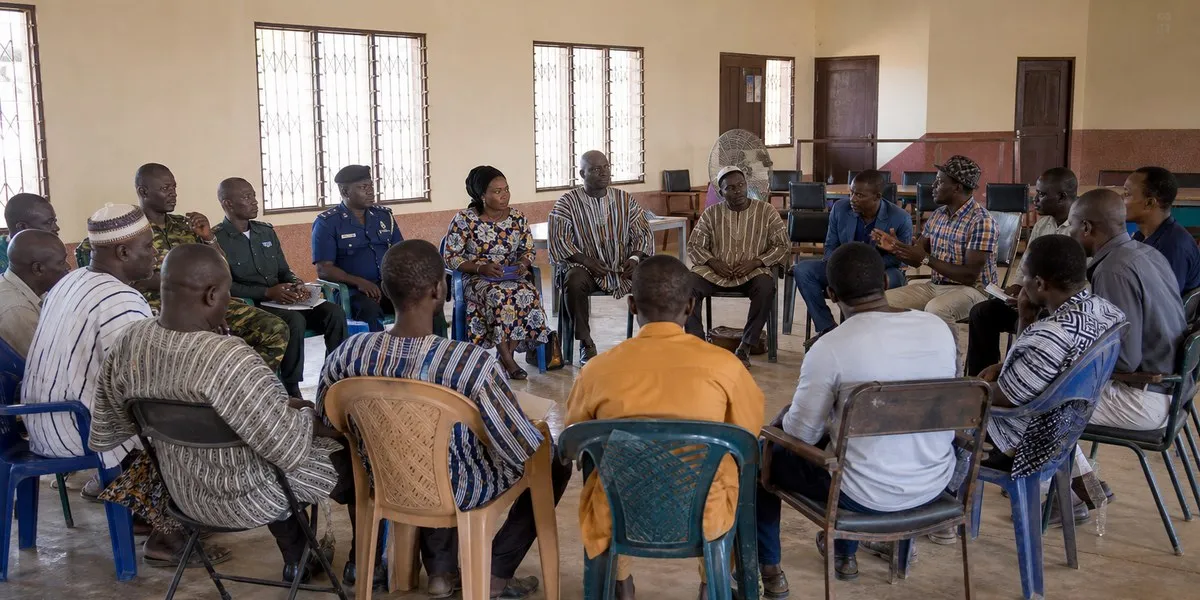
In the city of Wa in northern Ghana, the Kofi Annan International Peacekeeping Training Centre and the National Peace Council have launched a regional program to strengthen trust between civilians and state security services. The initiative, supported by the Embassy of Spain in Ghana, was presented during a seminar attended by 45 representatives of security agencies, local authorities, traditional and religious leaders, civil society organizations, young people, persons with disabilities, and the Fulbe community, MyJoyOnline reports.
The program will be implemented in four regions of Ghana: Upper West, Savannah, North East, and Upper East. It provides for training participants to hold community meetings, developing localized regional security plans, and establishing a permanent preventive mechanism. The organizers link the project’s relevance to risks for border communities due to threats spreading from neighboring Burkina Faso, Mali, and Togo.
Trust as a component of security
Lieutenant Colonel James Bampoe Palmer, commander of the 10th Mechanized Battalion, said that military equipment and technical training are insufficient to preserve peace. According to him, effective prevention of violent extremism depends on communities’ trust in the institutions responsible for their protection, as well as people’s willingness to share information.
Frank Wilson Bodza, Director of Conflict Resolution at the National Peace Council, stressed that civilians are an important source of information for security agencies. He noted that cooperation among the state, security forces, and the population, he said, had helped Ghana avoid attacks, and that preventive measures must remain permanent.
More current news is available on the UA.News Telegram channel Telegram.
Statements by seminar participants
During the discussion, community representatives voiced complaints about the work of certain officials. One participant said she had seen an immigration officer allegedly sleeping while on duty near the Dikpe crossing point on the Black Volta River. A representative of the Fulbe community also alleged possible extortion of money from livestock traders by road police officers on the Jirapa-Han route.
Informant Ibrahim Sani, who has a physical disability, said that after reporting a dispute over illegal weapons in Fongo, a police investigator allegedly disclosed his identity to the suspect’s family. An immigration service representative described sleeping on duty as a violation of professional ethics and said disciplinary sanctions were possible. Police representatives expressed concern over the extortion allegations and urged drivers and traders to record the names of officers whom they consider involved in violations.
Seminar participants also agreed to prepare an action plan for the Upper West Region, which is to formalize information exchange, strengthen the protection of informants, and improve communities’ resilience to radicalization.




